Tell us about the job
Takes about a minute. No obligation.
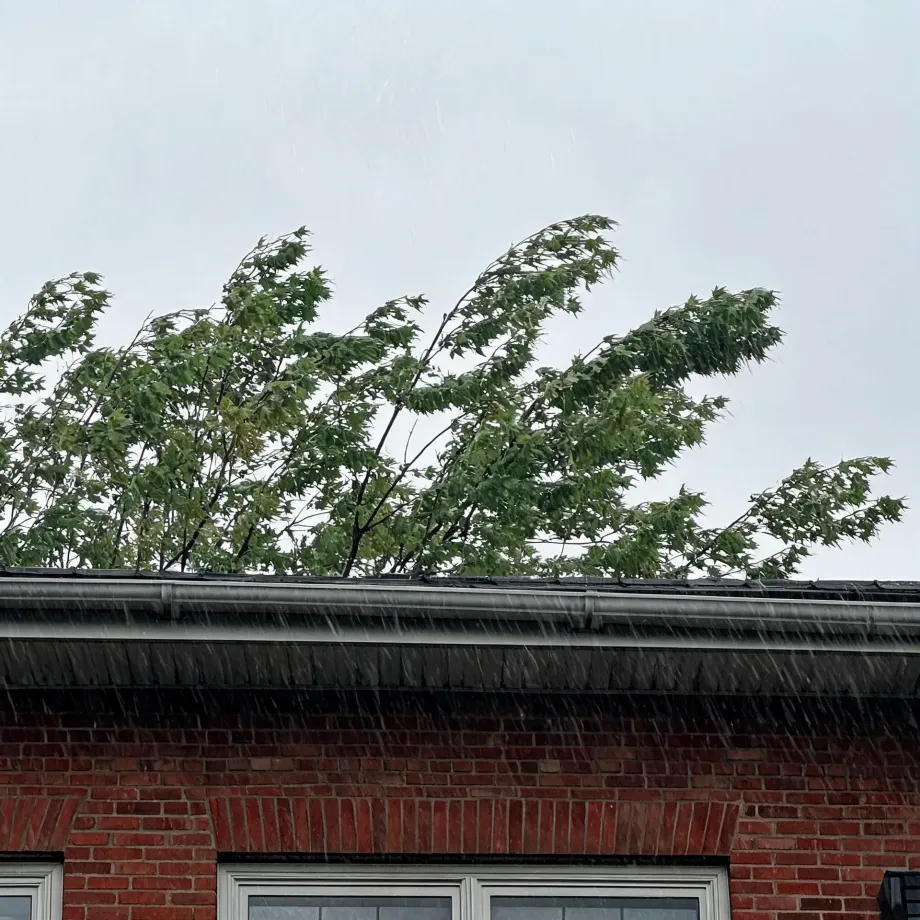
A contractor called out to repair a central AC system in Warren County has to establish what the unit has already been through before they can say which component failed and why. 132 severe weather events were recorded in Warren County, Virginia between 2015 and 2024. At that rate, severe weather is a standing feature of life for equipment here, and parts like capacitors and contactors that absorb electrical and thermal stress show it. A worn capacitor in this county could have aged out on its own, or it could have been pushed there faster by repeated weather stress. The contractor's job is to tell those two apart, because one of them points to a single failed part and the other points to a broader inspection of what else took the same load.
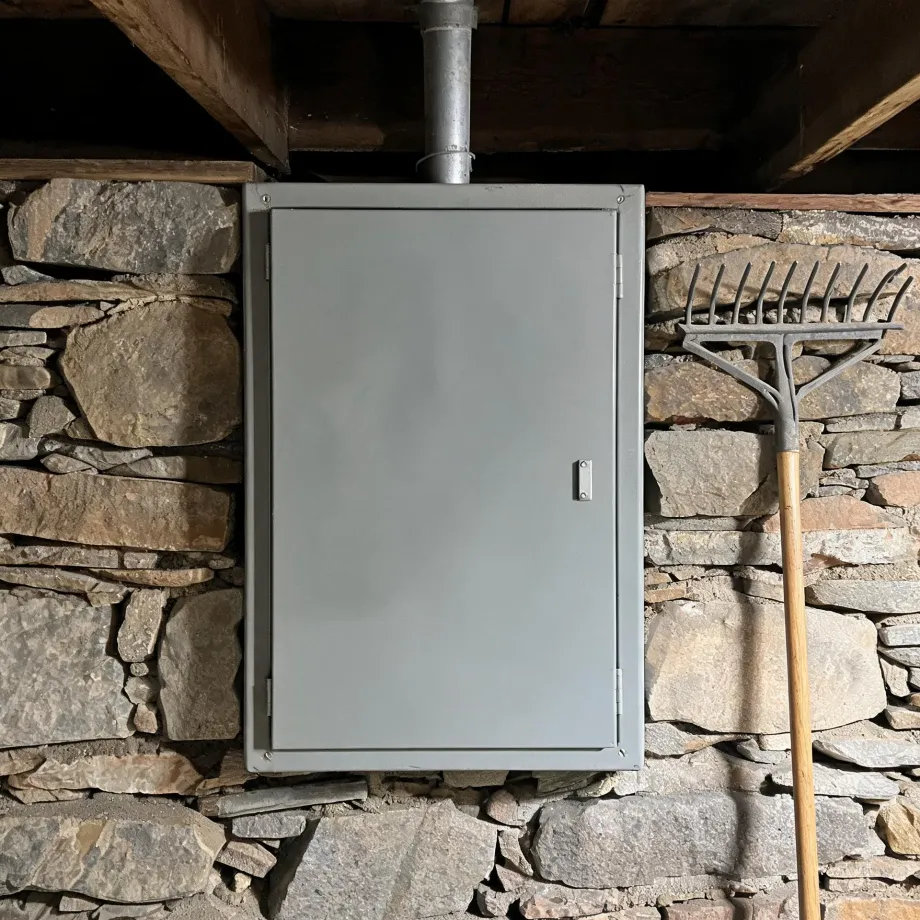
Ductwork laid down for one system and since adapted tells a contractor something, but for repair work on central AC, the opened unit is where the job either stays simple or gets complicated. Half the homes in Warren County, Virginia were built in 1986 or earlier (2020-2024 ACS 5-year). Housing that has been standing that long has typically hosted more than one cooling system in its lifetime, which means the equipment a contractor opens may share nothing with what the house was originally wired around. The relevant question is whether the parts that failed are still manufactured for that system, and that answer comes from the model plate and what is behind the access panel, not from the building permit.
The Parts of a Central AC a Contractor Checks During a Repair
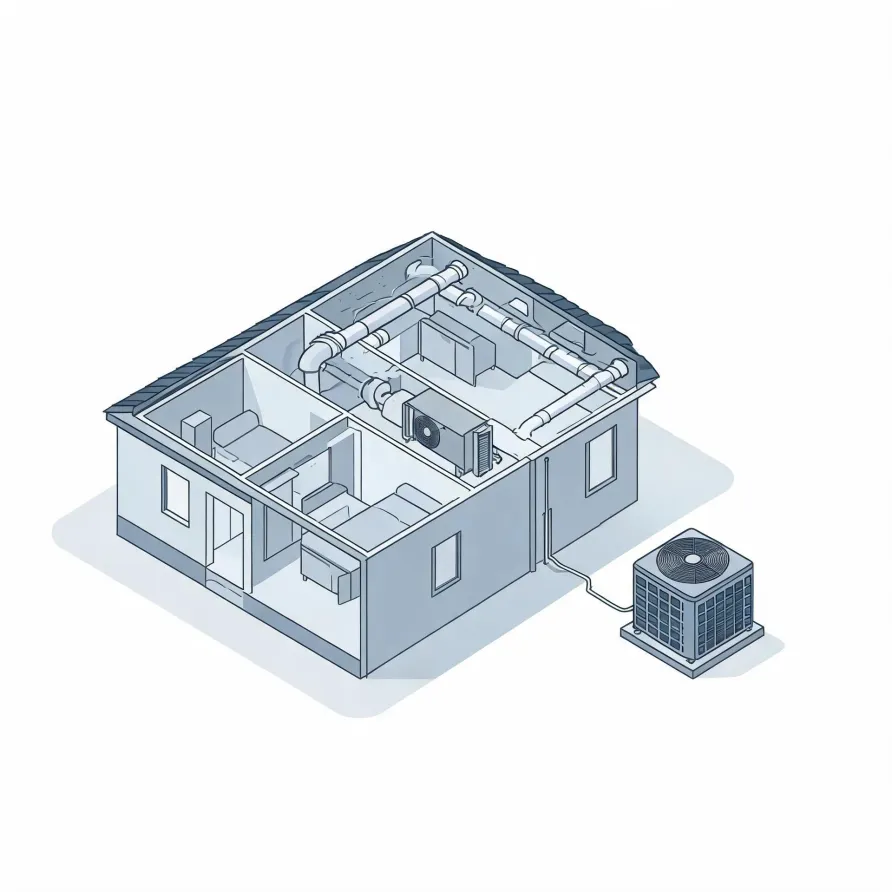
The outdoor condenser unit sits on a pad outside the house and holds the compressor and condenser coil, both of which are common sources of trouble when a system stops cooling. The compressor is the engine of the whole system, and a failed one is often what a contractor finds when the air handler runs but nothing gets cold. The condenser coil, wrapped around the outside of that cabinet, is where heat leaves the refrigerant, and a dirty or damaged coil throws the whole cycle off.
Inside the house, the air handler holds the evaporator coil and the blower. The evaporator coil absorbs heat from indoor air, and a frozen or leaking coil is a frequent repair target. The blower motor moves air across that coil and through the ducts, and a weak or failed motor shows up as low airflow even when everything else is working. The expansion valve, sitting between the two coils, controls refrigerant flow and is another piece a contractor checks when pressures look wrong.
The drawing shows a typical central AC layout, and a licensed contractor determines which components are involved based on what is actually present and failing in your home.
Get matched in Warren CountyWarren County, by the numbers
132 severe weather events were recorded in Warren County, Virginia between 2015 and 2024.
NOAA National Centers for Environmental Information, Storm Events Database, bulk CSV export, events 2015-01-01 through 2024-12-31.Half the homes in Warren County, Virginia were built in 1986 or earlier (2020-2024 ACS 5-year).
U.S. Census Bureau, 2020-2024 American Community Survey 5-Year EstimatesWarren County, Virginia holds 17,064 housing units (2020-2024 ACS 5-year).
U.S. Census Bureau, 2020-2024 American Community Survey 5-Year EstimatesOwners occupy 75.9% of the occupied homes in Warren County, Virginia (2020-2024 ACS 5-year).
U.S. Census Bureau, 2020-2024 American Community Survey 5-Year EstimatesCodes & Standards Governing Central AC Repair in Warren County, Virginia10 sourced rules and standards
What HVAC Repair Looks Like in Warren County
Split-system central air conditioners rated below 45,000 Btu/h manufactured on or after January 1, 2023 must meet a federal minimum of 13.4 SEER2.
Split-system central air conditioners rated at or above 45,000 Btu/h manufactured on or after January 1, 2023 must meet a federal minimum of 13.4 SEER2.
Split-system central air conditioners manufactured between January 1, 2015 and December 31, 2022 had to meet 13 SEER, the metric that preceded SEER2.
Single-package central air conditioners manufactured on or after January 1, 2023 must meet a federal minimum of 13.4 SEER2.
Space-constrained central air conditioners manufactured on or after January 1, 2023 must meet a federal minimum of 11.7 SEER2.
Federal efficiency standards for split-system central air conditioners and heat pumps are set on each certified combination of outdoor unit and indoor coil rather than on the outdoor unit alone.
Residential and light commercial air conditioning and heat pump systems assembled in the field, including mini-splits and unitary systems, may not be installed on or after January 1, 2025 using a refrigerant with a global warming potential above 700.
A field-assembled system whose specified components were all manufactured or imported before January 1, 2025 carries no installation compliance date under the refrigerant restrictions and may still be installed.
Licensing Rules for HVAC Repair in Warren County, Virginia
Virginia’s contractor licence classes start above $1,000: the entry class covers a single contract or project over $1,000 but less than $30,000, or less than $250,000 of work in any 12-month period, with larger classes above that.
Virginia requires a contractor licence: no person may engage in, or offer to engage in, contracting work in the Commonwealth without one.
Severe Weather Events in Warren County
Weather puts hours on HVAC equipment. Every stress event the sky delivers pushes compressors, capacitors, and refrigerant lines closer to the point where repair work becomes necessary, which is why local weather history is part of understanding what Central AC systems in this area actually endure.
132 severe weather events, 2015–2024. Source: NOAA National Centers for Environmental Information, Storm Events Database.