Why your AC smells like burning in Virginia

Step 1 of 3: Equipment

Why does my AC smell like it's burning?

A burning smell from your AC is one of those things you don't ignore, especially running the system hard through a Virginia summer. It usually means something electrical is overheating, not that dust is burning off, though that happens too. The smell itself tells you how worried to be, and waiting it out while the unit keeps running is how a small problem turns into a bigger repair.

It's almost always an electrical problem, not dust

A burning or acrid smell usually points to a motor winding, a circuit board, or a wire connection overheating somewhere in the system. A faint, dusty smell for the first few minutes after you turn the AC on for the first time in a while is normal and fades fast. One that doesn't fade, or smells sharp and plasticky, is different. With Virginia summers pushing the system to run long hours, overheated components get stressed harder and faster than they would in a mild climate. If the smell keeps up, shut the unit off at the thermostat or breaker. Running it longer risks the compressor or the wiring itself, and that turns a repair into a much bigger one.

A woman in a cream cowl-neck sweater stands in a lamp-lit room looking out a window at a snow-covered yard with shrubs and bare trees at dusk.
A woman in a gray turtleneck sweater stands near a large window in a lamp-lit living room, looking out at falling snow and snow-covered conifers.
A woman in a chunky knit sweater stands by a large window looking out at snow-covered ground, with a dimly lit living room containing a gray sofa, framed artwork, shelves and table lamps behind her.
A woman in a gray turtleneck sweater stands in a dimly lit living room with a lamp and bookshelves, looking out a multi-pane window at falling snow.
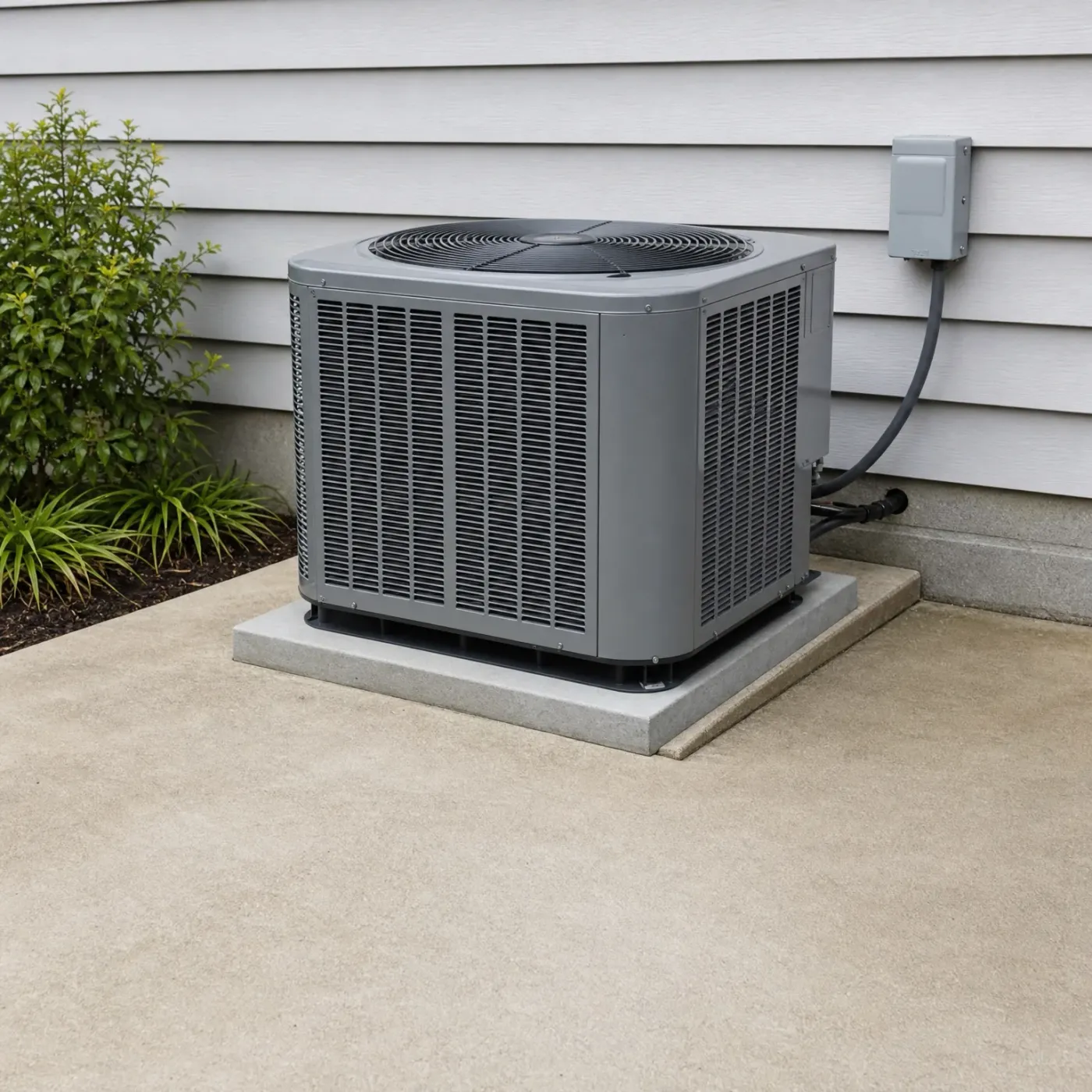
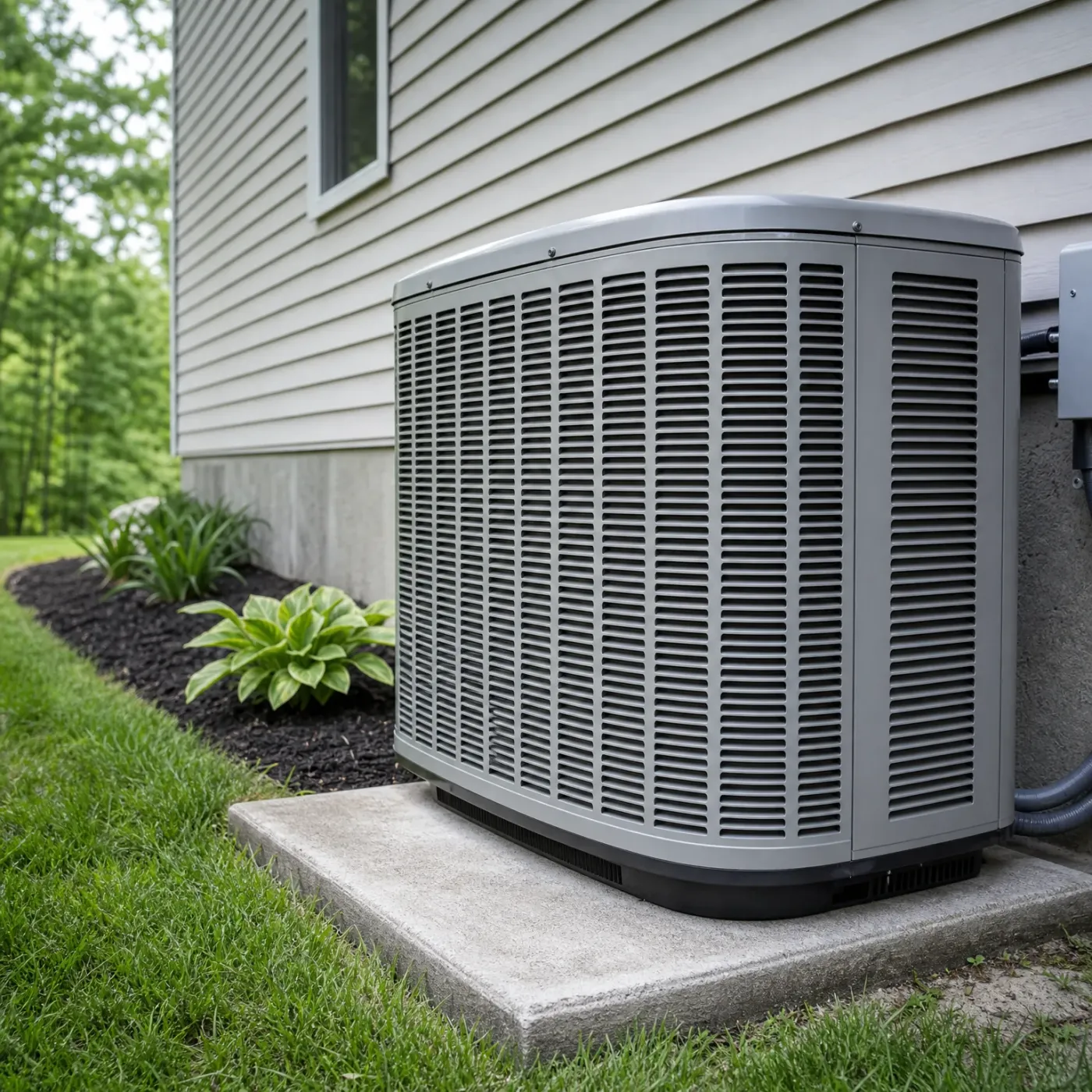
A gray outdoor air conditioning condenser unit on a concrete pad beside a house with horizontal lap siding, with a wall-mounted disconnect box and conduit, and shrubs to the left.
This unit runs clean, no odor, no smoke, just steady cooling through another humid Virginia afternoon.
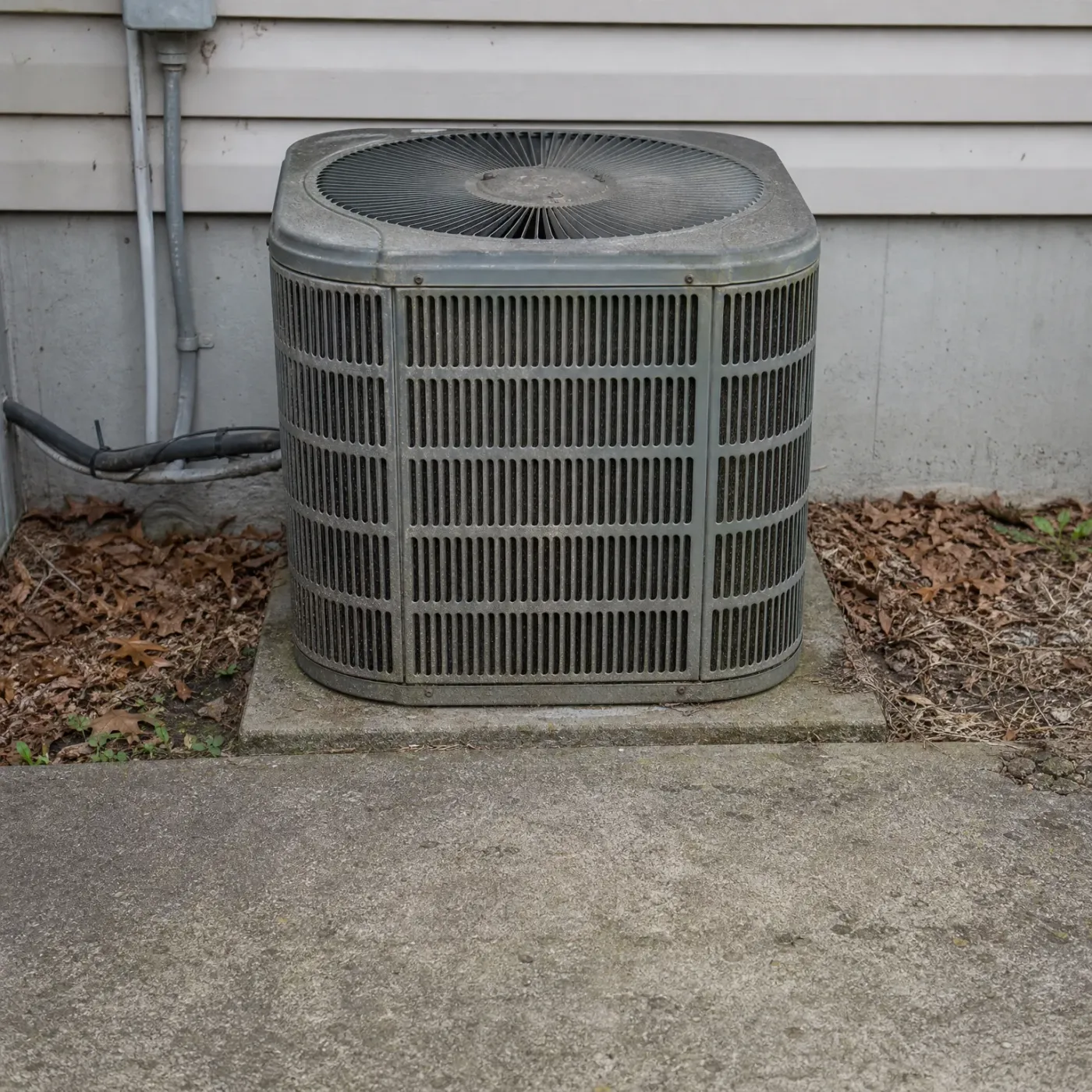
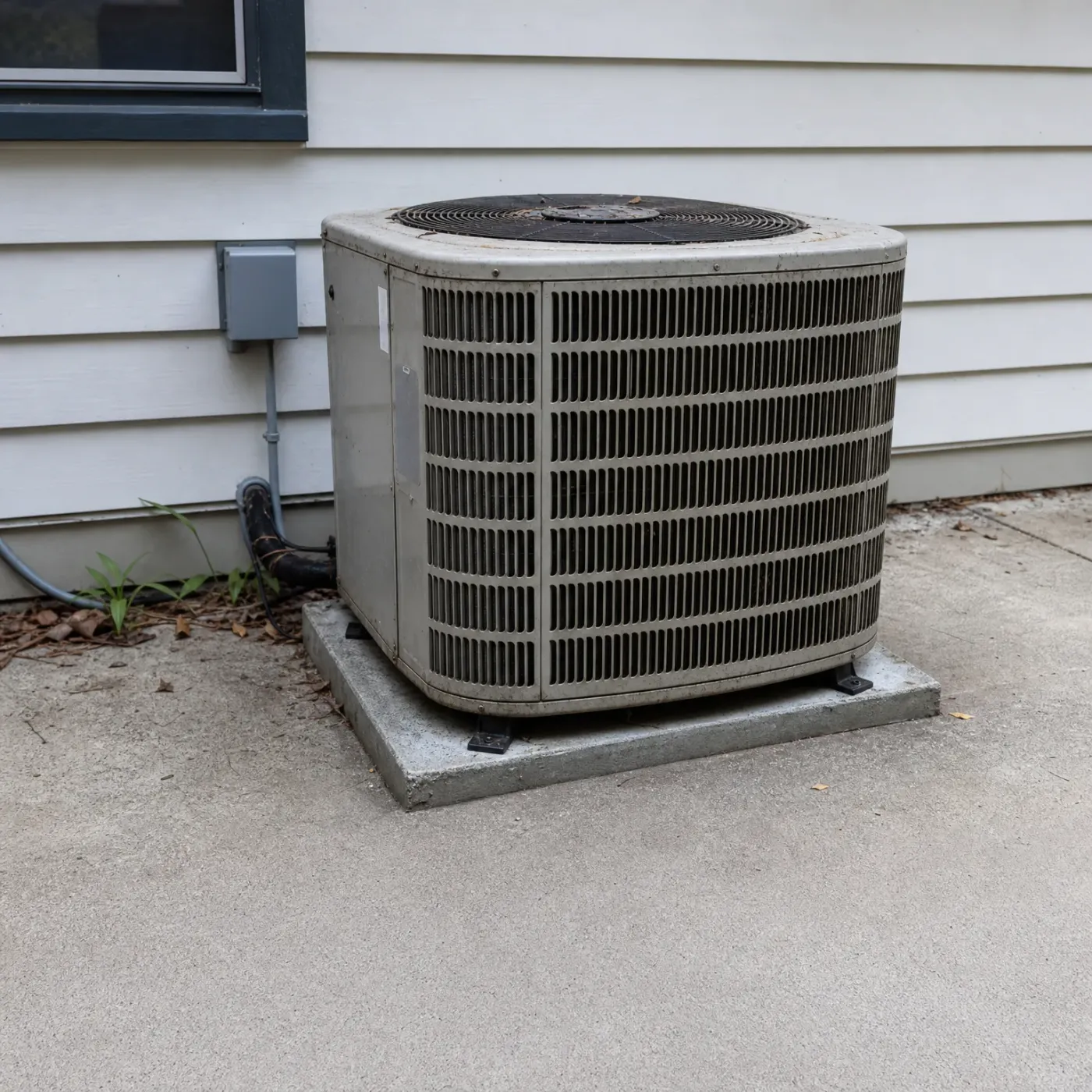
An outdoor air conditioning condenser unit on a concrete pad beside a house with horizontal siding and a concrete foundation, with dry brown leaves on the ground to either side.
This one is caked in leaves and grime, and that dirt can trap heat around the wiring until something burns.

Most of what gets called a burning smell is really electrical heat with nowhere to go. A capacitor that's wearing out can't hold the charge it used to, so the compressor or fan motor pulls more current than its windings were built for. That extra current turns into heat right at the windings, and the smell comes off the insulation before anything actually catches. A blower motor works the same way. Once the bearing starts to seize, the motor has to fight to keep the shaft turning, and that extra effort shows up as heat in the same spot. Where you smell it tells you something too. Smell it outside near the condenser and the problem is probably out there. Smell it coming through the vents and the issue is more likely inside the air handler. One exception: dust sitting on a heating element after the system's been off for a while will smell like burning for a few minutes when it first kicks on. That clears on its own and isn't related to the motor or capacitor problems above.

Where the heat actually starts

  • A burning smell usually starts at the motor windings, the capacitor, or a wire connection that has worked itself loose.
  • Electrical heat builds inside a sealed compartment, so the smell can reach you well before you'd ever see smoke.
  • A failing capacitor sends more current through the compressor or fan motor than the windings are built to carry, and that heat is what you're smelling.
  • A blower motor bearing that's seizing up makes the motor work harder to spin, and the extra strain heats the windings the same way.
  • If the smell comes from the vents instead of outside at the condenser, the overheating part is likely inside the air handler, not the outdoor unit.
  • A burnt dust smell when the system first kicks on after sitting idle usually clears in a few minutes and isn't the same problem.
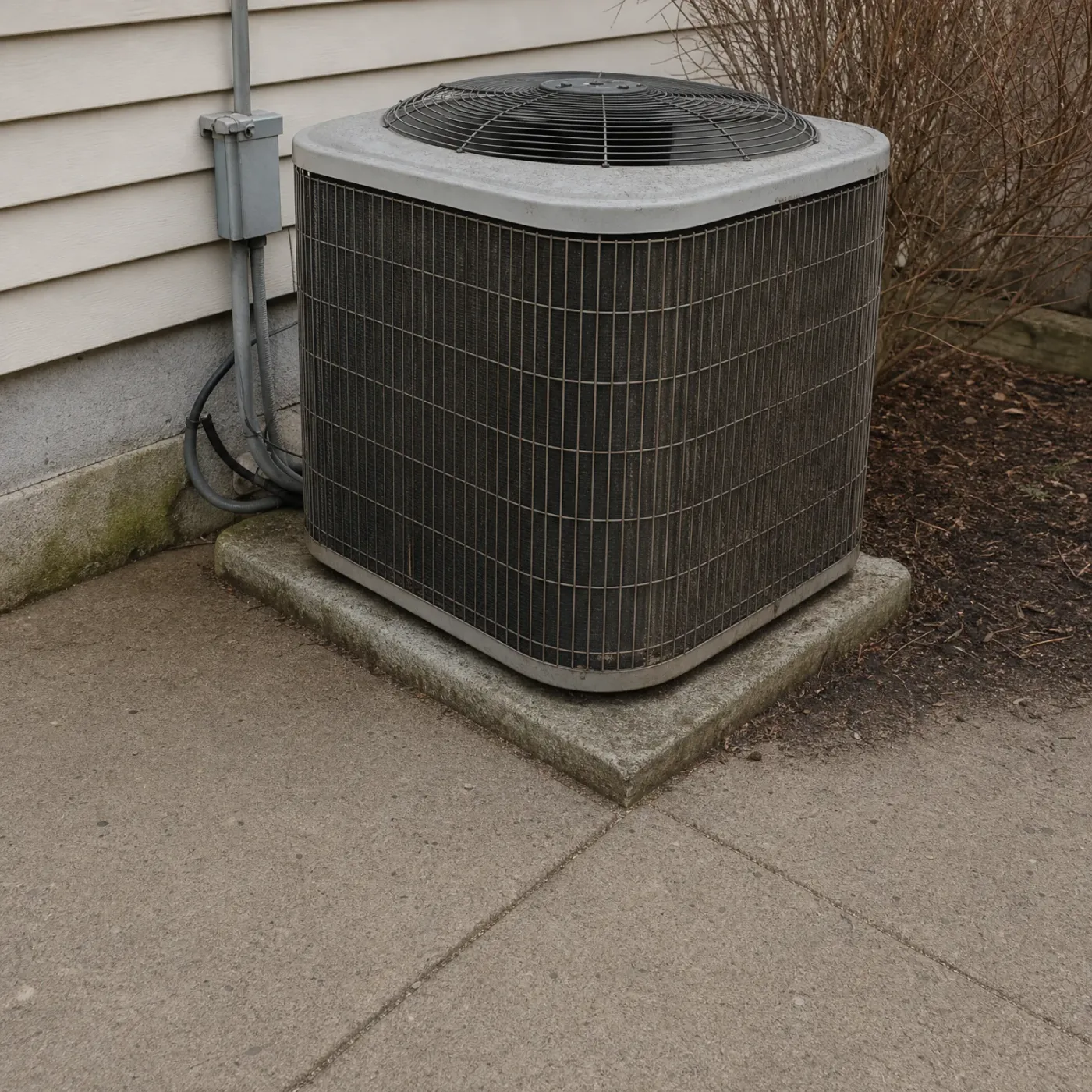
An outdoor air conditioning condenser unit on a concrete pad beside a house with light vinyl siding, an electrical disconnect box and conduit on the wall, bare shrubs and mulch to the right, and a concrete walkway in the foreground.
Before you get your air conditioner repair
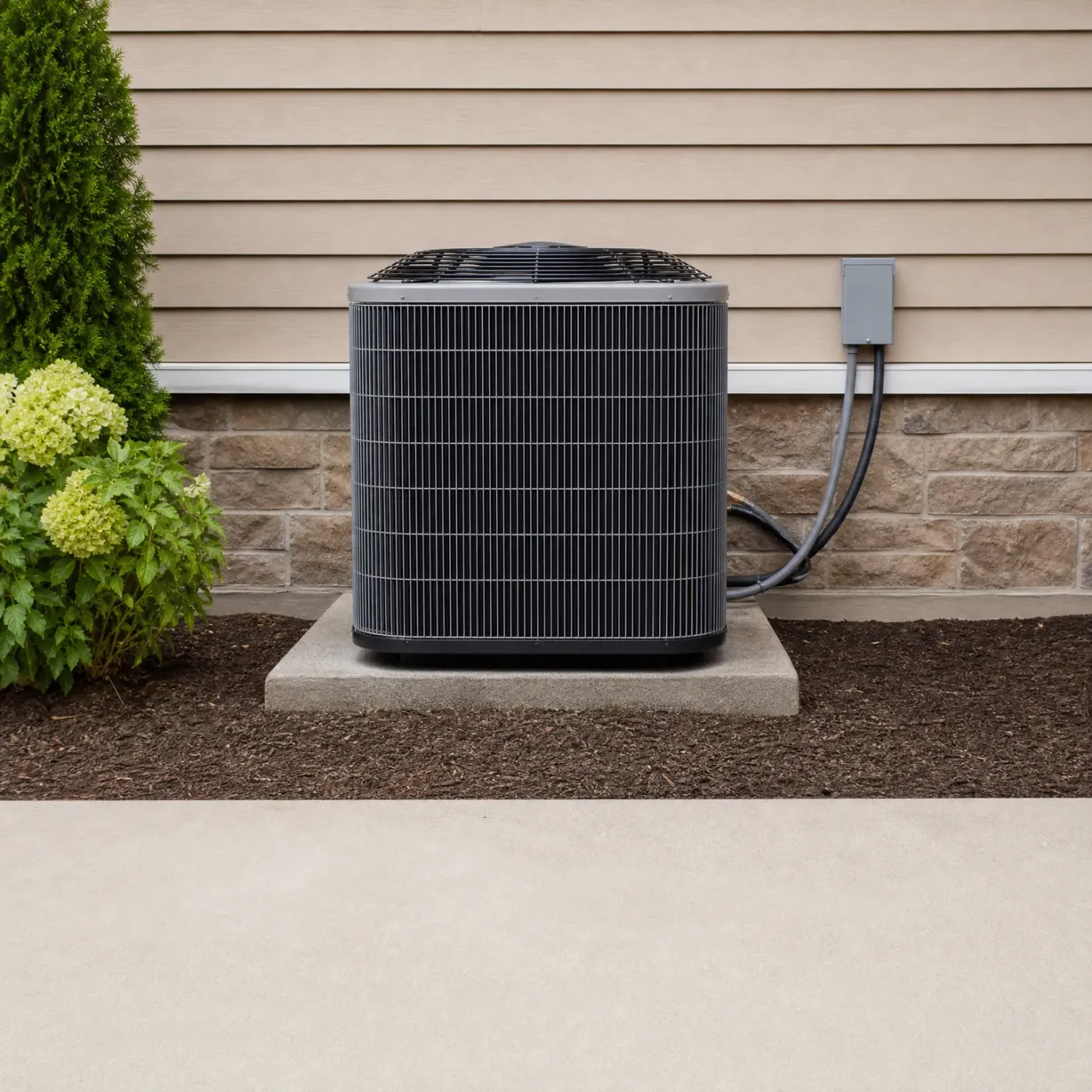
An outdoor air conditioner condenser unit on a concrete pad beside a house with beige horizontal siding and a stone-veneer base, with refrigerant lines running to a gray wall-mounted electrical box, surrounded by dark mulch, a flowering shrub and an evergreen on the left.
After you get your air conditioner repair
A gray outdoor air conditioning condenser unit on a concrete pad beside a house with light horizontal siding, with a mulched planting bed and lawn to the left.

Matched to your air conditioner job

Send the request today and let an air conditioner pro reach out to you.

Tell a local repair pro what your air conditioner is doing.

Connect with a pro

Asking costs nothing, and the choice to hire stays yours.

Run It or Shut It Off

Keep running it

  • The smell usually means heat building at a loose wire or a failing part, and that heat has a path to get worse.
  • A capacitor that's starting to go can fail completely within days, often during the hottest part of the afternoon.
  • Running a unit with overheating wiring puts stress on the compressor, which costs far more to replace than a wire connection.
  • Humidity through a Virginia summer makes your system run longer each cycle, which means more hours of strain on whatever is already overheating.
  • If the smell is coming from the blower compartment, that air is what's moving through your house right now.

Shut it off and call

  • A technician can trace the smell to its source with the panels off, instead of guessing from outside.
  • Catching a loose connection or a weak capacitor early is a smaller repair than replacing a motor it damaged.
  • Your system comes back on once the part is fixed, so you're not without cooling any longer than the repair takes.
  • A contractor who's seen this before knows which three or four spots to check first in your model.
  • Once you send the request, finding someone to come look at it is off your plate.
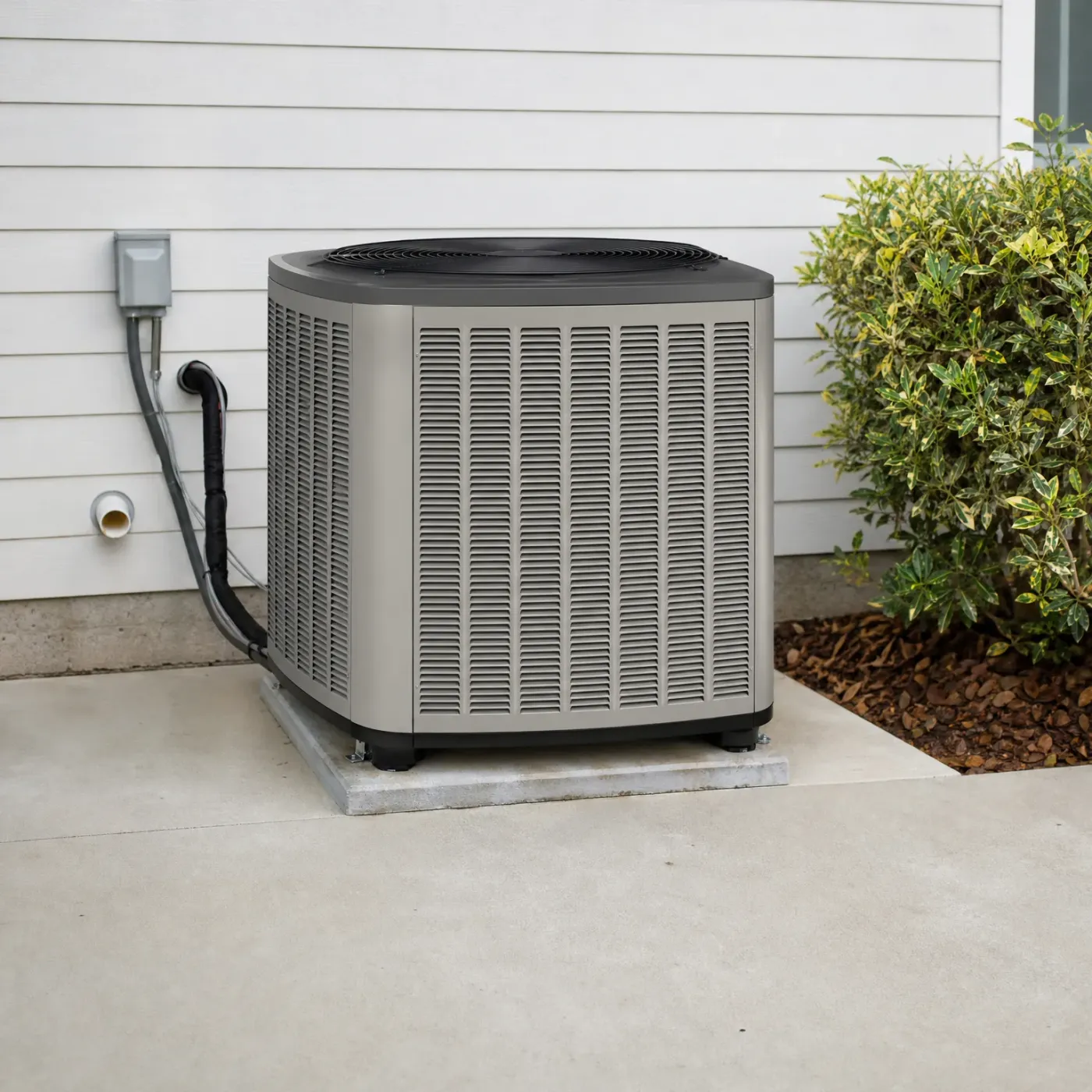
An outdoor air conditioning condenser unit on a concrete pad beside a house with white horizontal lap siding, with an electrical disconnect box and insulated refrigerant line on the wall and a shrub over mulch to the right.

A clean unit, no smell

This condenser sits on its pad against the siding, lines running clean to the disconnect box. Nothing caked on the coil, nothing crowding the cabinet. Air moves through it the way it's supposed to, and there's no smell standing in the yard near it.

An outdoor air conditioner condenser unit on a concrete pad beside a house with light horizontal lap siding, with an electrical disconnect box and conduit on the wall behind it.

A unit showing its age

This one has sat through enough Virginia summers to show it, grime built up around the housing and the lines along the foundation. Weathering like this doesn't cause a burning smell by itself, but it's often what an older unit looks like right before something inside it finally gives out.

A bearded man in a plaid flannel shirt stands indoors looking out a frost-covered window, with a steaming dark blue mug on the wooden sill and snow-covered trees outside.
A smiling man in a dark blue T-shirt sits on a light gray sofa in a living room with a wooden shelf and window behind him, with a laptop edge visible in the foreground.

Why the smell shows up outdoors first

The outdoor unit holds the capacitor, the contactor, and the wire connections feeding the compressor, so that's usually where overheating starts. It sits outside, exposed to whatever blows against it off the yard or the siding. In Virginia, that means pollen in spring, cut grass through summer, and leaves once fall starts dropping them. Any of that can settle into the cabinet and sit against the wiring. Heat that would otherwise dissipate into open air instead builds against a wire nut or a terminal, and that's enough to start melting insulation long before anything catches fire. The smell is often your only early warning, since the compartment is sealed and you can't see what's happening inside it.

Why it rarely fixes itself

A connection that's heating up under load keeps heating up under load. Every time the compressor cycles on, that same spot gets hot again, and each cycle leaves a little more damage behind. Through a Virginia summer, the unit might run a dozen times a day, so a wire that was just warm on Monday can be scorched by Friday. The smell doesn't fade because the part causing it isn't recovering between cycles, it's getting worse. Once insulation has started to melt, it stays weakened even after the system cools back down, which is why the smell tends to come back sooner the next time it runs.

Power costs 15.28 cents per kilowatt-hour statewide

At 15.28 cents per kilowatt-hour, your AC is already one of the bigger draws on your electric bill most months. A failing part that's overheating pulls harder than it should, so the burning smell can mean your cooling costs more to run even before it fails outright.

EIA-861 2025 statewide residential average

A burning smell from your AC has a cause, and it's one a licensed contractor can find fast, usually a capacitor, a loose wire, or a motor working harder than it should. You don't have to identify which one it is before asking for help. Once you send the request, the job of tracking down a contractor who handles this isn't yours to carry anymore, someone who works on Virginia homes will reach out to you directly. Shutting the system off until then costs you some cooling during a sticky stretch, but it keeps a small electrical problem from turning into a bigger one, or a compressor you have to replace. That tradeoff is worth it. The smell is your AC telling you something's wrong before it fails outright. Catching it now, rather than waiting through another humid afternoon, is what keeps a repair a repair instead of a replacement.


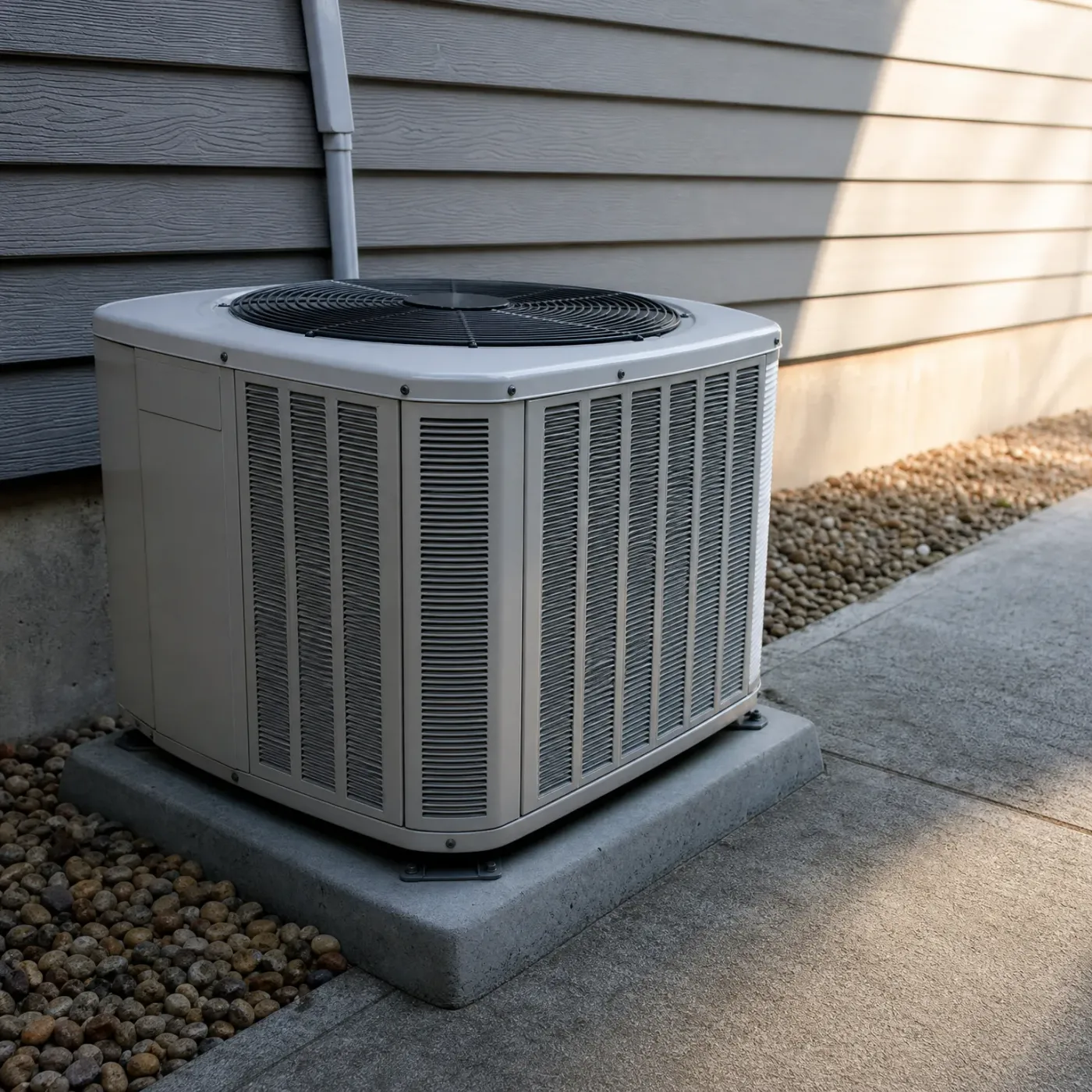
A beige outdoor air conditioner condenser unit with a top fan grille sits on a concrete pad beside a house with horizontal lap siding, bordered by gravel and a concrete walkway.

An air conditioner pro near you

Find a pro near me

Get the air conditioner repair search off your mind today.

No fee to send it, and nothing to sign.