Why your AC outdoor fan isn't spinning in Virginia

Step 1 of 3: Equipment

A handful of things stop that fan, and most of them are simple. The capacitor that kicks the motor into motion can weaken and quit, especially after a long run of hot days, which is common across a Virginia summer. The fan motor itself can seize or burn out from age and constant use. Sometimes the problem is simpler still, a breaker tripped from the unit working hard, or a thermostat setting that never actually called for cooling. Debris wrapped around the fan blade will also hold it still even when the motor is trying to turn it. None of these are things to diagnose by ear through the side of the cabinet. A unit that runs with no outdoor fan is pushing heat into the coil instead of out of it, and the compressor inside can take damage if that keeps going. The fix depends entirely on which of these it actually is.

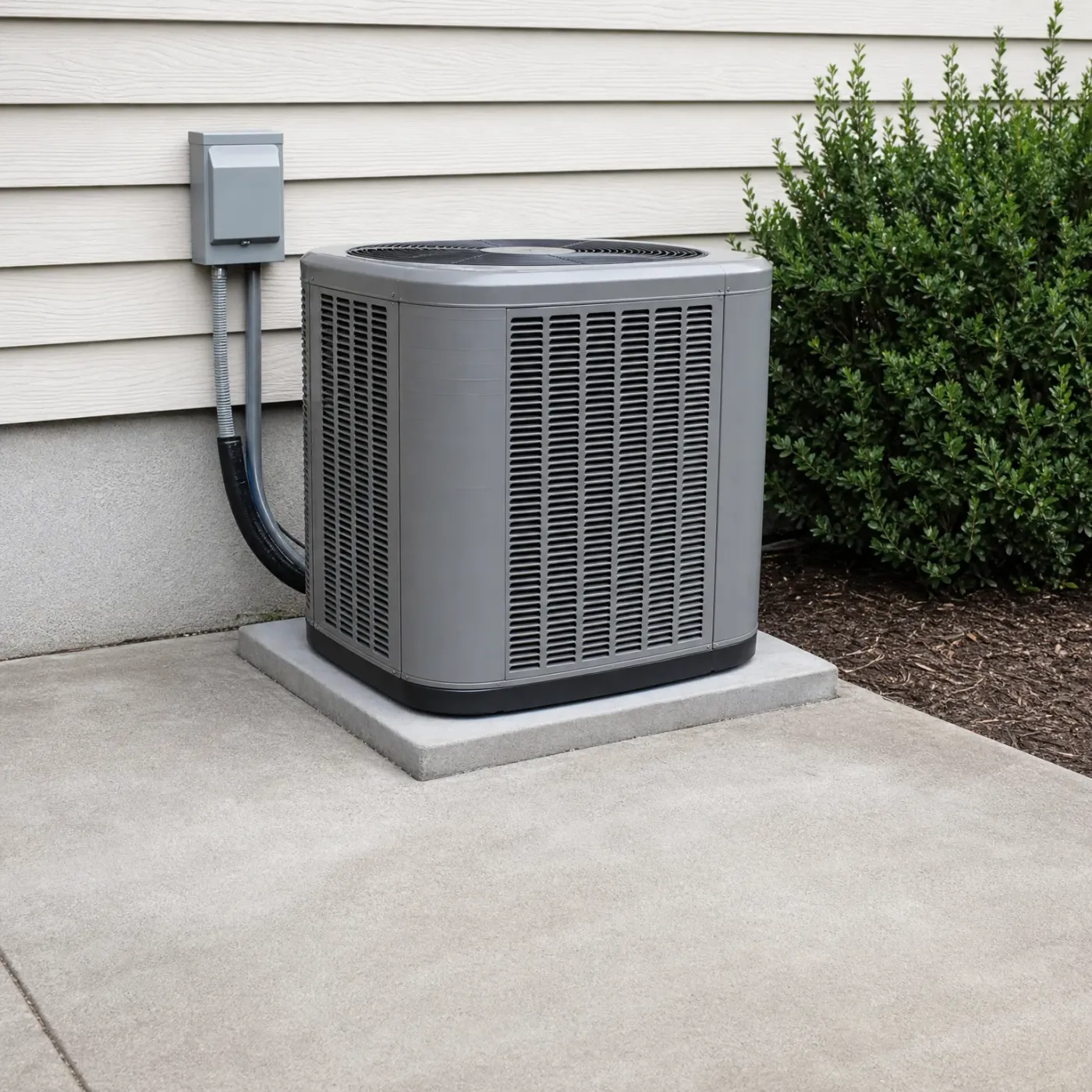
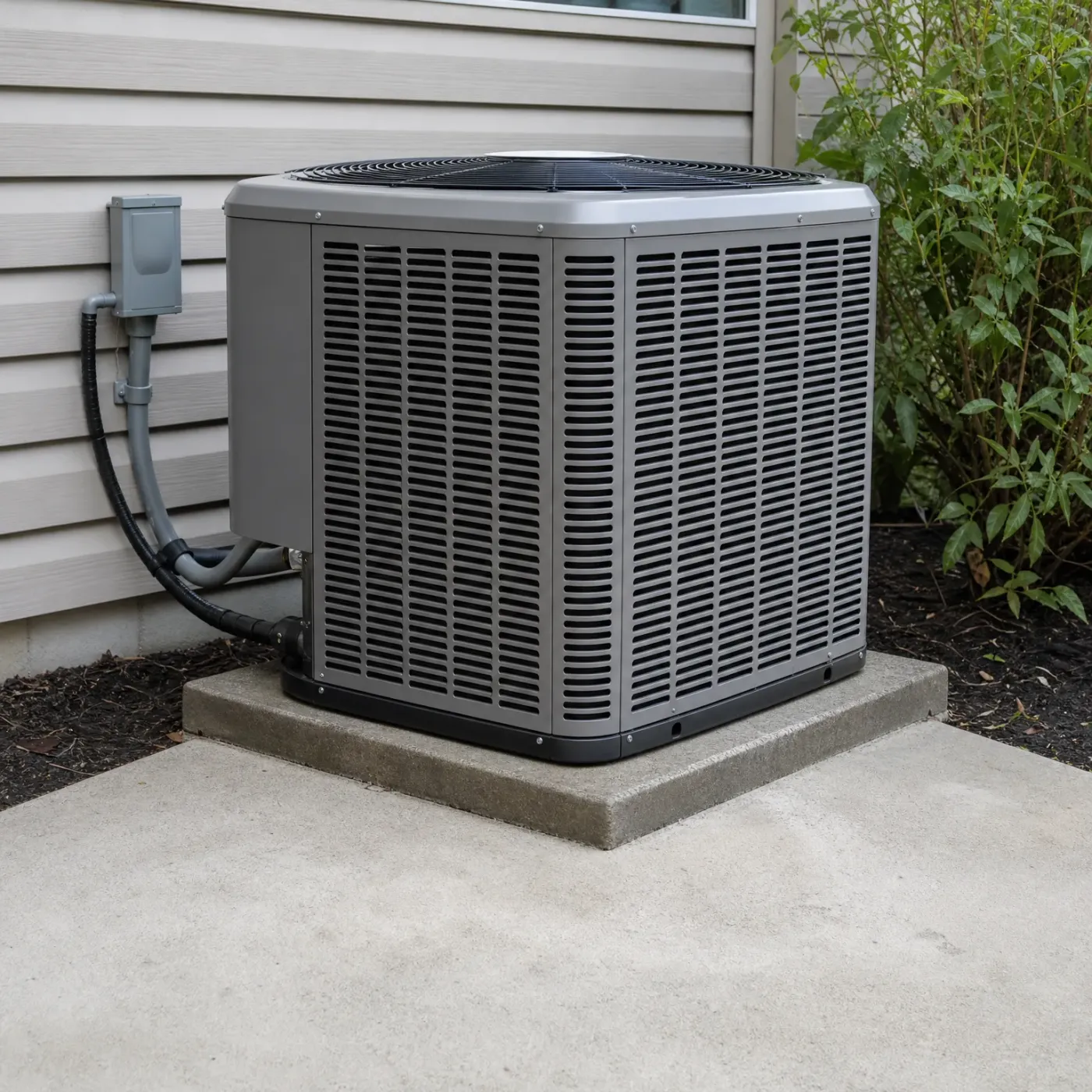
A gray outdoor air conditioner condenser unit on a concrete pad beside a house with light vinyl siding, with an electrical disconnect box and conduit on the wall and a leafy shrub with dark mulch to the right.

Fan running right

Air moves out the top of the unit and you can feel it from a few feet away. The fan spins steady and pulls warm air through the coil without hesitation, even on a stuck, humid afternoon. The outside unit should sound like a steady hum, not a hard buzz with no motion.
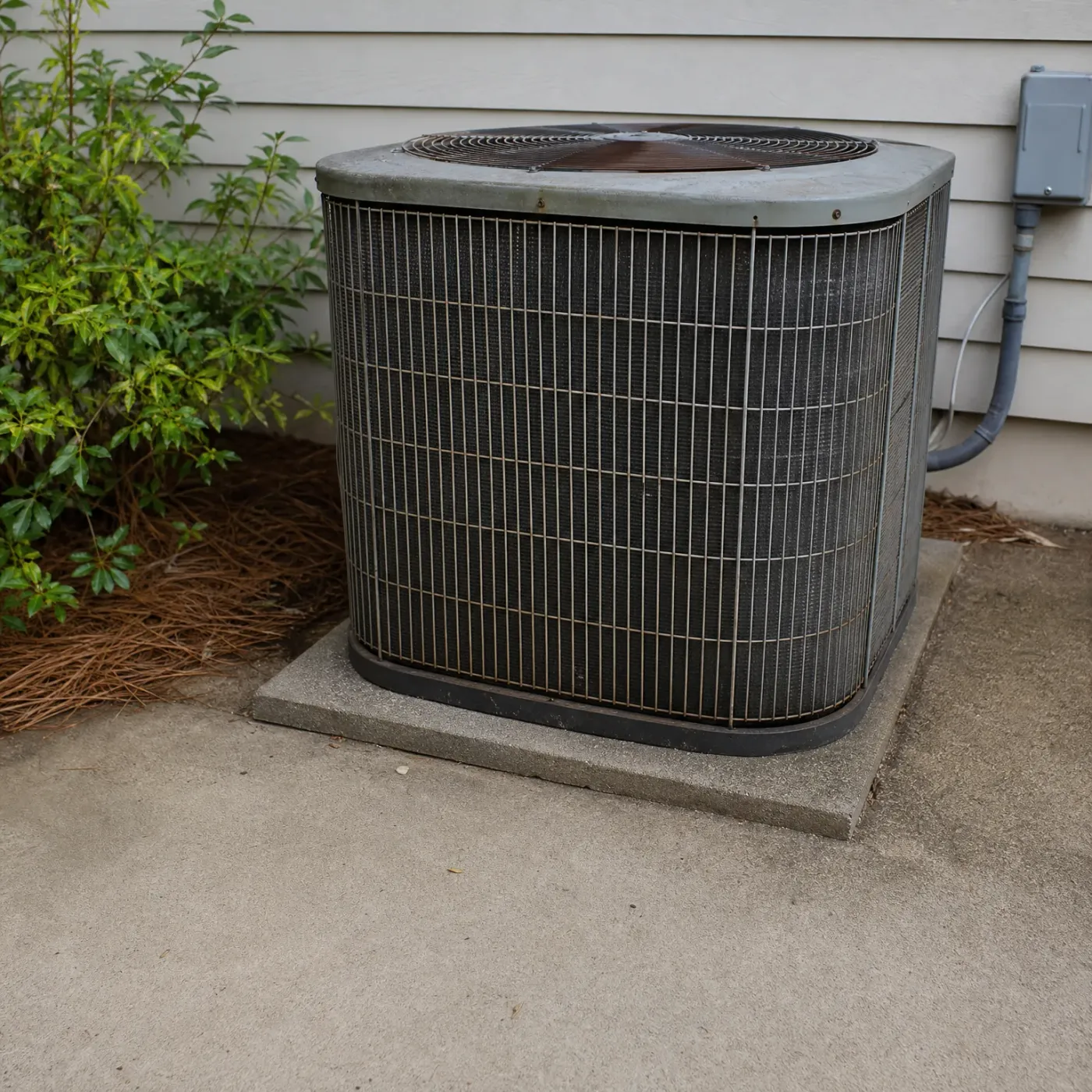

An outdoor air conditioner condenser unit on a concrete pad beside a house with horizontal lap siding, with a gray electrical disconnect box and conduit on the wall and a green shrub over pine-needle mulch at left.

Fan not moving

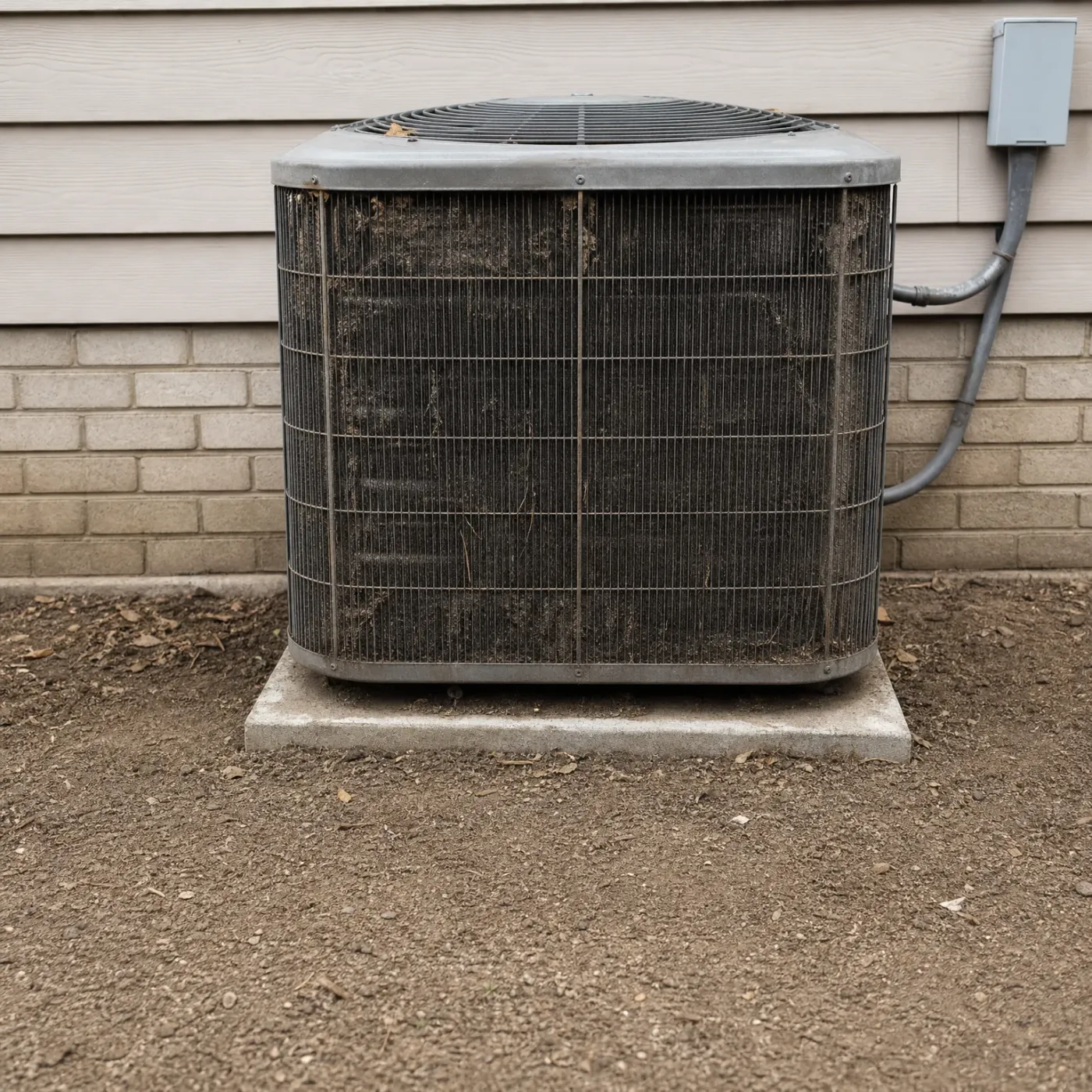
The unit hums or clicks but the blades stay still, or it's silent at the disconnect box with the breaker on. A grille caked with dirt and pine needles restricts airflow and makes a struggling motor work harder. Either way, the system inside can't push cool air while that fan sits idle.

A woman in a cream cowl-neck sweater sits by a window with snow outside, in a dimly lit living room with a sofa, lit lamp, mirror, candles and a fireplace.
A woman in a gray turtleneck sweater sits beside a large window looking out at snow-covered evergreen trees, in a dimly lit living room with a lit fireplace, lamps, couch and houseplant.
A woman in a cream turtleneck sweater stands beside a large window with snow-covered ground and bare trees outside, in a dimly lit living room with lamps, a sofa and framed art.
A woman in a grey cowl-neck sweater stands indoors near a window, looking out at falling snow, with a lamp, framed picture and couch in the warmly lit room behind her.

The outdoor unit runs on two separate motors. One turns the compressor, one turns the fan, and losing one doesn't mean you lose the other. When the fan won't turn, the usual suspect is the run capacitor, the part that gives the motor its first push to get spinning. A weak capacitor still sends power to the motor, so you hear a hum, but there's not enough behind it to start the blade moving. Give that blade a push by hand and if it takes off, that's your answer, and it's the capacitor, not the motor. The motor itself can seize too, usually after years of dirt and moisture working past the bearings under the top grille. Then there's the contactor, a relay that switches power to the whole outdoor unit. On some systems it feeds both motors through the same connection, so one pitted contact can take out the fan while the compressor keeps running, or stop the whole unit cold. Which one it is changes what gets fixed, not whether it needs fixing.

What's actually stopping the fan

  • The outdoor unit holds two motors, one for the compressor and one for the fan, and either can fail while the other keeps running.
  • A run capacitor stores the charge that gives the fan motor its first push, and a weak one leaves the motor humming without turning.
  • The fan motor sits under the top grille on a shaft that can seize with age or after enough seasons of dirt and moisture working into the bearings.
  • A contactor relay closes to send power out to the whole outdoor unit, and a stuck or pitted one can cut power to the fan while the compressor still runs.
  • Some outdoor units wire the fan and compressor through the same contactor, so a single bad connection can stop both at once or just one.
  • A fan motor that hums but does not spin on its own will often start if nudged by hand, which points to the capacitor rather than the motor.
A gray outdoor air conditioning condenser unit on a concrete pad beside a house with horizontal lap siding, with a wall-mounted disconnect box and conduit to the left and a green shrub with mulch to the right.
A clean unit lets the fan pull air through the coil without working against anything blocking it.
A dirty outdoor air conditioning condenser unit on a concrete pad beside a house wall with horizontal siding above a painted brick foundation, with a gray electrical disconnect box and conduit on the wall.
Fins packed with dirt and grass clippings trap heat against the coil, and that is often why the fan inside struggles or stalls.

Why does my AC fan hum but not spin?

That hum means the motor is getting power but something is stopping it from turning. In the thick heat of a Virginia summer, with the unit running for hours at a stretch, this is one of the most common ways it shows up. You can hear it from across the yard, and it usually means the problem is close to starting, not far off.

The capacitor is failing and the motor can't get moving on its own

The run capacitor gives the fan motor its first push to get spinning, then the motor keeps itself going. When the capacitor weakens, the motor gets just enough current to hum but not enough to turn. A fan blade nudged by hand sometimes spins right up when this is the cause, though that's a sign, not a fix, and the power should be off before anyone touches it. Heat wears capacitors down faster, and a Virginia summer gives one plenty of long, hot afternoons to do it. Less often, the motor bearings themselves have seized, and a new capacitor won't change that. Either way, a licensed contractor can test the capacitor in minutes and tell you which it is.

A bearded man in a blue and brown plaid flannel shirt stands indoors looking out a window at snow-covered trees, with a ceramic mug on the windowsill.
A man in a blue T-shirt sits on a light gray sofa, laughing while looking at an open laptop in the foreground, with a framed picture, lamp and potted plant behind him.

An air conditioner pro near you

A dead fan on a muggy Virginia afternoon means the indoor air stops cooling fast, since the outdoor unit can't push the heat out of the house. Figuring out whether it's the capacitor, the motor, or something blocking the fan takes someone who can open the cabinet and test the parts, and most homeowners don't have the time or the parts on hand to chase that down themselves. There's also the usual slog of finding someone to do it: searching for a contractor who works on AC units near you, calling a few, explaining the same thing about the fan not spinning to each one, then waiting on quotes to compare. Handing that off means you skip all of that and get matched with a contractor suited to this repair, who will reach out to you directly. With the heat this sticky, the sooner that fan is sorted, the sooner the house stops holding onto the warm air it's been pulling in all day.

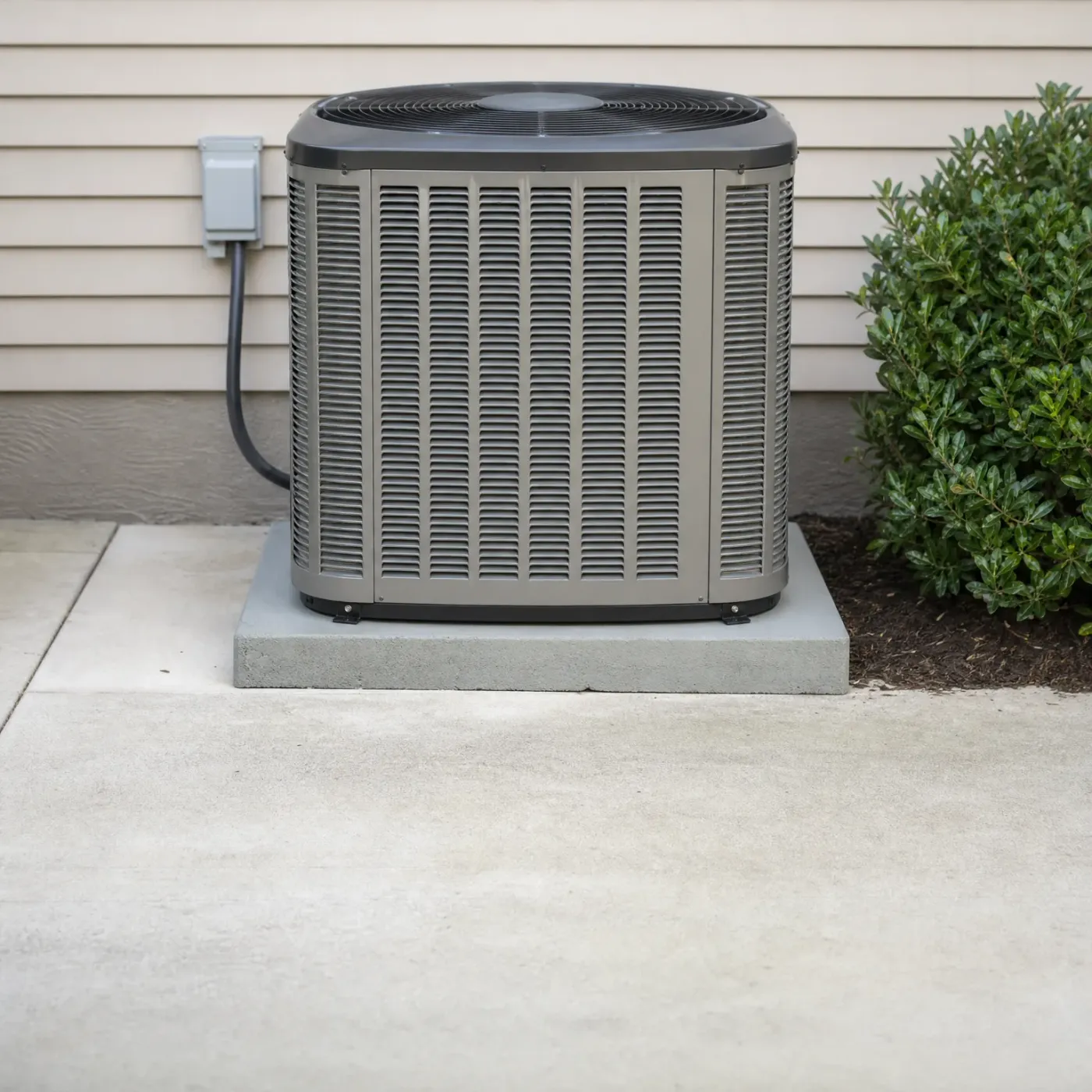
An outdoor air conditioning condenser unit on a concrete pad beside a house with horizontal lap siding, with an electrical disconnect box and conduit on the wall and a green shrub to the right.

What a working unit looks like

The cabinet is clean and the louvered panels are free of grime. The disconnect box on the siding feeds power down to the unit without issue, and the fan on top turns the moment the system calls for cooling.

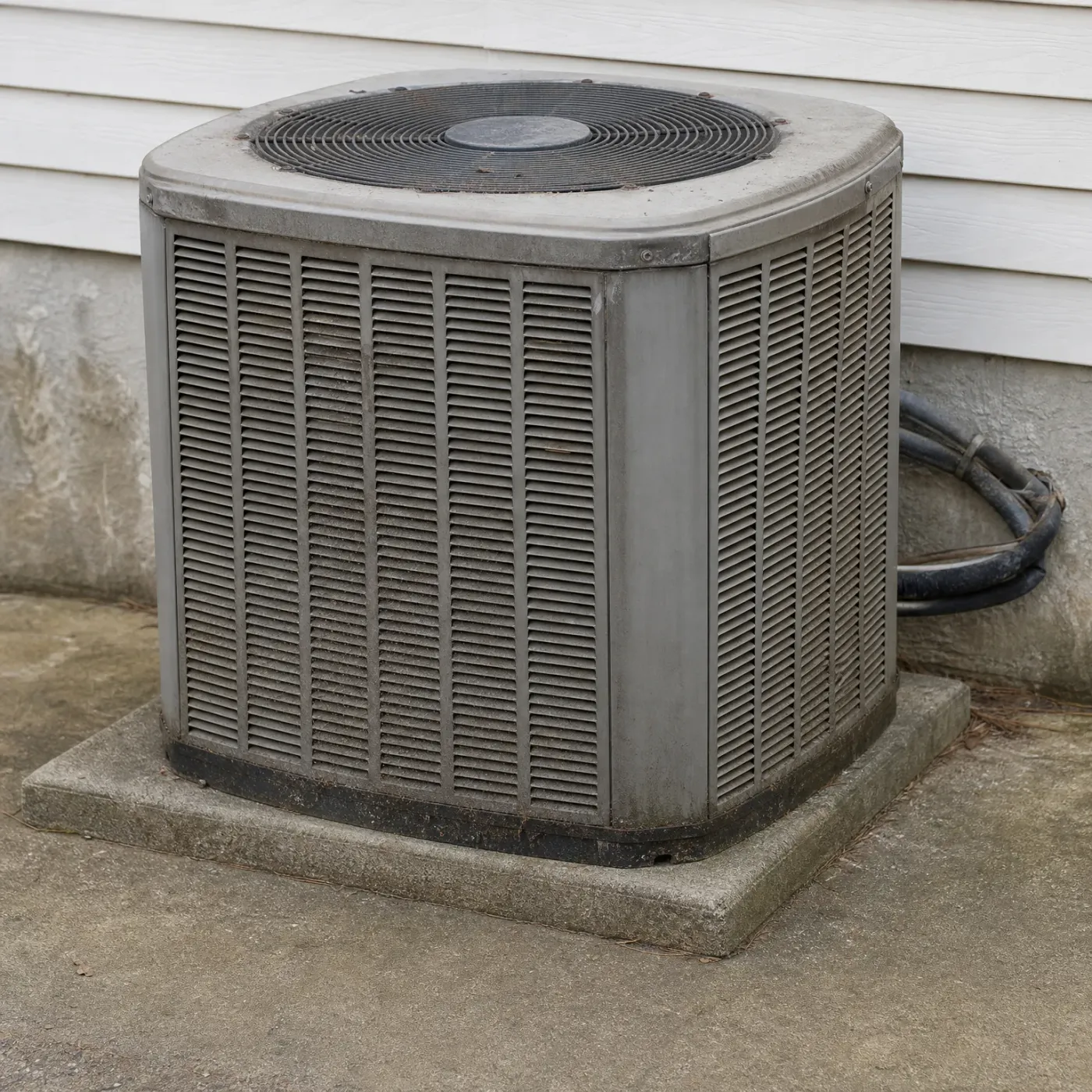
An outdoor air conditioner condenser unit on a concrete pad beside a house with horizontal siding and a lower concrete foundation wall, with coiled refrigerant lines at right.

What a struggling unit looks like

Years of weather have dulled the panels and left dirt packed into the grille. Refrigerant lines run clear at the back, but a unit this worn is more likely to have a tired capacitor or a motor nearing the end of its life.

Power costs 15.28 cents per kilowatt-hour statewide

At 15.28 cents per kilowatt-hour, every hour your outdoor fan sits still and the compressor runs anyway is money spent without any cooling to show for it. A stalled fan does not slow your power use, it just stops the heat from leaving.

EIA-861 2025 statewide residential average

What a Still Fan Tells You

  • A fan that won't spin almost always traces back to a weak capacitor, a failing motor, or debris blocking the blades.
  • Catching it early keeps a stalled fan from turning into a compressor replacement later in the summer.
  • Instead of searching for contractors and calling around to find one who's free, you get matched with one who handles this directly.
  • You explain the problem once, not over and over to every company you call for a quote.
  • The compressor can keep running even with a dead fan, so the unit draws power at 15.28 cents per kilowatt-hour with nothing to show for it.
  • Once you know which of the three causes fits what you're seeing, the next step is getting someone out to confirm it.

Three things stop an outdoor fan from spinning: a weak capacitor, a motor that has seized or burned out, or debris jamming the blades. None of them fix themselves, and none of them get better while the compressor keeps running without the fan to cool it. That is the part worth sitting with. The unit doesn't stop drawing power just because the fan stopped turning, so a day or two of waiting costs you in both directions, on the power bill and on the strain working its way into the compressor.

You don't need to know which of the three it is before you ask for help. You need someone who can open the cabinet, test the capacitor, check the motor, and tell you straight which one failed. What you can skip is the part that has nothing to do with your AC: finding that person. Instead of calling one company after another, repeating the same description of the hum and the still fan each time, and then sitting with a stack of quotes you have to compare line by line, you get matched with a contractor who takes this kind of call and already knows what to look for. You explain it once.

Virginia summers don't give a stalled fan much room to wait. The heat keeps building indoors whether the unit outside is working or not. Knowing it's one of three things narrows the problem. Getting the right person out to confirm which one is what actually gets the air moving again.

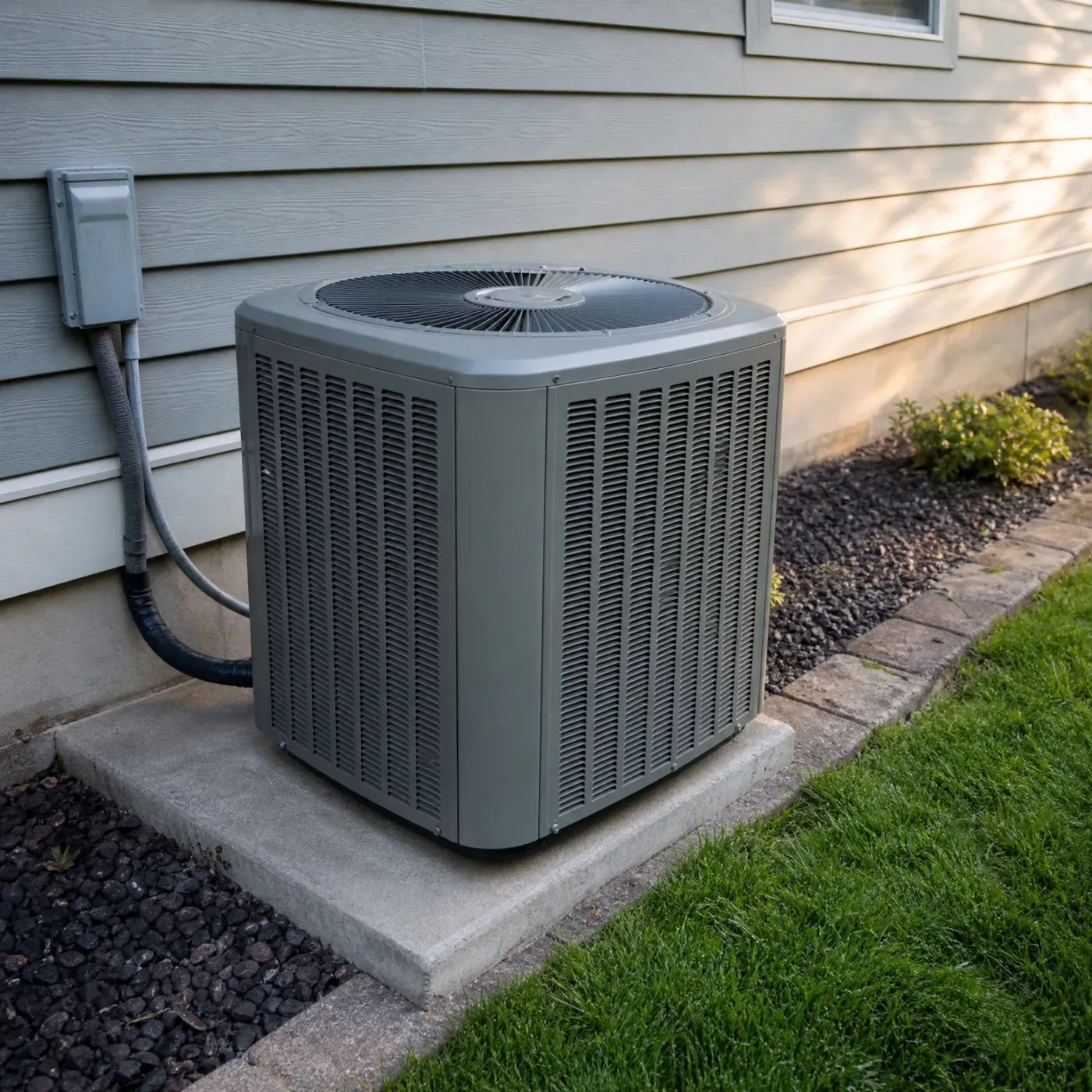
A gray outdoor air conditioning condenser unit on a concrete pad beside a house with horizontal lap siding, with a wall-mounted disconnect box and conduit, lava rock mulch, a shrub, and grass nearby.

A local pro for your air conditioner repair

Request a pro

Skip searching for an air conditioner pro and answer a few questions instead.

You only hire the pro if you want to.