Why your AC compressor won't kick on in Virginia

Step 1 of 3: Equipment

Why won't my AC compressor turn on in Virginia?

Your AC is running, the fan might even be blowing, but outside the compressor stays quiet. In Virginia's sticky summers, that unit is what actually cools the air, so nothing changes in the house no matter how long the system runs. You want to know what's keeping it from starting before the heat makes the evening miserable.

Most often a bad capacitor or a tripped safety switch is keeping it off

The compressor needs a jolt of power to start spinning, and a weak or failed capacitor can't deliver it anymore. That's the most common reason a unit sits silent while the rest of the system seems to run fine. A tripped high pressure switch does the same thing, shutting the compressor down to protect it when something downstream isn't right. With Virginia summers running long and humid, these units cycle on and off constantly from May through September, and that repeated strain is exactly what wears a capacitor down over the years. A compressor that won't start isn't a small issue. Running the system this way, or trying to force it, risks damage to a part that's expensive to replace on its own.

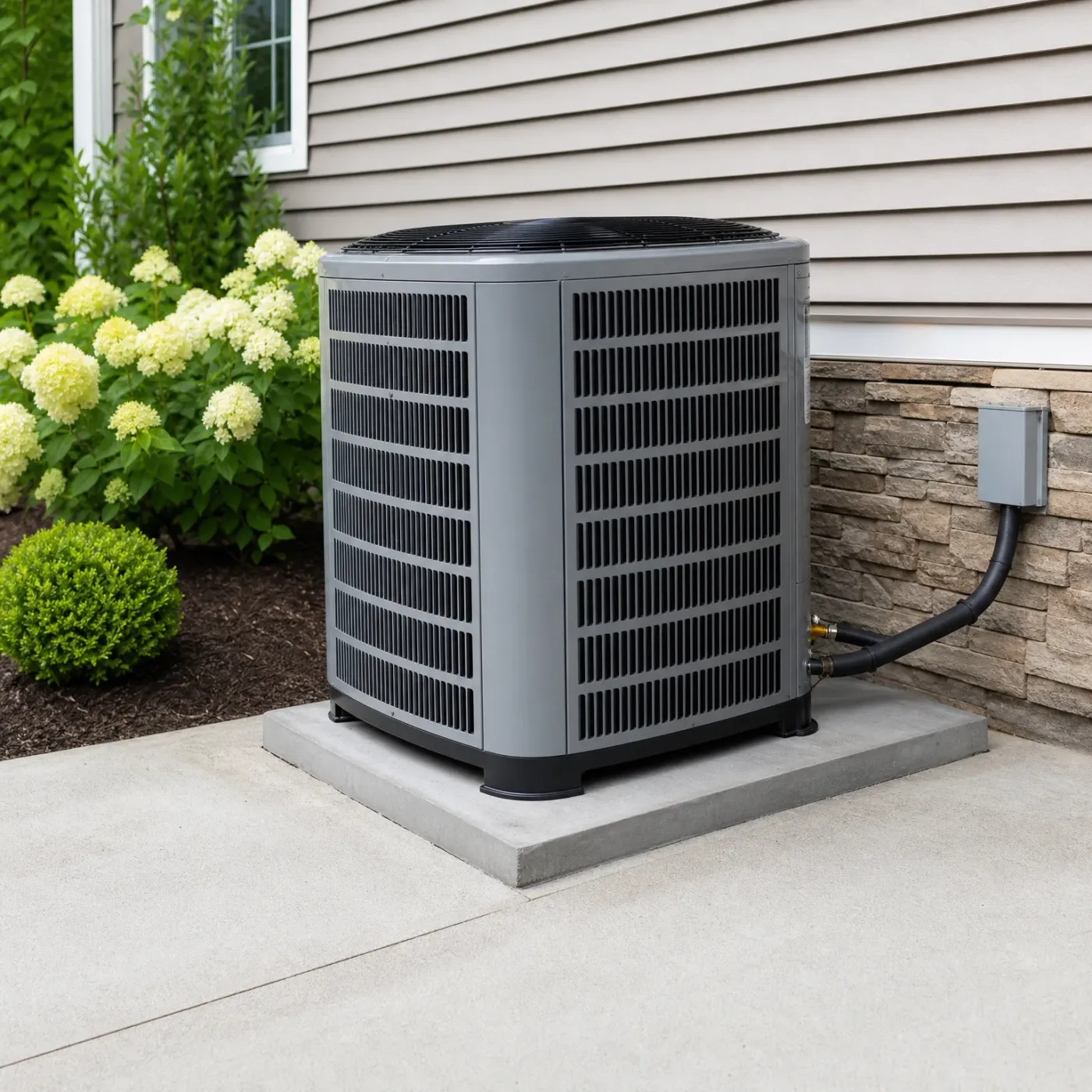
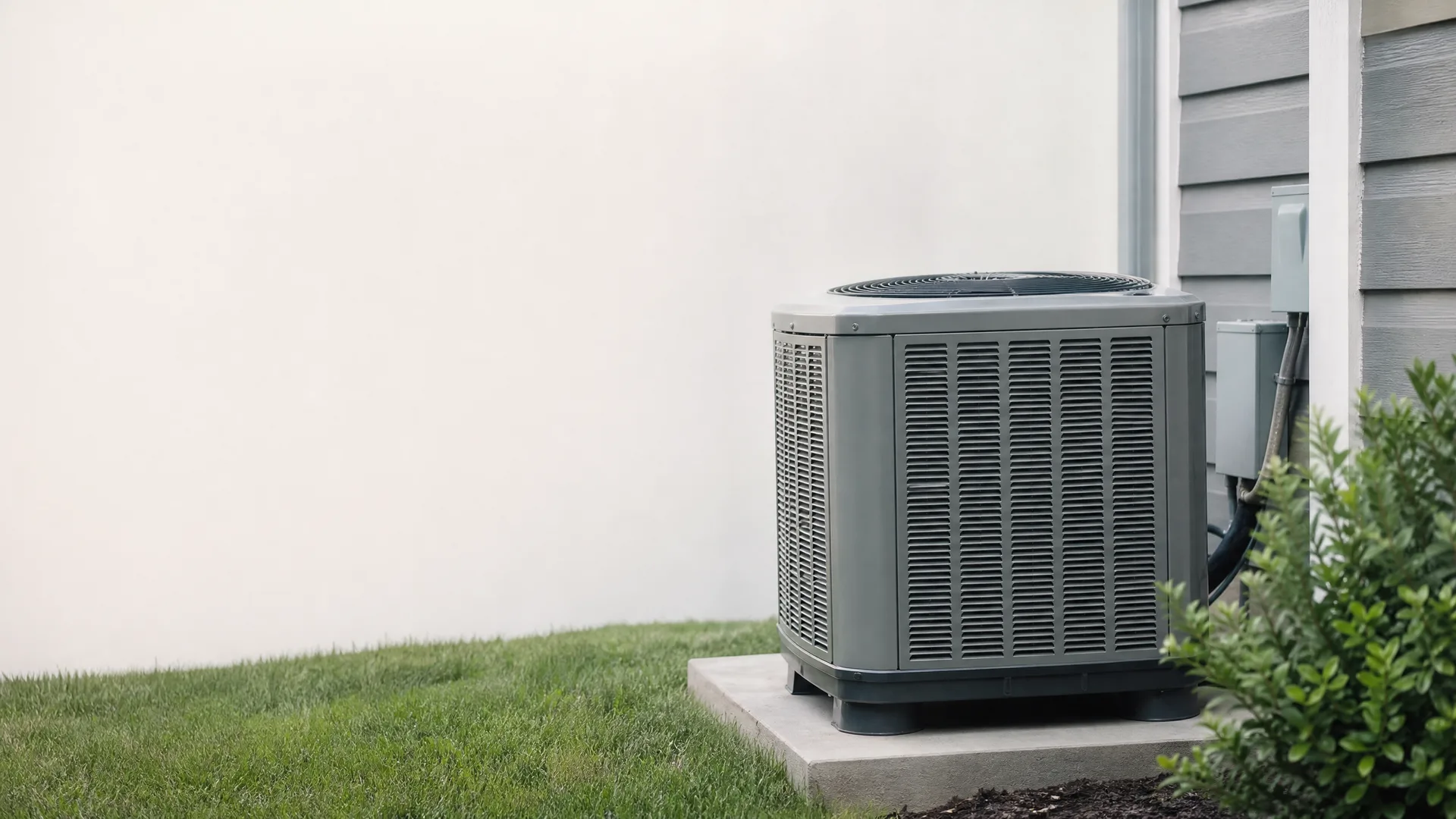
A gray outdoor air conditioning condenser unit on a concrete pad beside a house with horizontal siding and a stone veneer base, with refrigerant line and electrical disconnect box on the wall and flowering shrubs to the left.

Compressor cycling normally

The unit outside hums on when the house calls for cool air and shuts off once the house reaches temperature. You can hear it start, run for a while, then go quiet. Lines running into the wall stay cold to the touch while it works.

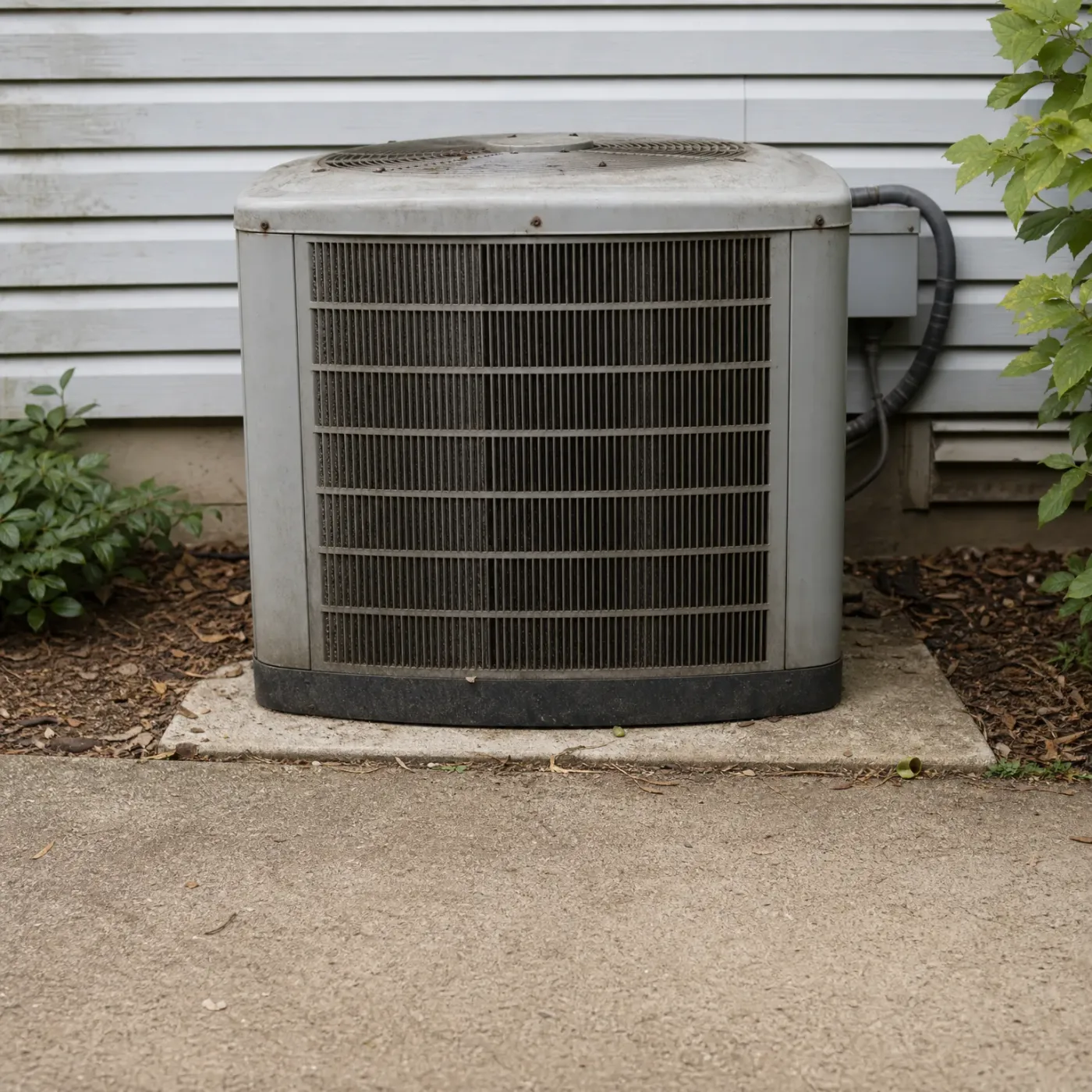
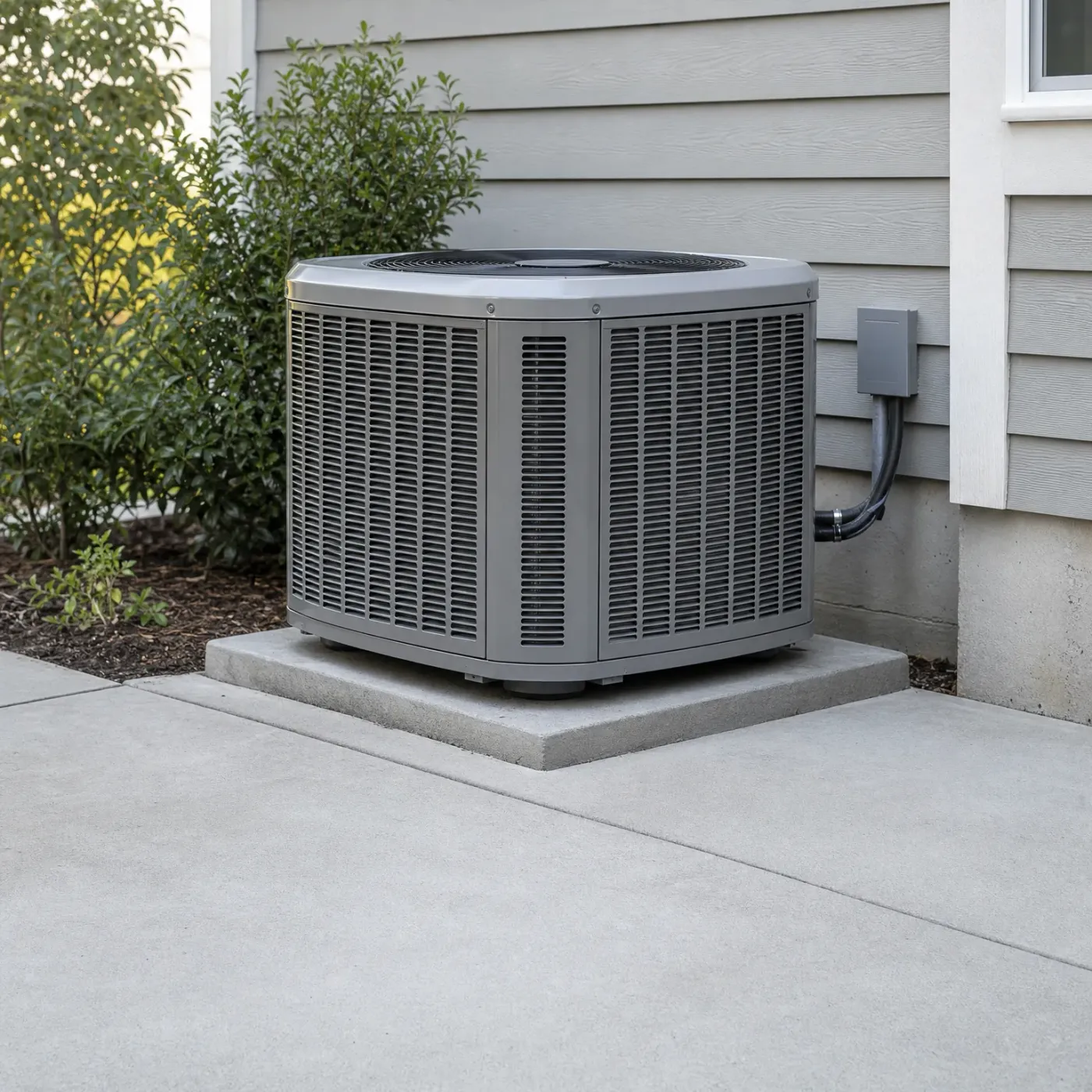
An outdoor air conditioner condenser unit on a concrete pad beside a house with light gray horizontal siding, with mulch and green shrubs on either side and a concrete walkway in the foreground.

Compressor staying silent

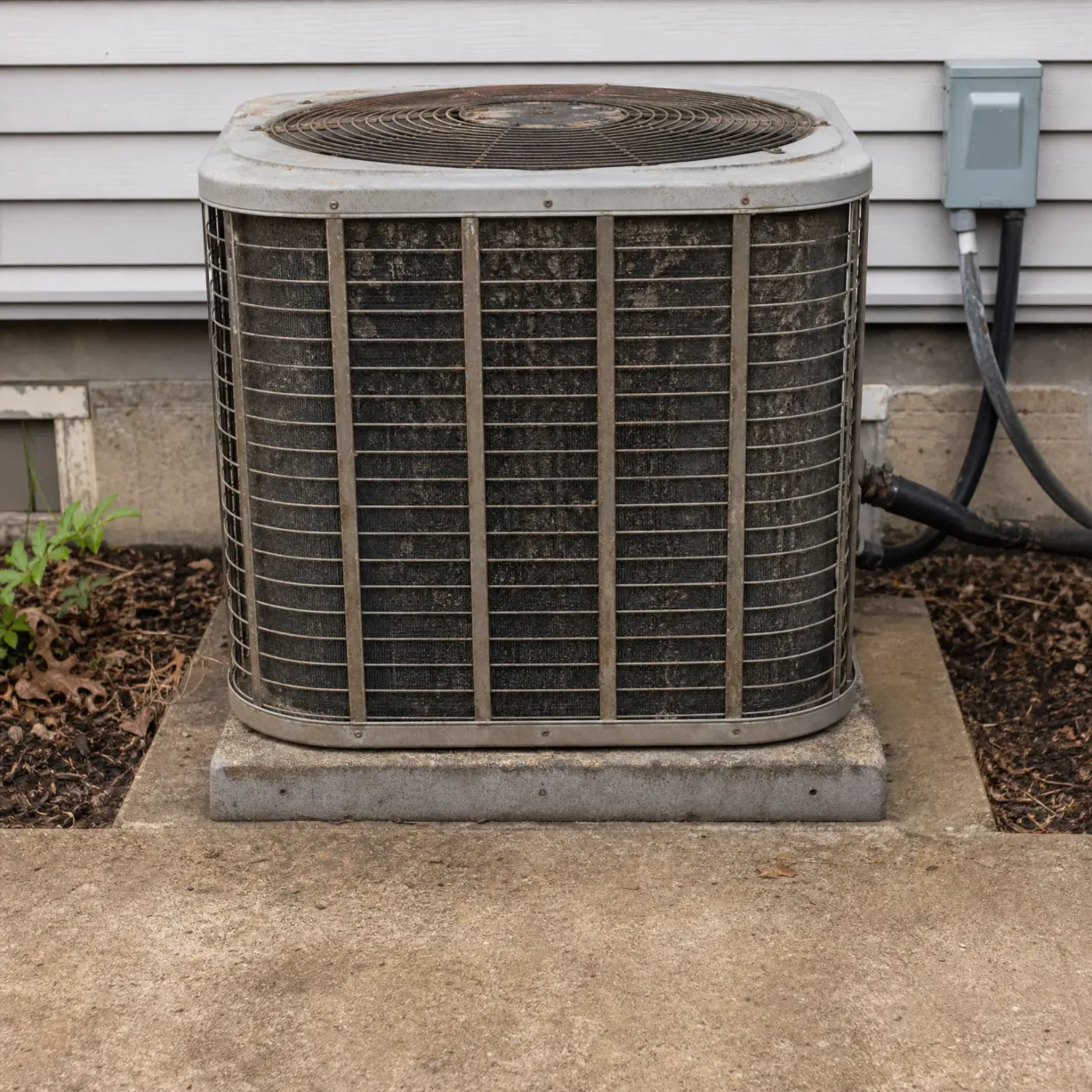
The fan on top may still spin, but the compressor itself never kicks in. No hum, no vibration from the unit. Grime and weathering on an older unit like this one often go along with wiring or a capacitor that's worn out from years outside.

Call Now or Check First

Call for repair now

  • If the compressor stays silent while the fan runs, the thermostat and fan aren't the problem, so a service call finds the real cause faster.
  • A capacitor that's failed usually shows a quiet hum or a click with no start, and that part only gets replaced by someone opening the unit.
  • Running the system for days with a tripped overload or a failed contactor can push more strain onto the compressor itself.
  • Refrigerant lines that stay warm to the touch point to a charge or airflow issue that a gauge set diagnoses, not a guess.
  • Virginia's humidity means every day the compressor doesn't run is a day moisture and heat build up inside the house with nowhere to go.

Wait and watch

  • A breaker that tripped once from a power blip may reset and run fine, so flipping it back on costs nothing to try first.
  • If the outdoor unit was recently cleaned or moved, give it a few minutes, some units pause briefly before the compressor engages.
  • A thermostat set incorrectly or with a dead battery can look like a compressor failure when the equipment outside is fine.
  • Checking that the outdoor disconnect switch is pushed in takes a minute and sometimes that's the entire reason it's not starting.
  • Waiting through a heat wave without cooling in Virginia means the house keeps gaining heat and humidity the whole time.
A smiling bearded man in a dark green hooded jacket and blue t-shirt sits on a couch in a living room with shelves, a potted plant, and a bowl of popcorn on a wooden table.
A smiling man in a green long-sleeved shirt sits on a beige sofa in a living room, with a bowl of popcorn in the foreground, a large potted plant and shelving behind him.
A smiling man in a dark blue T-shirt sits on a couch in a dimly lit living room with a bowl of popcorn and a remote on a wooden table, a lit floor lamp and bookshelves behind him, and windows showing greenery.
A smiling bearded man in a dark green long-sleeved shirt sits on a leather couch in a living room, with a bowl of popcorn and a remote control on a wooden table in the foreground.

Is your house staying hot while the unit sits outside doing nothing

You'll feel it first in the rooms upstairs, since those warm up fastest. The thermostat might say 78 and climbing, and nothing you do changes it. Outside, the unit is dead quiet when it should be running, no hum, no click, no vibration. Put your hand near the outdoor lines and they're warm instead of cold. Inside, the air coming from the vents is barely cooler than the room itself. Leave it alone through a few more Virginia afternoons and the house just keeps heating up, which is hard on anyone inside, especially if there are young kids, older adults, or pets who can't tell you how bad it's gotten.

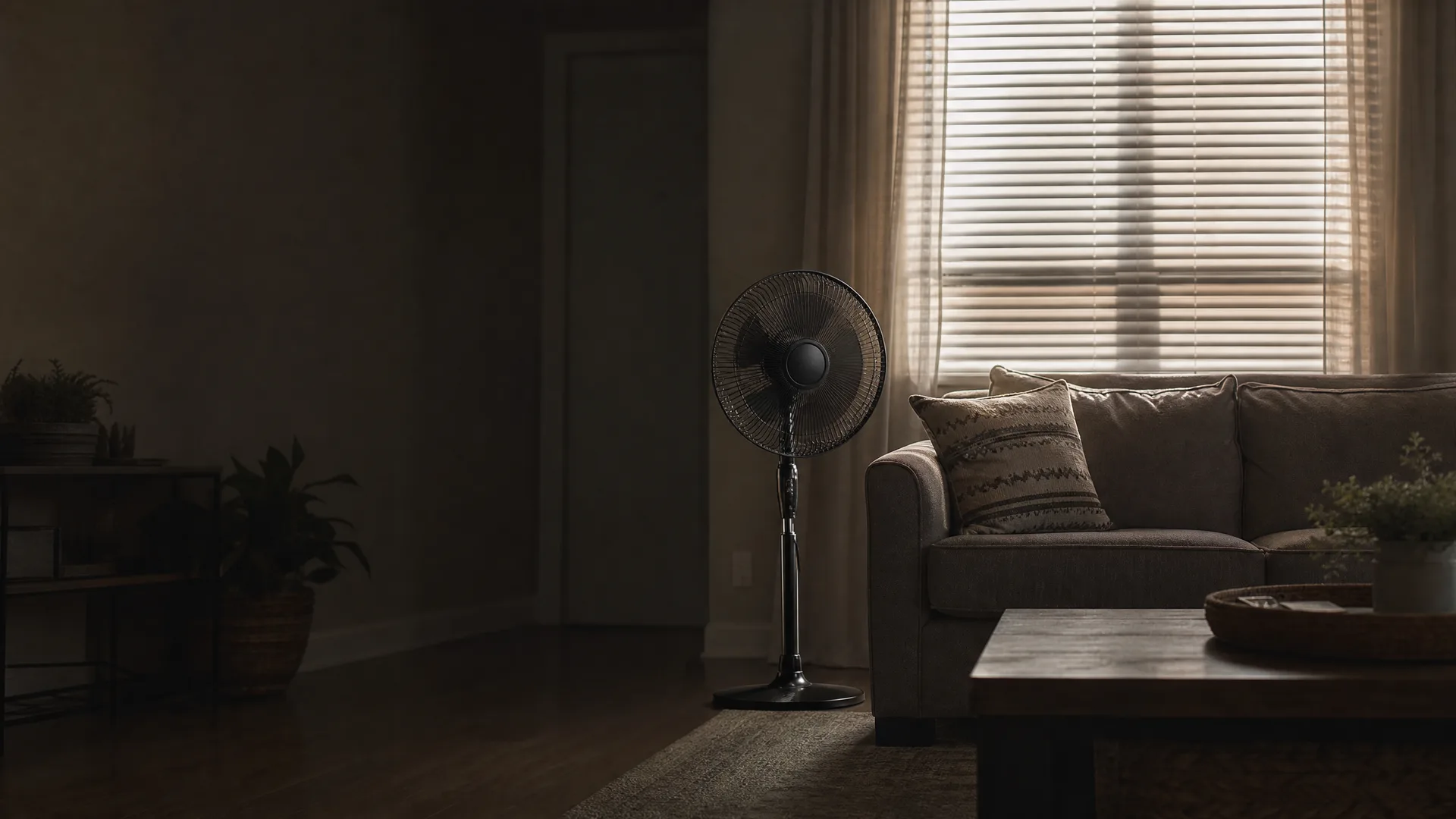
A dimly lit living room with a black pedestal fan on a wood floor beside a gray sofa with a patterned pillow, a wooden coffee table in the foreground, potted plants at left, and a curtained window with blinds behind.

It's just past two in the afternoon and the blinds are drawn against the sun. The floor fan next to the couch is turning on high, pushing the same warm air around the room. You've got a glass of ice water sweating onto the side table. Outside, past the window, the unit on the pad sits still. No hum, no click, nothing. You already checked the thermostat twice, it's set right, the number keeps climbing anyway. The dog's stretched out on the cool part of the floor near the vent, not even bothering with the air coming out of it. Virginia summer afternoons get long when the house won't cool down.


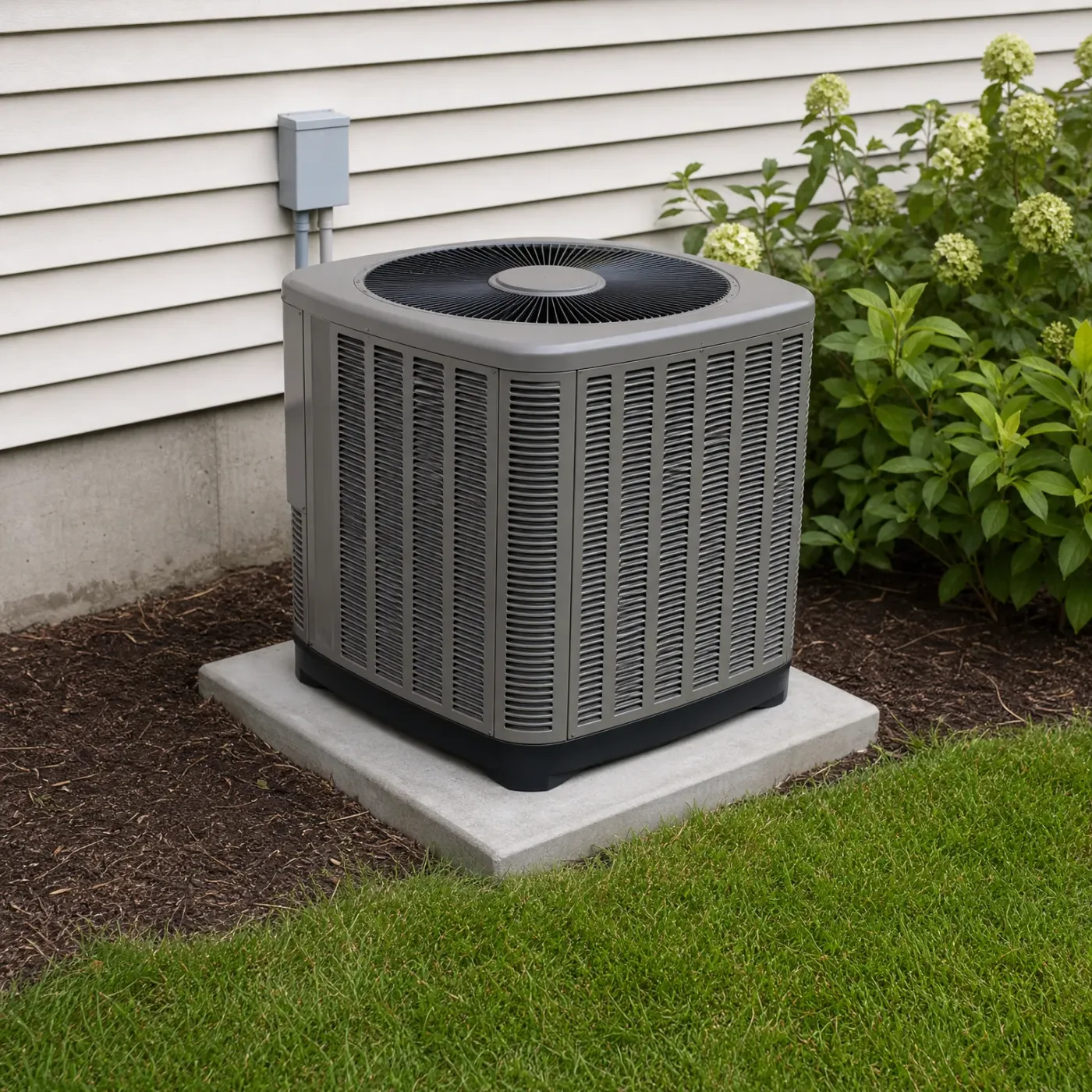
A gray outdoor air conditioner condenser unit on a concrete pad beside a house with horizontal vinyl siding, surrounded by mulch, flowering shrubs, and lawn.
A clean coil like this one lets the unit shed heat fast, so it cycles on and off without strain.
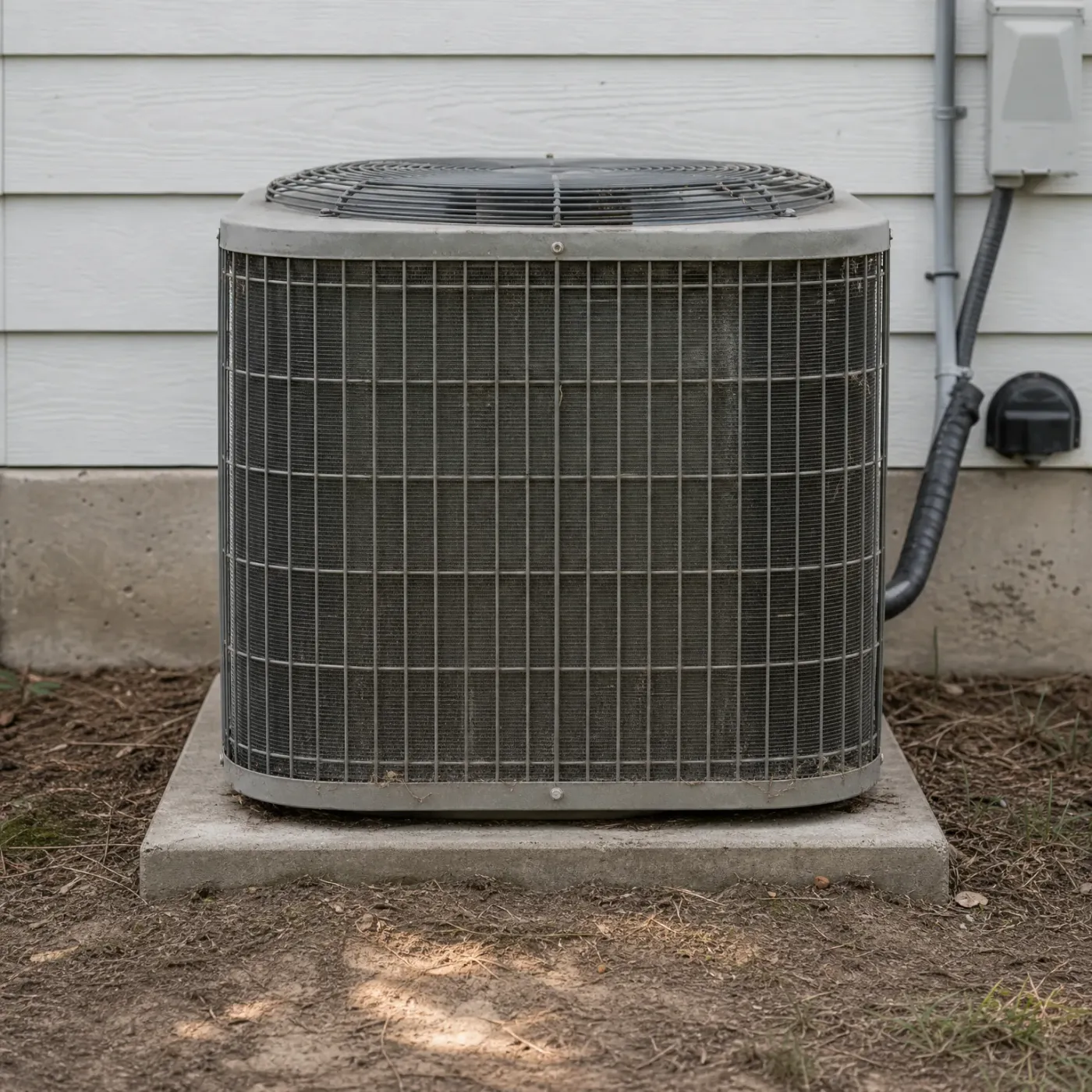
A weathered outdoor air conditioning condenser unit on a concrete pad beside a house with light horizontal siding, an electrical disconnect box and conduit on the wall, and mulched soil on either side.
Dirt and grime packed into the coil fins trap heat and can keep the compressor from starting at all.
A woman with dark hair in a bun reclines on a sofa with her eyes closed, wrapped in a cream fleece blanket, a closed blue hardcover book resting in front of her, with a lit lamp and a vase of dried flowers in the background.
A smiling bearded man in a navy sweater sits at a candlelit dinner table with a glass of red wine, a bowl of salad, and plates of food in the foreground.

Power costs 15.28 cents per kilowatt-hour statewide

At 15.28 cents per kilowatt-hour, a compressor that won't start is actually cheaper to run, since it's not drawing power to do nothing. But a repair that gets it cycling again costs you far less over a summer than the fan and other loads working overtime trying to compensate.

EIA-861 2025 statewide residential average

A run capacitor gives the compressor the jolt it needs to start. Once that part weakens, the compressor can hum or click but never actually turn over.

That's why the fix is usually a part swap, not a new unit. A contractor who finds a bad capacitor can often get the compressor firing again the same visit.

An outdoor air conditioning condenser unit on a concrete pad beside a house with horizontal lap siding, with a conduit and electrical disconnect box on the wall at right.
Before you get your air conditioner repair
A gray outdoor air conditioner condenser unit on a concrete pad beside a house with horizontal lap siding, with a wall-mounted disconnect box and conduit to its right and shrubs to the left.
After you get your air conditioner repair

Get your air conditioner to the right pro

A silent compressor in July isn't a small thing to live with here. Virginia summers stay sticky well past dark, and a house that can't shed that heat gets uncomfortable fast, especially upstairs where it collects. You've already checked the thermostat, maybe reset the breaker, and the unit outside still won't turn over. At that point there's not much more to learn by waiting another day on it. The part that's failing, whether it's a capacitor that's too weak to give the compressor its start or something else, isn't something you can see from the back door. A contractor who works on these systems can look at it and tell you in minutes what's wrong. Handing this off doesn't mean living with the heat any longer than you have to while you figure out who to call. It means someone who knows what they're looking at takes it from here, and you go back to waiting out the heat indoors instead of out by the unit.

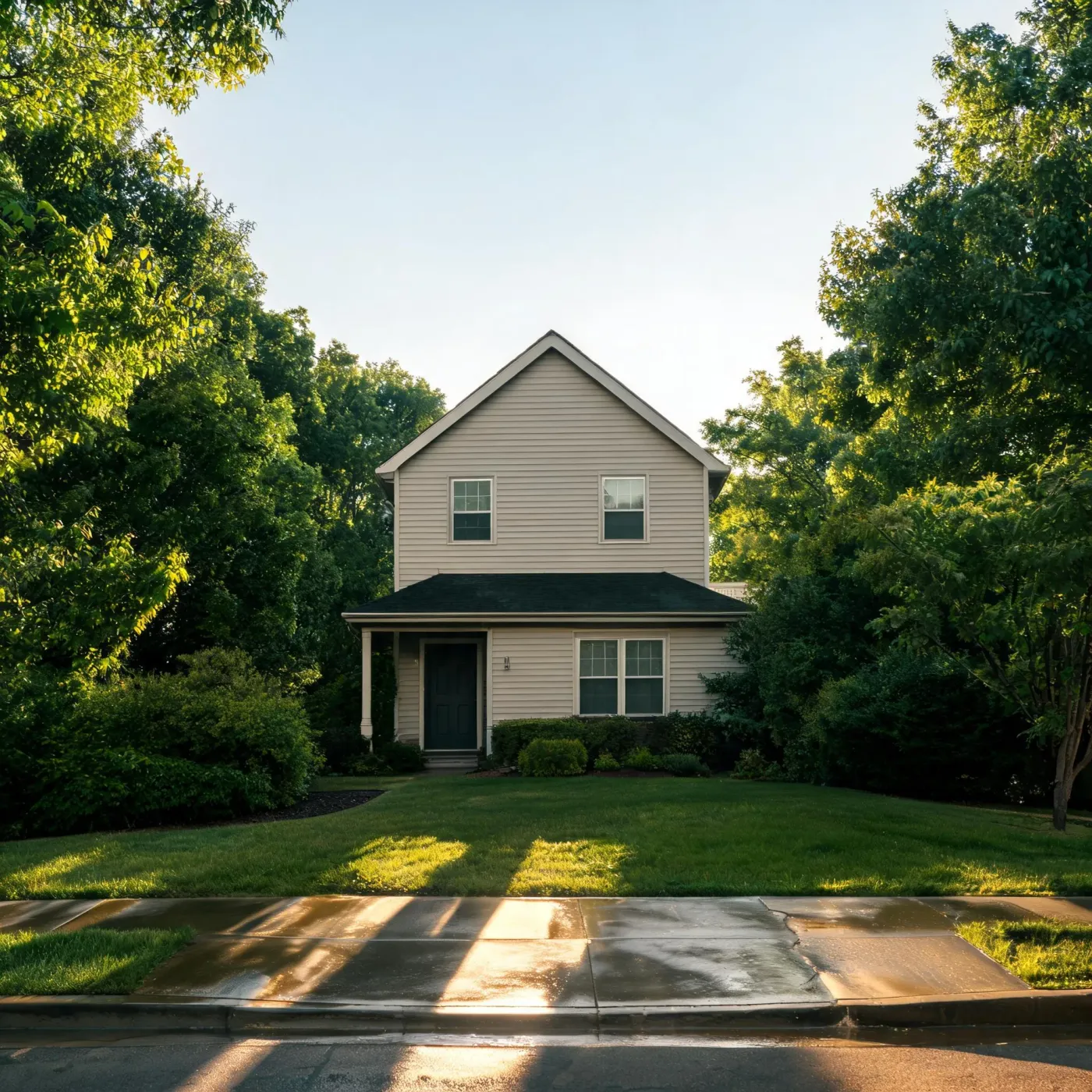
A two-story house with light beige horizontal siding, a gabled roof, a small covered front porch with dark door, and shrubs along the foundation, set behind a mown lawn and wet sidewalk with large leafy trees on both sides.

Virginia summers hold a dew point around 64°F, by NOAA's average, and that's the number that decides how heavy the air feels on your skin. Air that wet holds a lot of heat, and your air conditioner has to pull that moisture out before the house feels cool at all. When the compressor stays silent, none of that happens. The air inside just sits there, damp and warm, even with the fan running. You'll notice it on skin before you notice it on the thermostat, that sticky feeling that a moving fan doesn't fix. A compressor that won't start leaves you with air that only a working unit can actually dry out.

NASA POWER T2MDEW county cells weighted by homes

A woman in a cream sweater and jeans stands in the open doorway of a white stucco house, holding the dark door, while a man in a dark quilted jacket seen from behind walks toward the entry past potted plants.

What has to happen before that compressor ever turns over

The thermostat sends its call, and a relay inside the outdoor unit closes to send power to the compressor. That's the moment you're waiting on when the fan's already running and nothing outside is happening. Either the power never reaches the compressor, or it reaches it and the compressor still can't turn over, usually because the start components aren't doing their job. A contactor with burnt or pitted contacts can let power through to the fan but never quite close the circuit to the compressor itself, which is why one runs and the other doesn't.

None of this is something to chase down with a multimeter on a Saturday. A contractor who gets matched to your call already knows what to test first and in what order, so the visit isn't spent guessing. You send the details once, and from there it's someone else's job to track down which part failed and get it back on the truck.

Interior corner of a living room with a beige upholstered sofa and dark cushion in the foreground, a ceramic vase of leafy branches on a dark side table by a curtained window, a framed picture on the wall, and a wood-surround fireplace at right.
A gray outdoor air conditioner condenser unit on a concrete pad beside a house corner with lap siding and a stucco wall, surrounded by mown green grass.

Letting the contractor sort it out

You check the breaker, you check the thermostat batteries, you watch the outdoor unit for a minute hoping it kicks in on its own. None of that tells you whether it's a capacitor, a relay, or a compressor that's seized for good. A contractor opens the panel with a meter and knows in minutes what you'd spend an evening guessing at, and the house stays hot the whole time you're guessing.

An outdoor air conditioning condenser unit on a concrete pad beside a house with light stucco and lap siding, with mown grass to the left and a green shrub to the right.

Sending in a request tonight

You fill out the form, and that's the last part of this that's on you. No more checking the outdoor unit between chores, no more wondering if it's worth calling around for quotes. Someone who works on these systems gets matched to what you've described and reaches out. The waiting that's left is a different kind, the kind where the problem is already somebody else's to solve.

A compressor that won't start isn't something to wait out, because waiting doesn't fix a bad capacitor or a stuck relay, and it doesn't cool the house either. The fan running while the unit outside stays silent is a clear sign, not a mystery, and a contractor who knows what to listen and look for can usually tell within minutes which part failed. Once you send the form, you're done with the guessing part. You don't have to figure out if it's the capacitor or the relay or something else, and you don't have to track down who's available and who answers the phone. Someone who does this work gets in touch with you. That's the whole shift, from checking the breaker and the thermostat batteries and hoping the unit kicks on, to having it handled by someone who knows what a silent compressor in a Virginia summer actually means and what to do about it.

A dark standing-seam metal roof with a stone chimney and metal cap, seen against a backdrop of autumn-colored forest and layered hills under an overcast sky.

The right pro for this job

Find my pro

No charge to send it. You decide if you hire them.

A house that sits at 78 and climbing all afternoon doesn't cool itself once the compressor quits. Sending the request now means a contractor takes it from here, and figuring out whether it's a capacitor or a relay stops being something you have to puzzle out alone.