


Virginia Cooling Pros

Why your AC can't keep up on hot Virginia days

Tell a local repair pro what your air conditioner is doing.

Match me with a pro

Your AC loses the fight on the hottest days because it was sized for an average load, not for a stretch of 90 and humid afternoons back to back. Virginia summers push the air conditioner to run almost constantly, and a unit that cycles on and off fine in June can run flat out in late July and still lose ground. The humidity makes it worse. Your system has to pull moisture out of the air as well as cool it, and that takes extra capacity that isn't there when it's already working at its limit. If the unit is low on refrigerant, has a dirty coil, or the airflow is restricted somewhere in the ducts, that limit drops even lower, and the gap between what the house needs and what the system can deliver shows up exactly on the days you notice it most. None of this means the system is ruined. It usually means something specific is making it work harder than it should, and that's fixable.

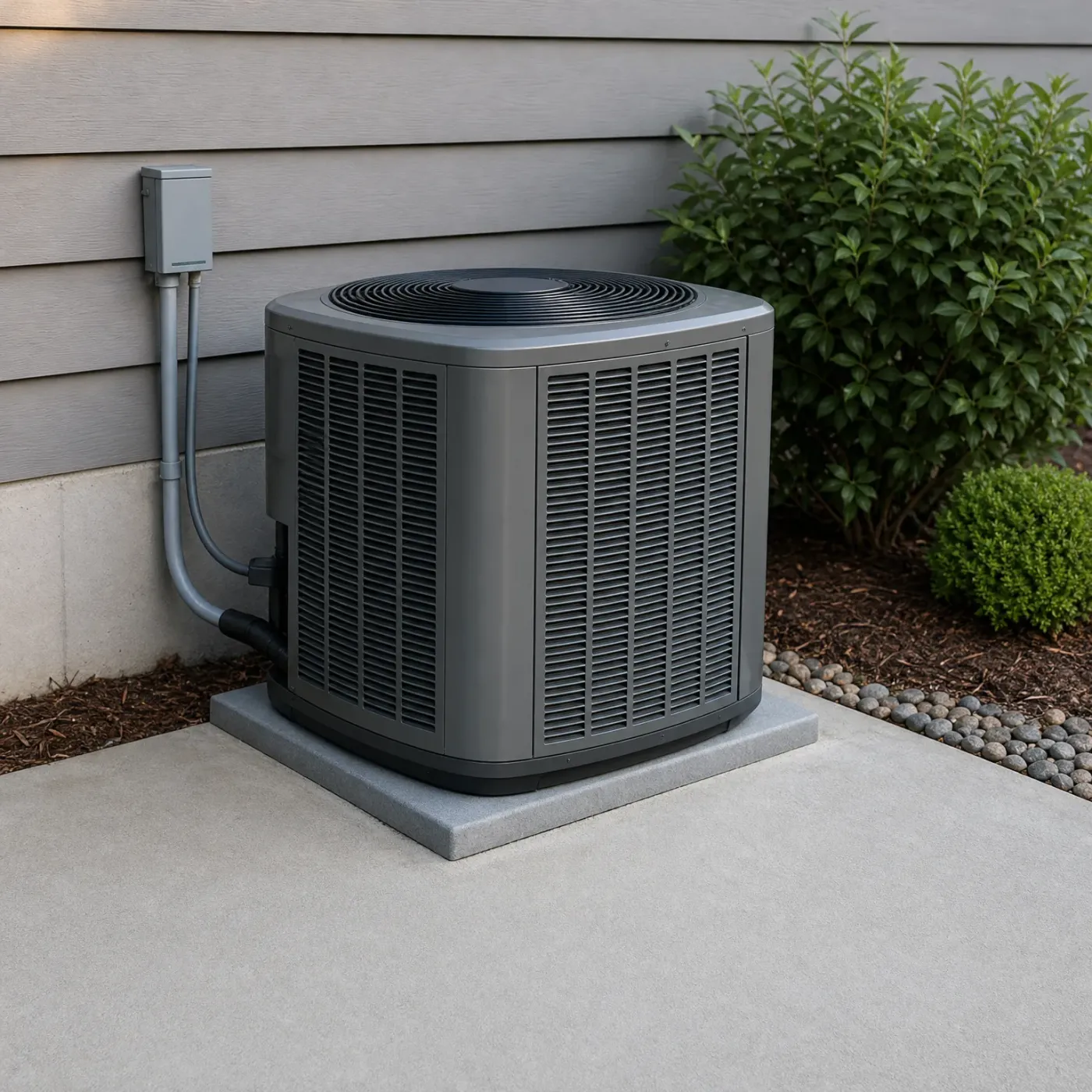
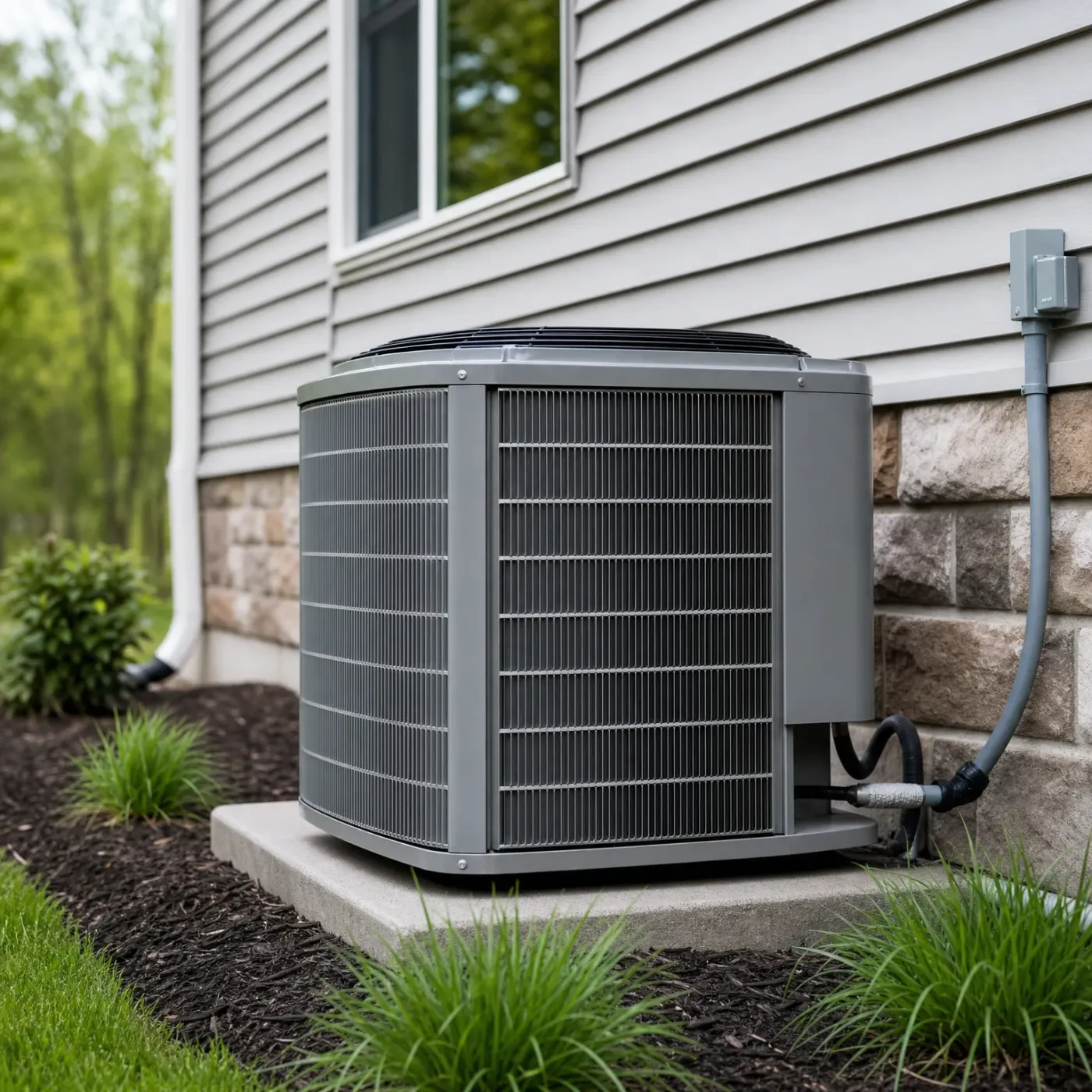
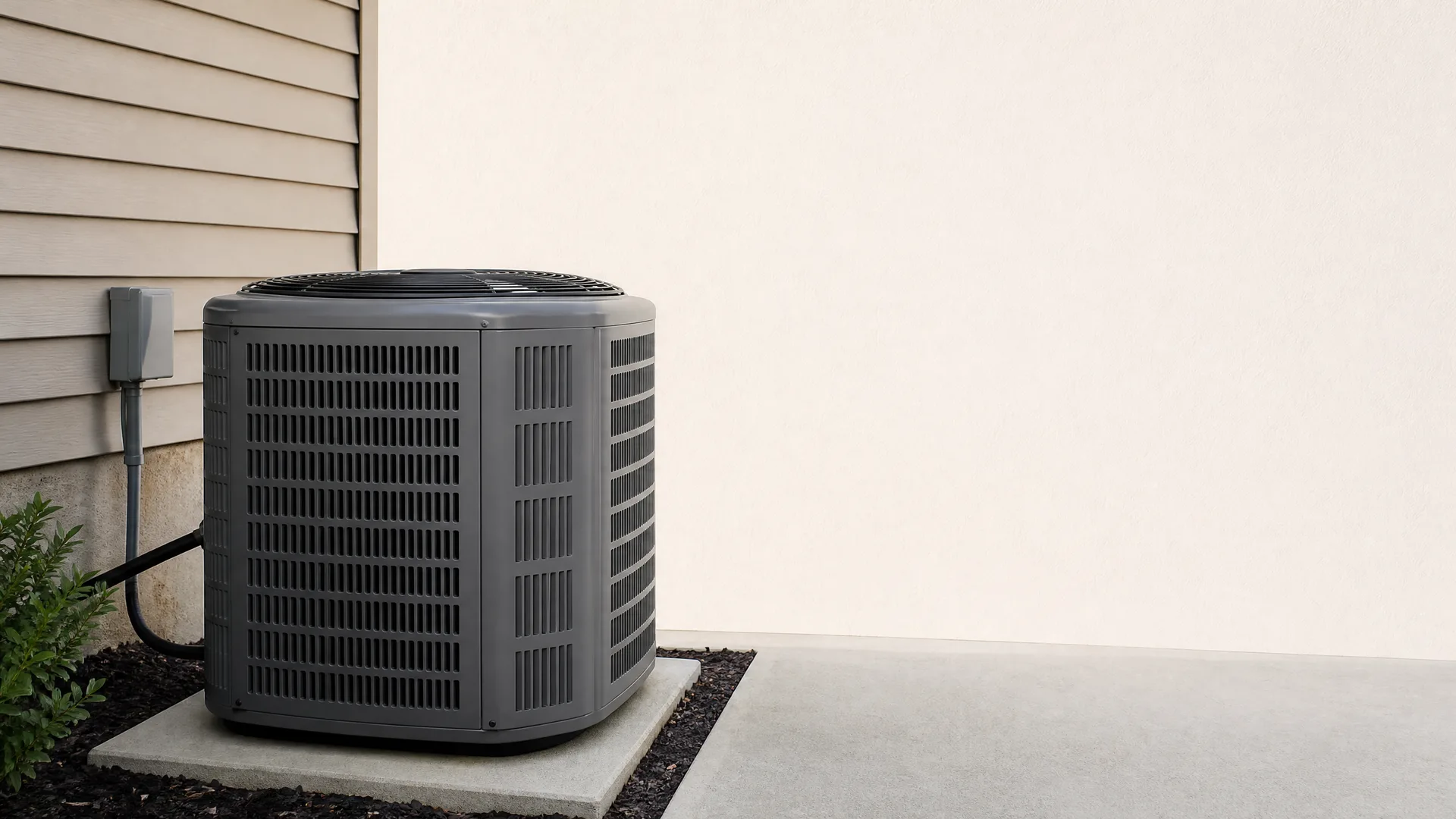
A gray outdoor air conditioner condenser unit on a concrete pad beside a house with horizontal siding and a light stucco wall, with a disconnect box and refrigerant lines on the wall and a shrub and mulch bed at left.

Humidity adds a second job

Your AC does two things at once: it pulls heat out of the air and it pulls moisture out. In Virginia's humidity, that second job takes real work. A unit that can drop the temperature fine in a dry climate can run long and still feel like it's not catching up here, because so much of its capacity is going into the air you can't feel, just the air you can wring out.

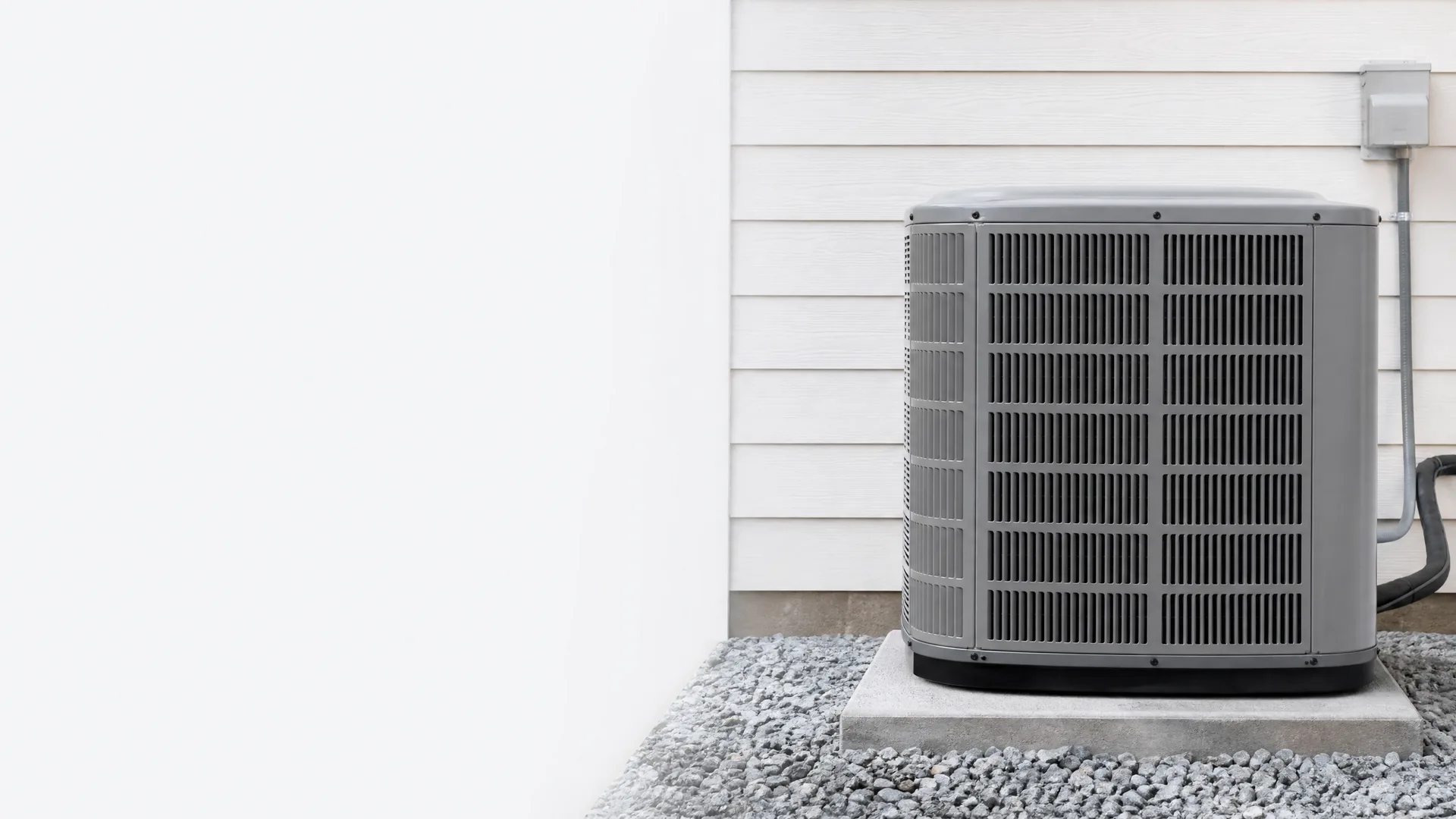
A gray outdoor air conditioning condenser unit on a concrete pad surrounded by gravel, next to a white horizontal-lap-sided house wall with an electrical box and conduit, against a blank white background on the left.

What happens when it runs nonstop

When a unit runs for hours without stopping, parts that are only mildly worn start to matter. A capacitor running a little weak, a coil that's partly dirty, a charge that's a bit low, any of these barely show up on a mild day. Stack a run of 90-degree afternoons on top and the unit can't shed heat fast enough to shut off, and the house falls behind.

A woman in a cream cardigan and jeans stands with one hand raised facing an open front door of a gray horizontal-siding house, with a black lantern wall light, a potted shrub with yellow flowers, and a stone-faced porch column.

What it looks like in your house

You notice it upstairs first. The bedrooms stay a few degrees warmer than the thermostat reading downstairs, and by evening the air feels thick even with the system running. Someone is adjusting the thermostat lower to chase a number it can't reach, and the unit just keeps running without getting there. That's wear on a system that's already working as hard as it can.

A local contractor who services air conditioners all summer in this kind of heat has likely seen your exact symptom before on another Virginia house the same week. Getting matched with one means someone looks at your system who already knows what tends to give out first when the afternoons stack up hot and humid, not someone learning your equipment from scratch. You give your information once and one contractor who fits your situation follows up.

A living room corner with a beige upholstered armchair holding navy and striped cushions, a small round wooden side table with a carved bowl and a potted green plant, a framed landscape picture on a pale wall, built-in shelving, and a curtained window.
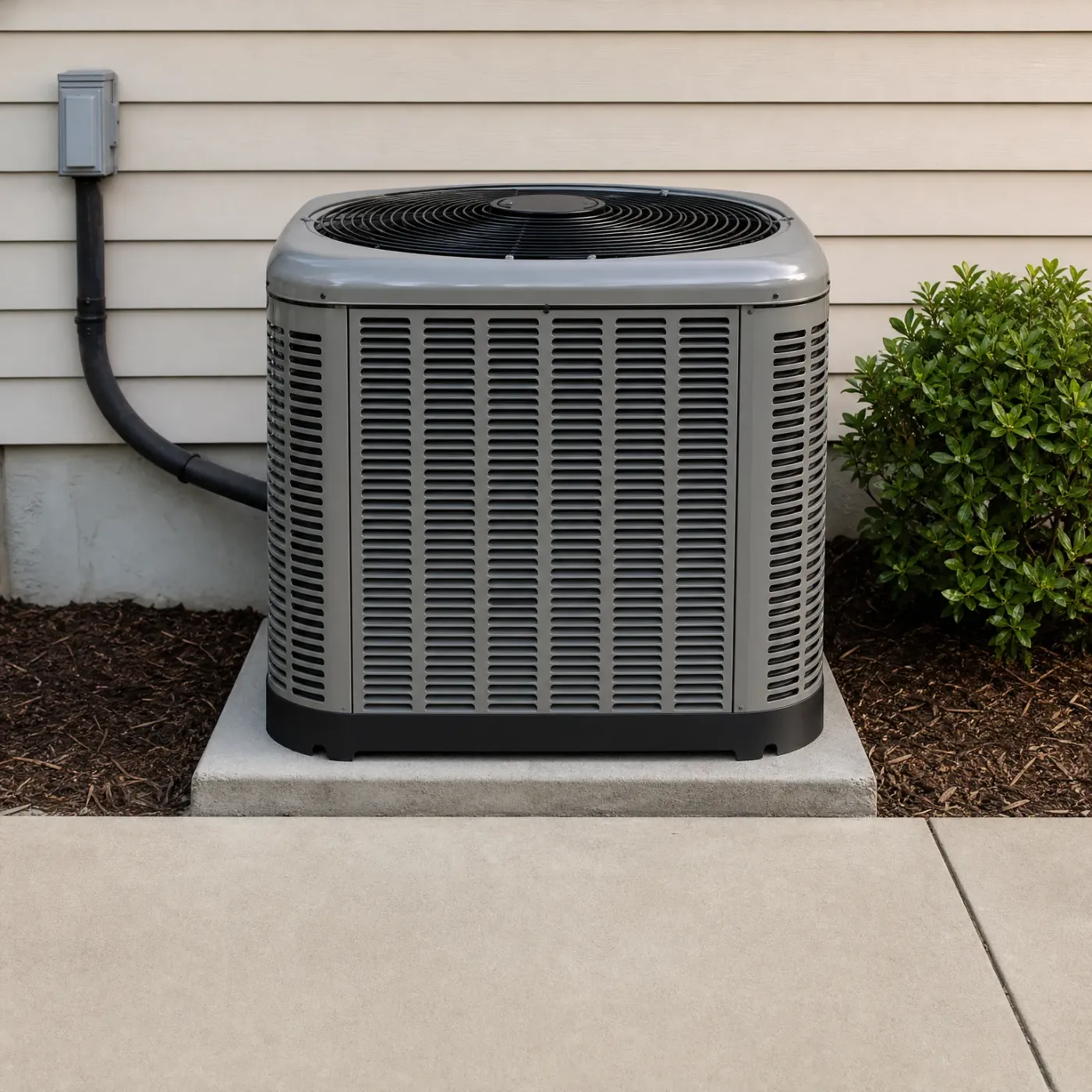
A gray outdoor air conditioning condenser unit on a concrete pad beside a house with horizontal lap siding, with a conduit and electrical disconnect box on the wall and a green shrub in mulch to the right.

Running clean, keeping up

The coil and grille are clear, so air moves through the unit the way it was designed to. On a 95 degree afternoon it can still pull heat and moisture out of the house as fast as the rooms gain it, and the thermostat setting actually holds.
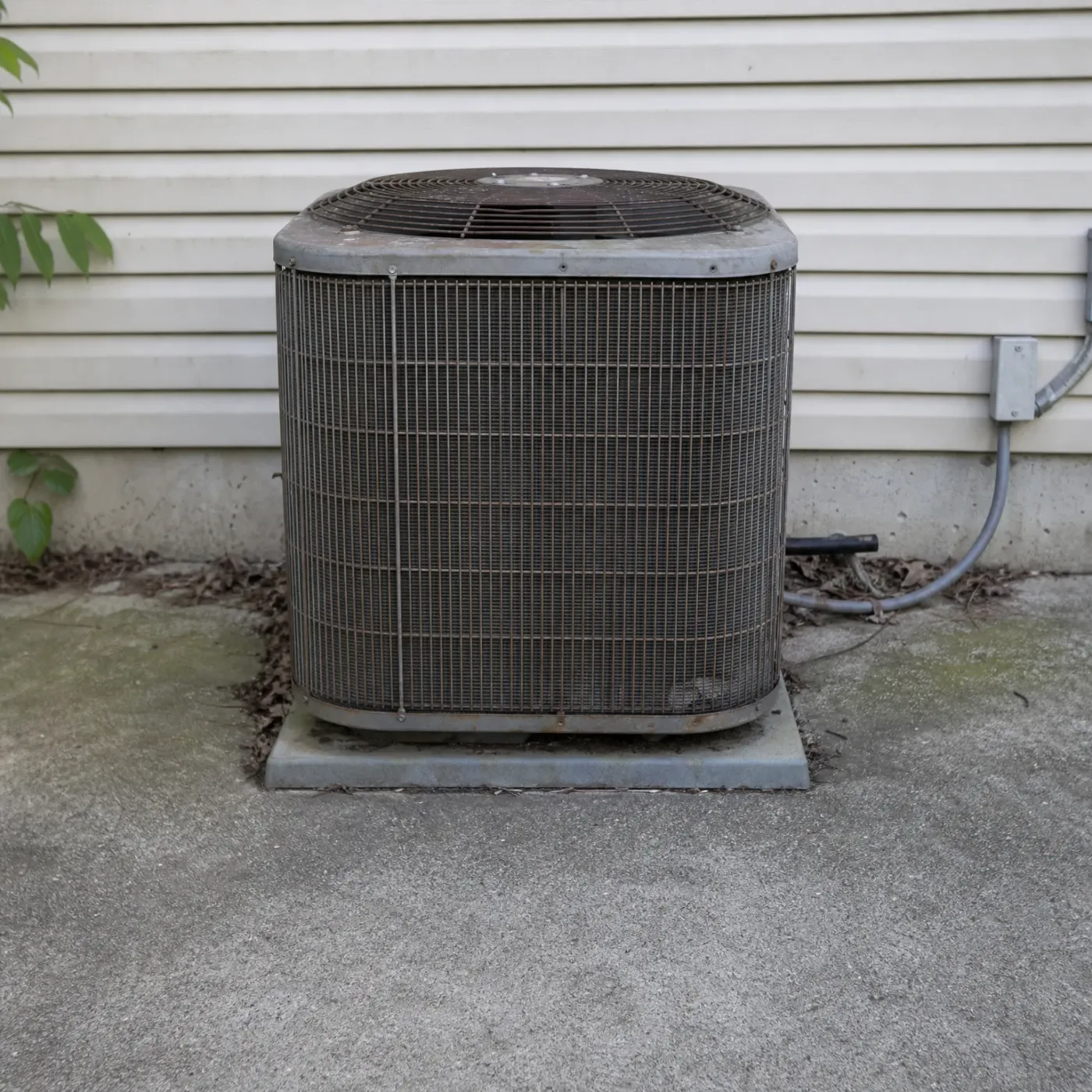

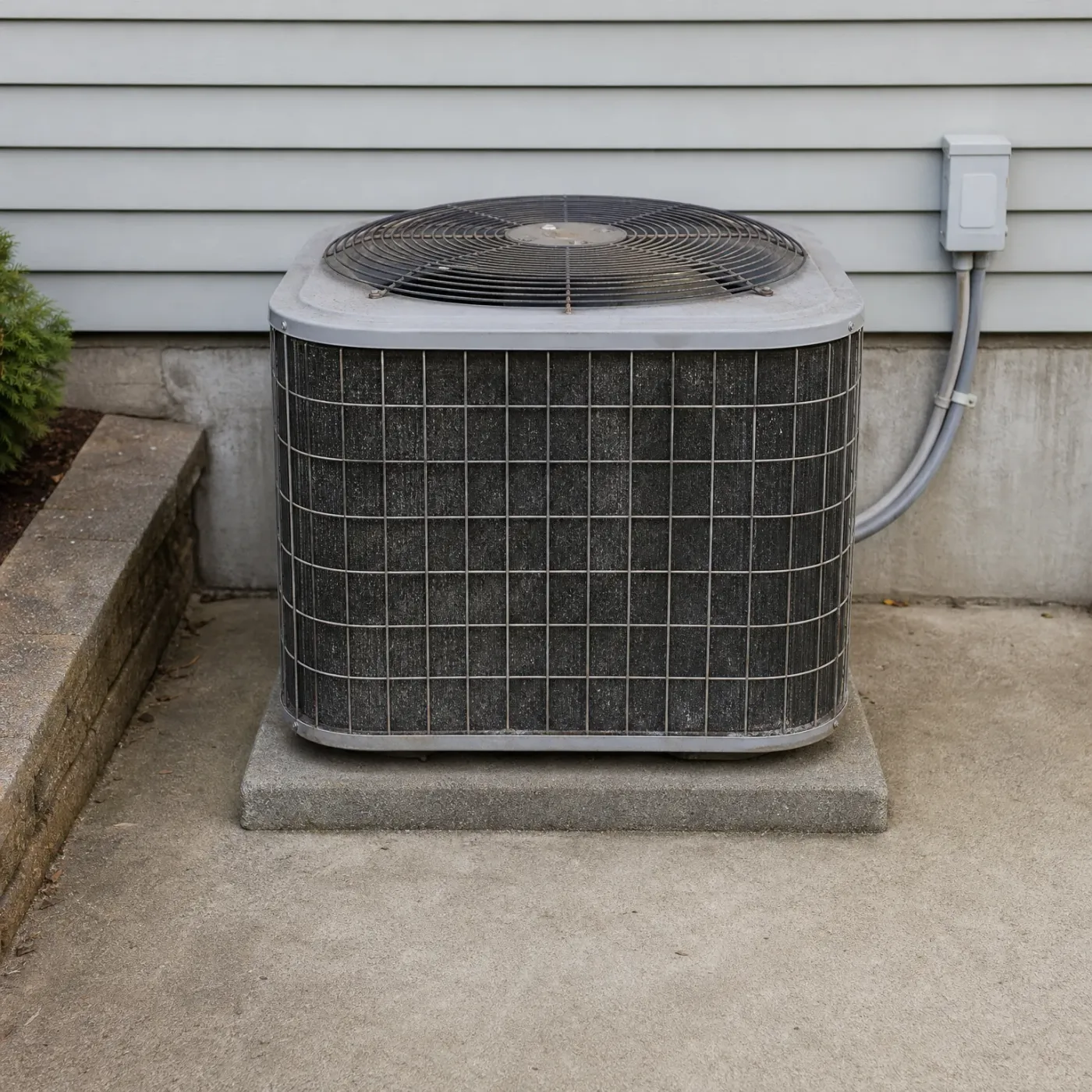
A weathered outdoor air conditioner condenser unit on a concrete pad beside a house with horizontal vinyl siding, with a conduit and disconnect box on the wall to the right.

Clogged and falling behind

Leaves and grime packed against the grille block airflow before it ever reaches the coil. The compressor keeps running, but less heat leaves the house each hour, so on the hottest days it never catches up to the thermostat setting.

A woman with long wavy brown hair in a grey ribbed sweater sits on a couch indoors, looking toward a window, with a potted palm-like plant and fireplace behind her.
A woman with long brown hair wearing a green V-neck top and beige cardigan sits on a light sofa, looking off to the side, with a dining table, lamp and framed picture in the background.
A woman with long dark hair in a cream knit sweater sits on a beige sofa indoors, looking toward a bright window with a houseplant and framed picture in the background.
A woman with long dark hair in a green knit sweater sits on a couch indoors, smiling and looking toward a window with a blurred room behind her.

A system that's aging versus one that isn't

An air conditioner that's ten or fifteen years old loses capacity it had when it was new. The coil doesn't transfer heat as well, the compressor doesn't move refrigerant as efficiently, and the fan motor may not be pushing the air it once did. On a mild day in May that loss doesn't show. On a string of 95 degree afternoons it does, because the unit has no reserve left to draw on. It was already running close to its limit, and the heat and humidity push it past it.

A system that's sized right versus one that isn't

Two houses the same size can need different tonnage depending on windows, sun exposure and how the rooms are laid out. An air conditioner sized right for the house will run long on the hottest days but it keeps the temperature where you set it. One that was undersized, or sized for a different house before an addition went in, runs just as long and still loses ground. If your house has had any work done since the system went in, that mismatch is worth having someone check, because no amount of maintenance fixes a unit that was never big enough.

Power costs 15.28 cents per kilowatt-hour statewide

Virginia homes paid 15.28 cents per kilowatt-hour in 2025, close to the national average. That matters here because most houses heat with electricity too, so a struggling AC that runs long hours on a hot afternoon shows up fast on the same bill that carries your winter heat.

EIA-861 2025 statewide residential average

A gray outdoor air conditioner condenser unit on a concrete pad beside a house with horizontal lap siding, with a wall-mounted disconnect box and conduit at left and a green shrub and mulch bed at right.

Working normally

The unit cycles the way it should. It runs, catches up to the thermostat, and shuts off, then starts again later when the house warms a few degrees. The disconnect box, the conduit, the pad, all of it just sits there doing its job quietly. You'd barely notice it's hot outside.

An outdoor air conditioner condenser unit on a concrete pad beside a house with horizontal lap siding, with a conduit running to a gray electrical disconnect box on the wall.

In trouble

The same unit, same siding, same conduit to the disconnect, but it never shuts off. It runs straight through the afternoon and into the evening without the house catching up. Something inside it, often the compressor or the refrigerant charge, can't keep pace with a 95 degree day anymore.

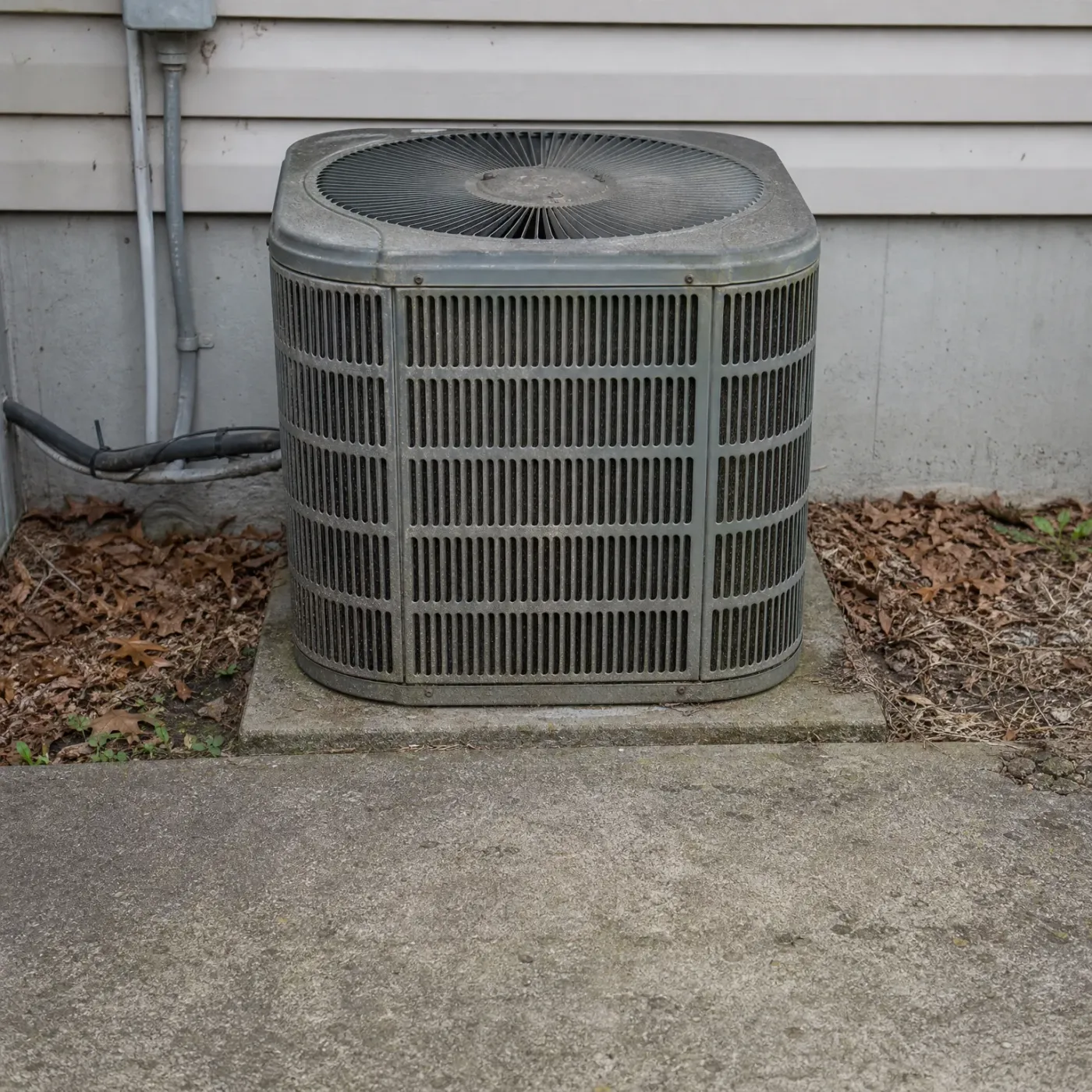
An outdoor air conditioning condenser unit on a concrete pad beside a house with horizontal siding and a concrete foundation, with dry brown leaves on the ground to either side.
Before you get your air conditioner repair
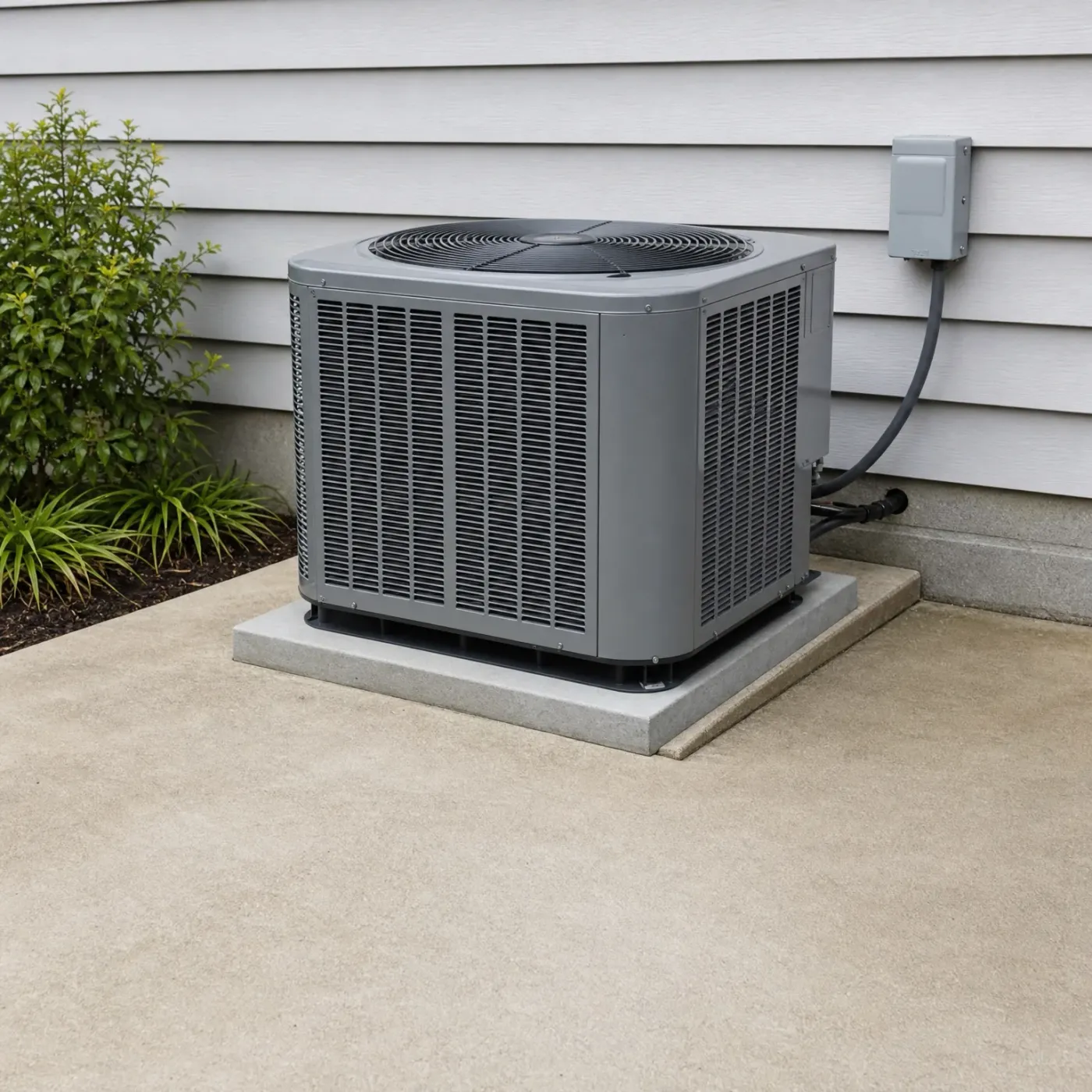
A gray outdoor air conditioning condenser unit on a concrete pad beside a house with horizontal lap siding, with a wall-mounted disconnect box and conduit, and shrubs to the left.
After you get your air conditioner repair
A gray outdoor air conditioner condenser unit on a concrete pad beside a house with horizontal siding and a stone veneer foundation, surrounded by mulch, ornamental grasses, and shrubs, with a conduit and disconnect box on the wall.

A pro who works on air conditioners

Your request stays with one local pro.

Describe your air conditioner job, and a local pro who handles it gets in touch.

Find a local pro

You only hire the pro if you want to.

Why does my house still feel sticky with the AC running

You set the thermostat to 72 and the house still feels damp. The air coming out of the vents doesn't feel as cold as it used to, and the system runs for long stretches without shutting off. You might notice condensation on windows, a musty smell in rooms that stay closed up, or towels that won't quite dry on the rack. Someone in the house is probably running a window unit or a fan to make one room bearable. Left alone, the extra moisture gives mold and dust mites a place to take hold, and anyone with allergies or asthma in the house feels it first.

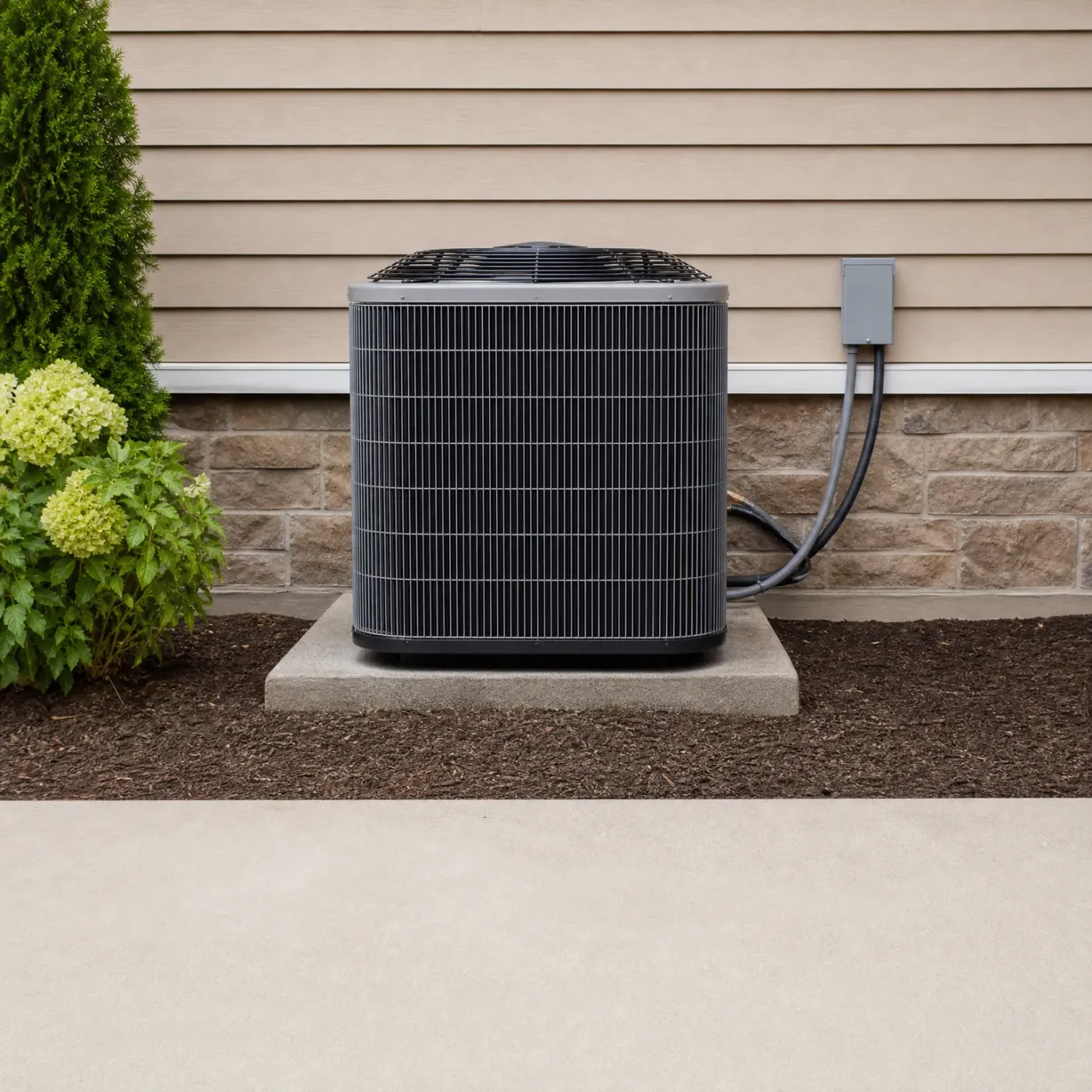
An outdoor air conditioner condenser unit on a concrete pad beside a house with beige horizontal siding and a stone-veneer base, with refrigerant lines running to a gray wall-mounted electrical box, surrounded by dark mulch, a flowering shrub and an evergreen on the left.
A unit like this one, clean and clear of the shrubs around it, has room to pull in air and shed heat all afternoon.
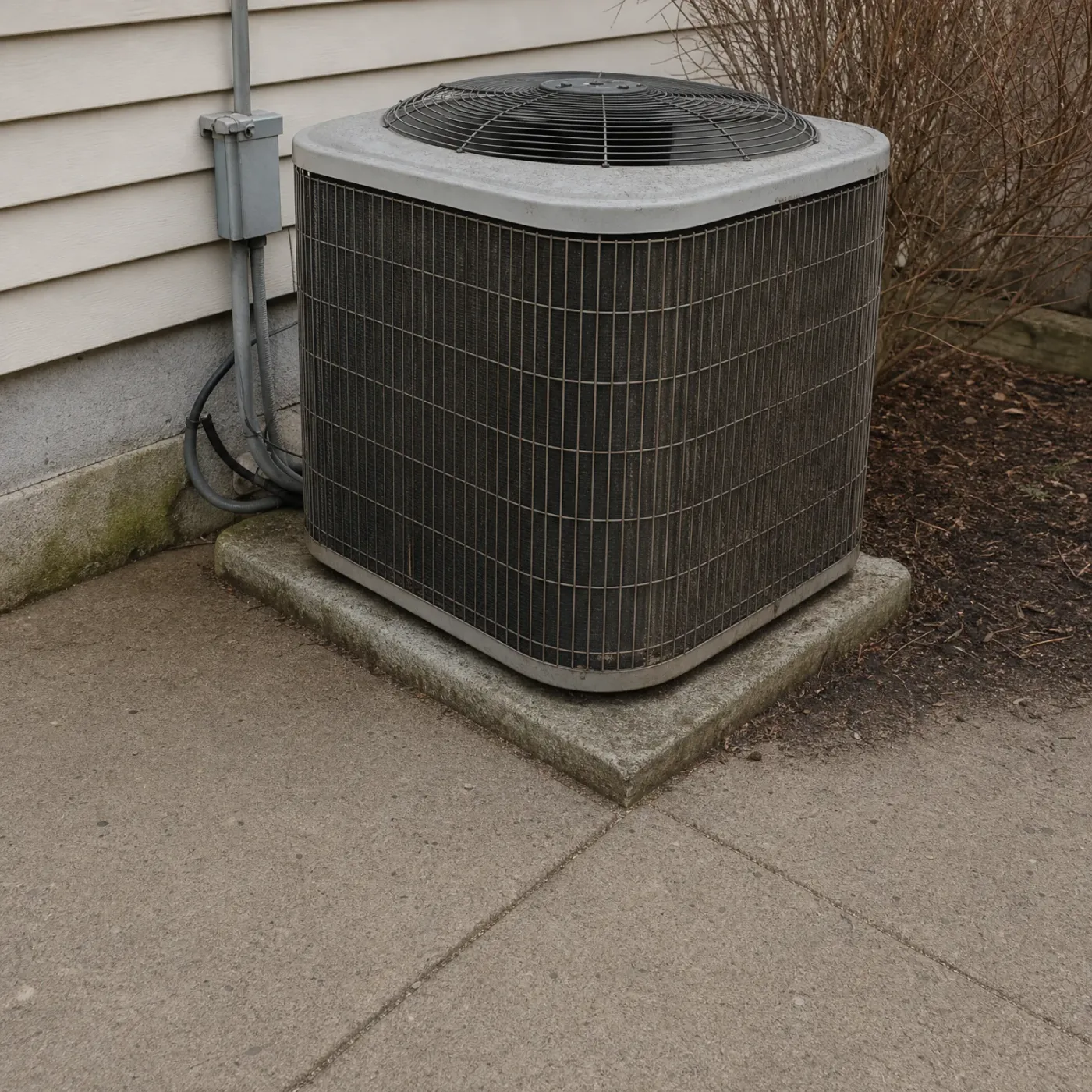
An outdoor air conditioning condenser unit on a concrete pad beside a house with light vinyl siding, an electrical disconnect box and conduit on the wall, bare shrubs and mulch to the right, and a concrete walkway in the foreground.
A unit crowded or straining like this one works harder for less, and on a 95 degree day that gap is what you feel indoors.

Where the strain shows up

Outdoor unit

  • If shrubs or a fence sit closer than a couple feet from the unit, it can't shed heat as fast as it pulls it in.
  • A condenser coil caked with cottonwood fluff or cut grass blocks the airflow the unit needs to dump heat outside.
  • A fan motor that's slowing down still runs, but it moves less air across the coil on the hottest afternoons.
  • Low refrigerant from a slow leak means the unit is moving less heat per cycle even though it sounds the same.
  • A capacitor that's weakening makes the compressor struggle to start and stay loaded through a long afternoon.

Indoor side

  • A clogged filter starves the system of airflow, so the coil can get too cold and start icing over instead of cooling.
  • Dirty evaporator coils can't absorb heat from the air passing over them, no matter how hard the blower pushes.
  • A blower motor running slower than it should means less air moves past the coil, even on a system otherwise working fine.
  • Leaky or disconnected ductwork in the attic loses cooled air before it ever reaches the bedrooms upstairs.
  • A thermostat that's miscalibrated or in the wrong spot can shut the system off before the house actually reaches that temperature.
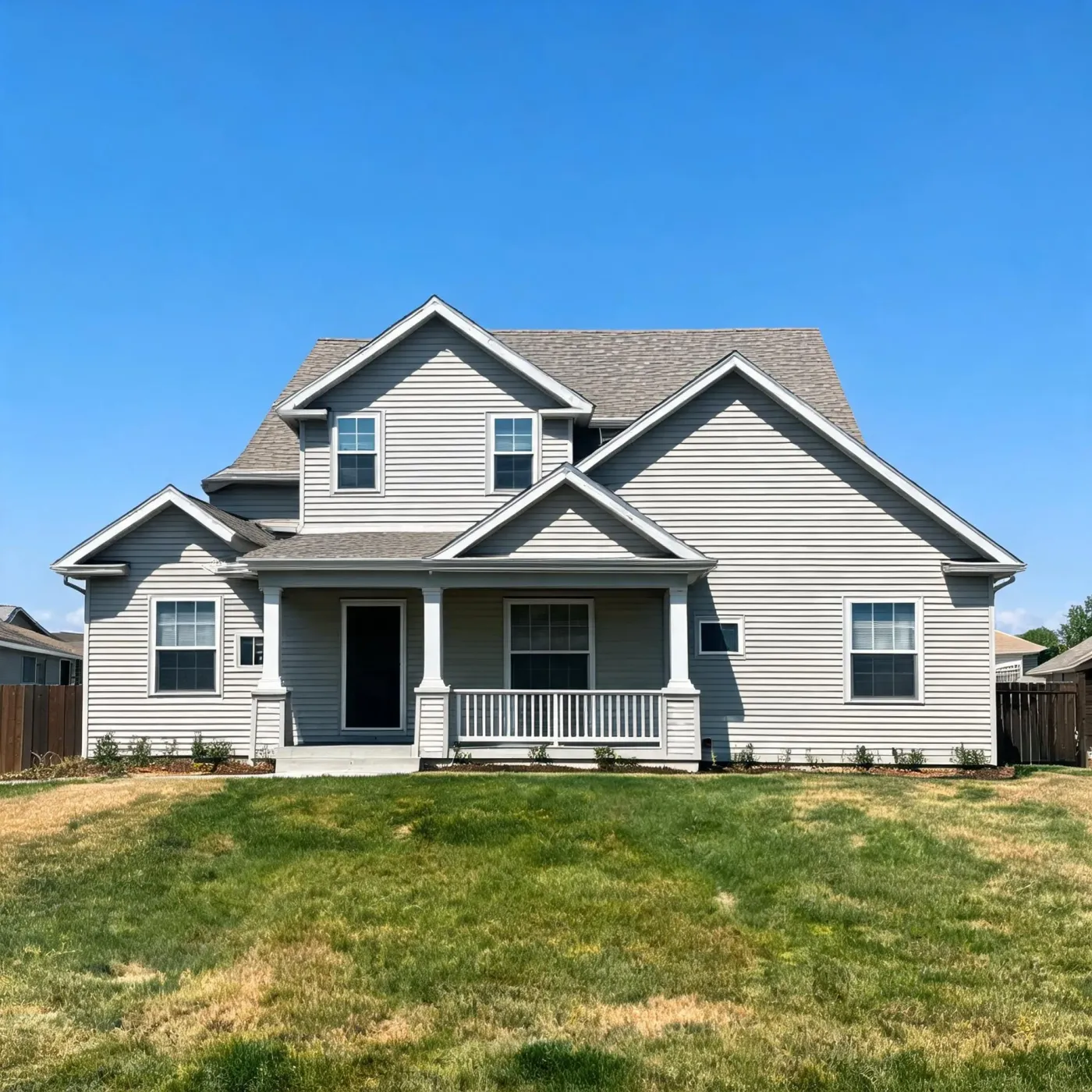
A two-story gray horizontal-siding house with multiple gables, a covered front porch with white columns and railing, and a dark front door, fronted by a patchy green and brown lawn under a clear blue sky.

The average summer dew point across Virginia is 64°F, according to NOAA climate data. That's heavy air, the kind where your skin stays damp even standing still. Your air conditioner has to wring that moisture out of every cubic foot it circulates before the house feels dry, and on a string of June or July afternoons it's doing that for hours without a break. A unit that's lost some capacity, or one that's just undersized for the house, falls behind on that job before it falls behind on temperature. You feel it as clammy air at the vents and a thermostat that says 72 while the room still feels like summer.

NASA POWER T2MDEW county cells weighted by homes

A gray-haired woman in a cream knit sweater stands in a dimly lit kitchen at night, looking to her right, with a round loaf of bread in the foreground and a dark window and potted plant behind her.
A woman with her hair in a bun holds a sleeping young child against her chest, both wrapped in a textured beige knit blanket on a sofa in a dimly lit room with a lamp, framed picture, and bookshelf behind them.

Where your AC stands now

  • A unit sized right and running clean can still fall behind on a 95 degree, high humidity afternoon simply because the load is heavier than most days.
  • Shrubs too close, a dirty coil, an aging compressor, and a long duty cycle all point to the same gap between what the house needs and what the system delivers.
  • A licensed contractor who services Virginia systems all summer has seen which of these show up most on homes like yours.
  • Matching you with one local contractor means a single technician learns your system instead of several crews each guessing fresh.
  • Knowing which part of your setup is the weak link is the difference between a repair that holds through August and one that doesn't.

The heat and the humidity both ask more of your air conditioner than a mild day does, and on the hottest afternoons something else usually adds to that load: shrubs crowding the outdoor unit, a coil that hasn't been cleaned, a compressor that's lost some of what it had when it was new. None of these show up much in April. They show up in August, when the system is already running close to its limit and has nothing left to give. That's the gap between what your house needs on a 95 degree day and what the unit in your yard can actually deliver.

Finding which of those is your problem takes someone who looks at this kind of system all summer, not just once. A contractor who services Virginia homes through the hot months has already seen which part tends to fail first, whether it's airflow blocked outside, a coil that can't shed heat fast enough, or a compressor on its way out. That's the kind of read that comes from doing this work locally, season after season, not from a guess made over the phone.

When you request a repair through this page, you're matched with one licensed contractor local to you, not a handful of companies competing for the job. That means one technician looking at your system, forming one opinion about what's wrong, and following through on the fix instead of a string of strangers each starting over. On a system that has to run hard every summer, that kind of continuity is worth something. The right repair, aimed at the actual weak point, is what gets your house back to holding 72 even on the days it's hardest to.

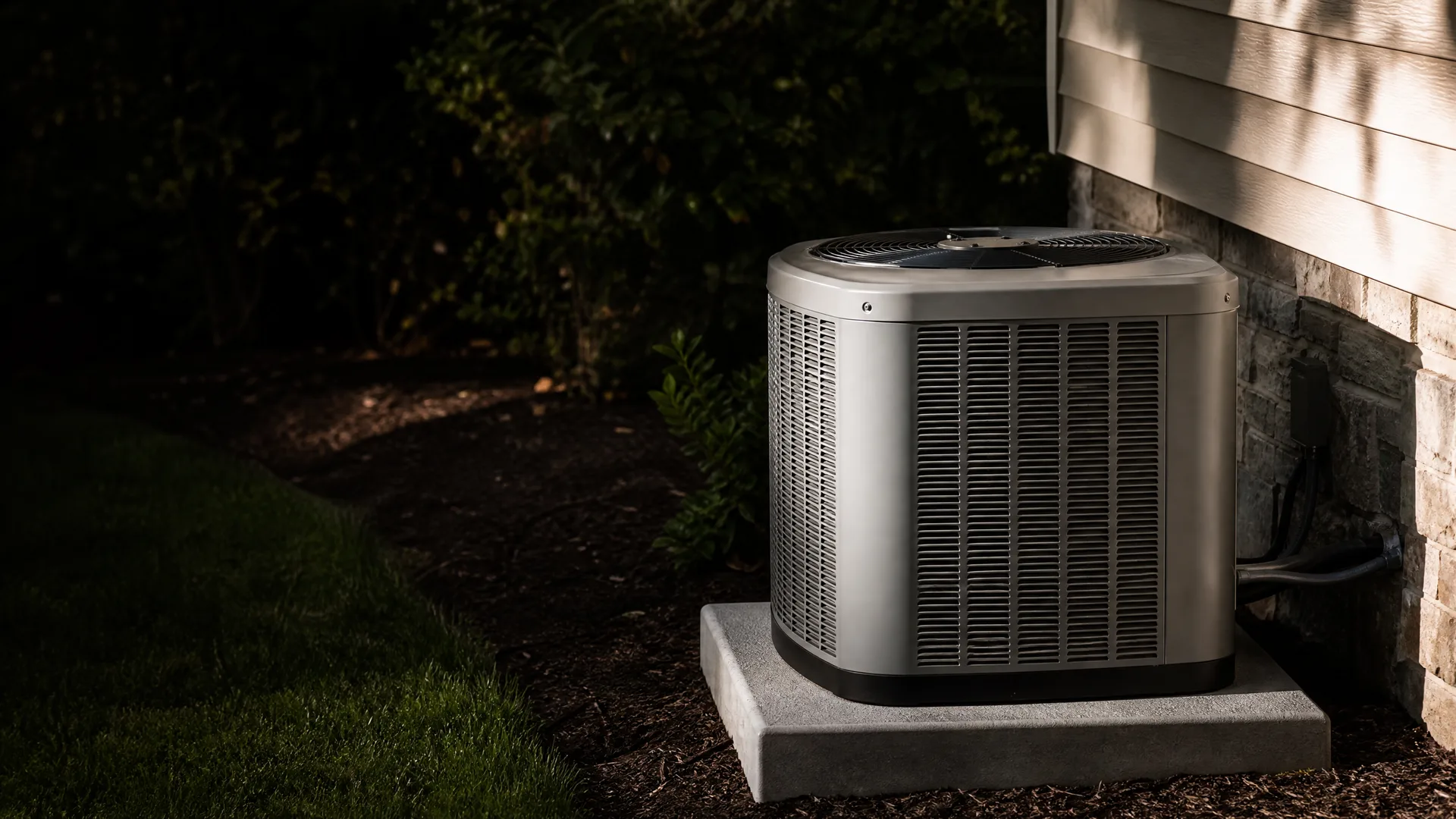
An outdoor air conditioner condenser unit sits on a concrete pad beside a house with horizontal siding and stone veneer, next to mulch, shrubs, and grass.

Get your air conditioner to the right pro

Step 1 of 3: Equipment