Describe your air conditioner job, and a local pro who handles it gets in touch.
Your AC unit runs hard once Virginia summer sets in, and the capacitor is one of the first things to give out under that kind of load. It's a small part that does the job of starting and running the compressor and fan motor, and when it weakens, the whole system struggles before it quits.
You might notice the outdoor unit humming but not starting. Maybe the fan spins slow, or you have to give it a push to get going. Sometimes the AC clicks off on its own after a few minutes, or the air coming through the vents isn't as cold as it was last week. Any of these can point to a capacitor that's losing its charge.
It's worth getting a straight answer before the next hot stretch turns a weak capacitor into a dead compressor. That's a bigger repair, and one that's harder to live without in a Virginia summer.
Getting that answer means having someone look at the unit who knows what a tired capacitor sounds like and what it takes to replace one correctly. When you put in a request here, it goes to a licensed contractor working near you, someone who handles this kind of repair on homes like yours all season. Just the one contractor reaches out, not a string of companies competing for your number, so you're dealing with someone who already knows the situation when they call.
Below, you'll find the specific signs this capacitor trouble shows up with, and what distinguishes it from other reasons an AC might stop cooling. Read through them, see what matches what you're hearing or feeling in your own house, and use the button when you're ready to get a contractor's eyes on it.
A bad capacitor usually shows up as an AC that hums but won't start, or one that shuts off on its own after running a few minutes. You might hear a clicking sound from the outdoor unit as it tries and fails to kick on, or notice the fan spinning slowly, or not at all, while the compressor struggles. Sometimes the air coming out of the vents turns warm even though the unit sounds like it's running fine. The capacitor stores and releases the electrical charge that gets the compressor and fan motor moving, and once it weakens, it can't deliver enough of a jolt to start them reliably. In a Virginia summer, with the system running almost nonstop for months, that strain adds up faster than it would somewhere milder. A capacitor that's starting to fail rarely fixes itself. Left alone, it tends to take the compressor down with it, which turns a small, inexpensive part into a much bigger repair.
Your request goes to one pro, not a list of companies.
Sending the form costs nothing.
The capacitor holds a charge that gives the compressor and fan motor the jolt they need to start. Once it weakens, that jolt isn't enough, even though the unit still has power.
That's why the outdoor unit can hum, click, or try to start and give up, while everything inside still seems to run. The motor isn't the problem. The push to get it moving is.
Capacitor holding up
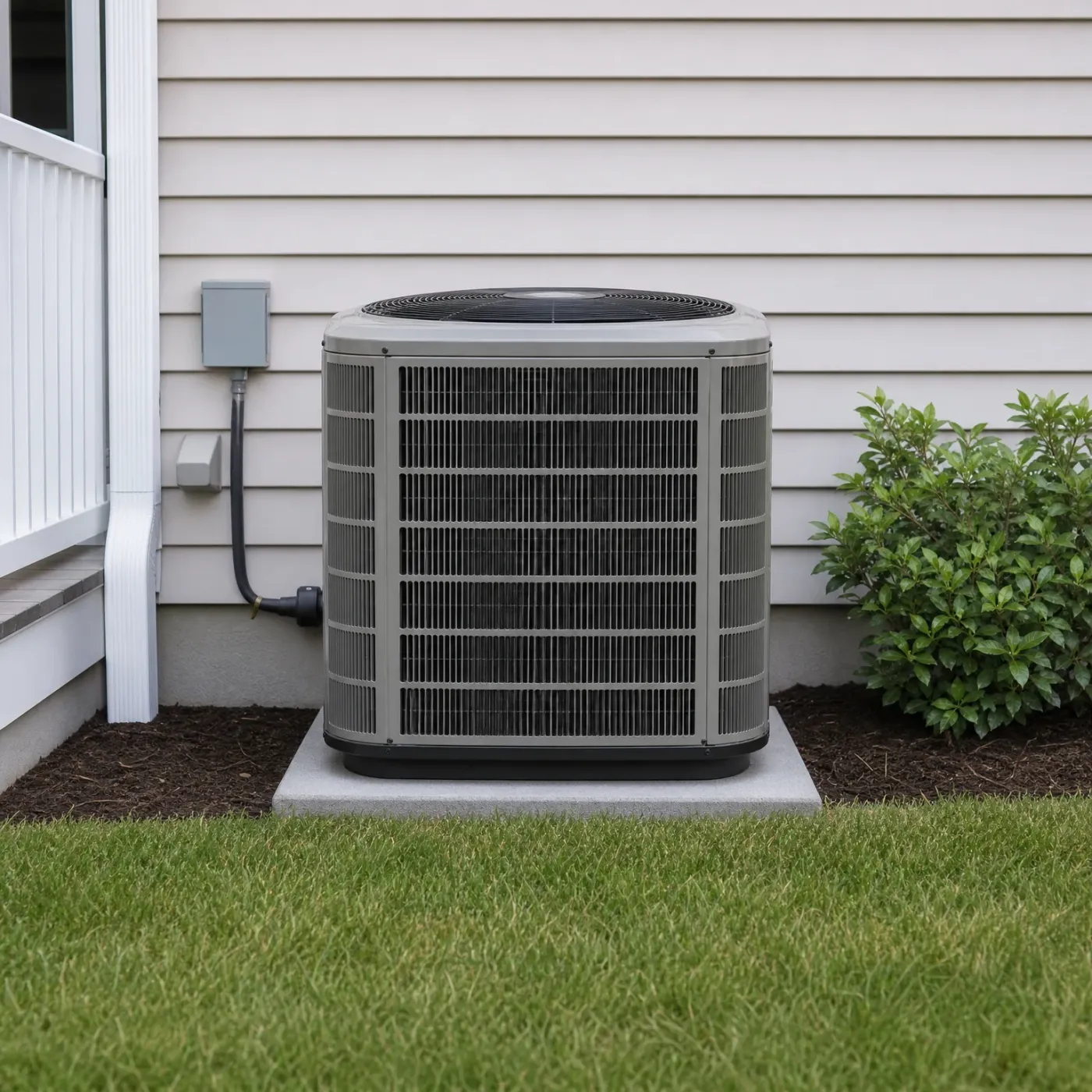
This is what a healthy unit looks like. The fan spins right up, the compressor kicks in, and cold air follows within a minute or two. No hesitation, no noise from the outdoor unit beyond a normal hum as it settles into its cycle.
Capacitor on the way out
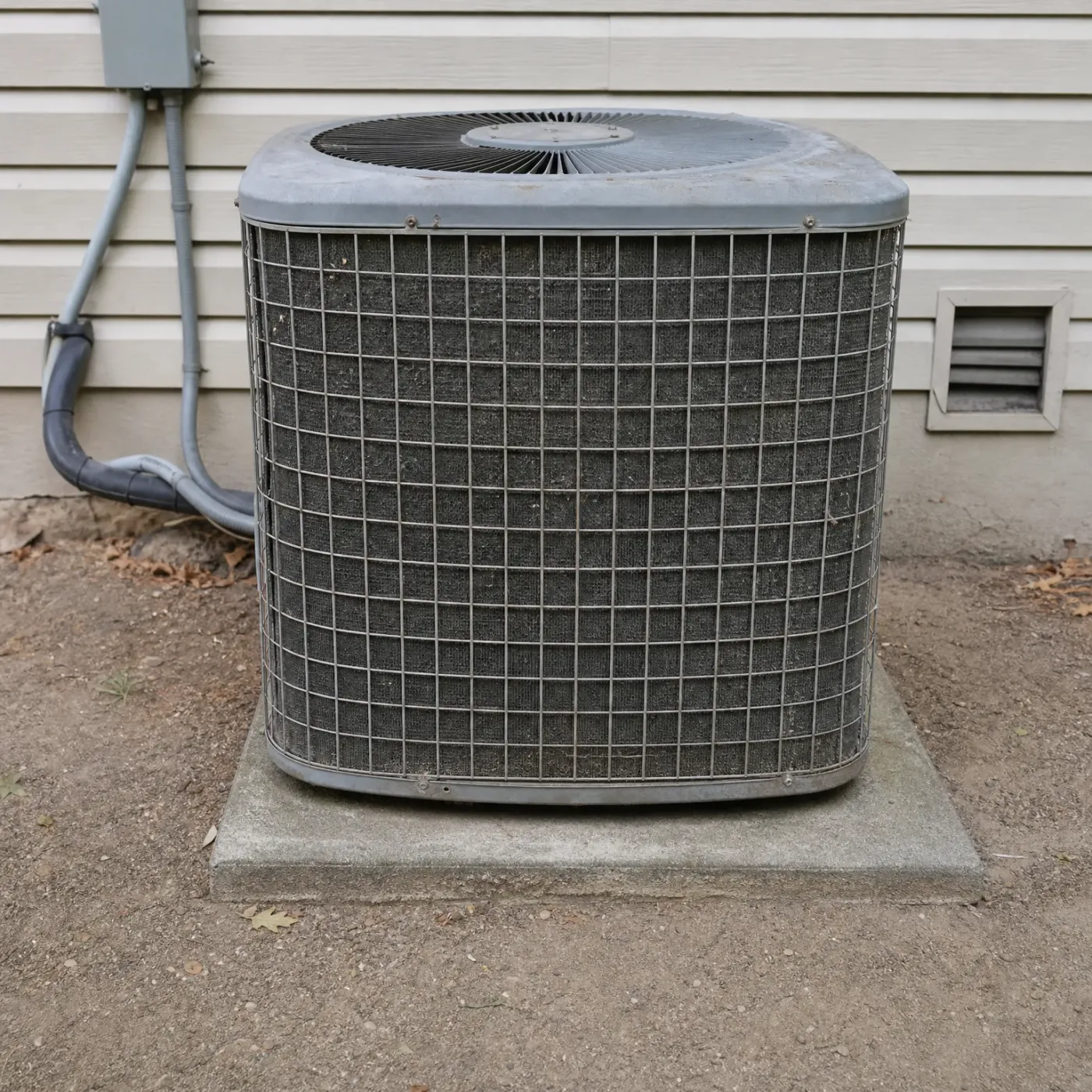
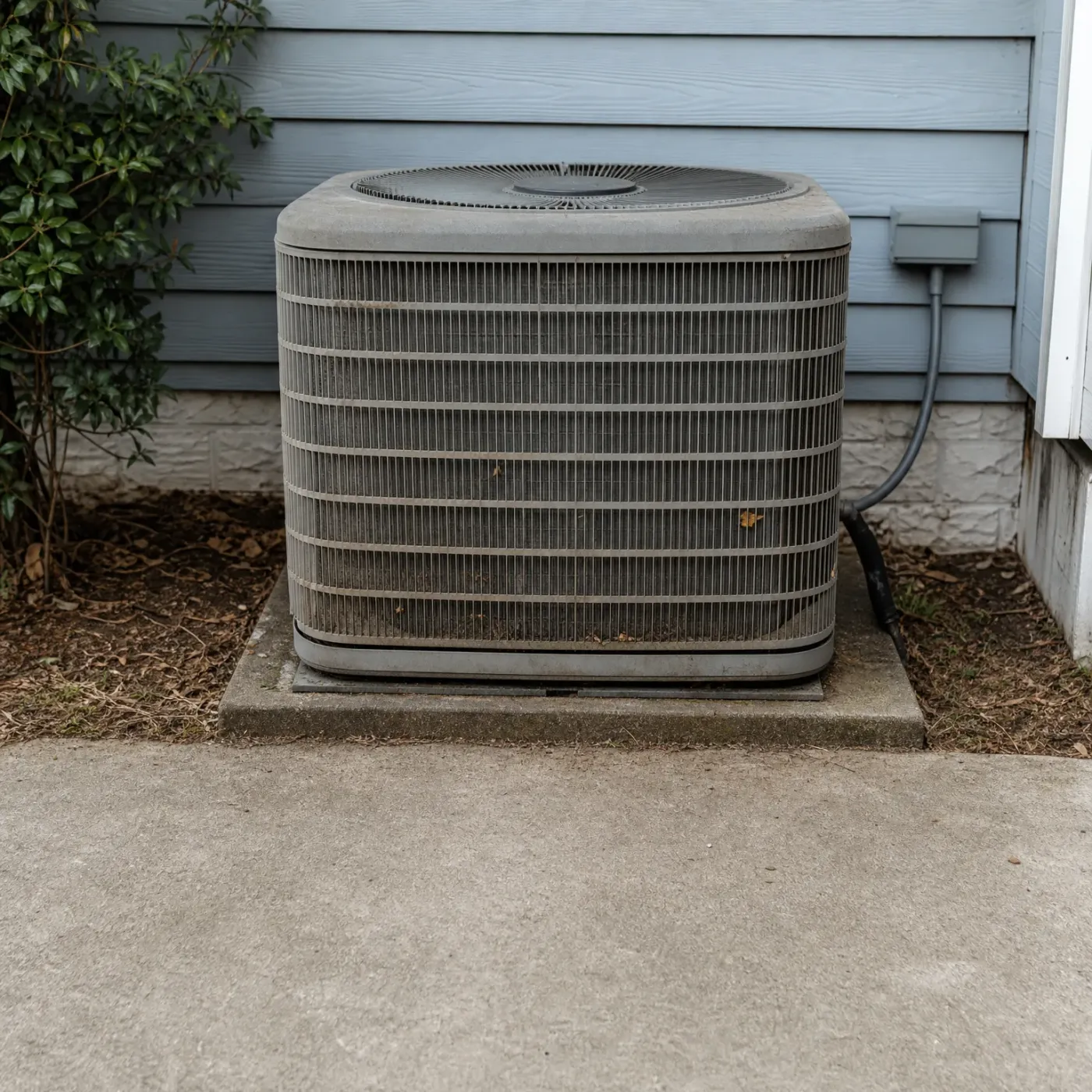
A struggling unit looks fine on the outside but acts up when it runs. It clicks and tries to start, stalls out, or shuts off a few minutes in. Dirt on the grille isn't the cause, but a unit that's gone this long without attention often has a tired capacitor too.
Power costs 15.28 cents per kilowatt-hour statewide
At 15.28 cents per kilowatt-hour, every extra minute your compressor spends straining against a weak capacitor adds to the bill. A unit fighting to start still pulls power even when it fails, so a bad capacitor costs you before it finally quits for good.
EIA-861 2025 statewide residential average
Running the way it should
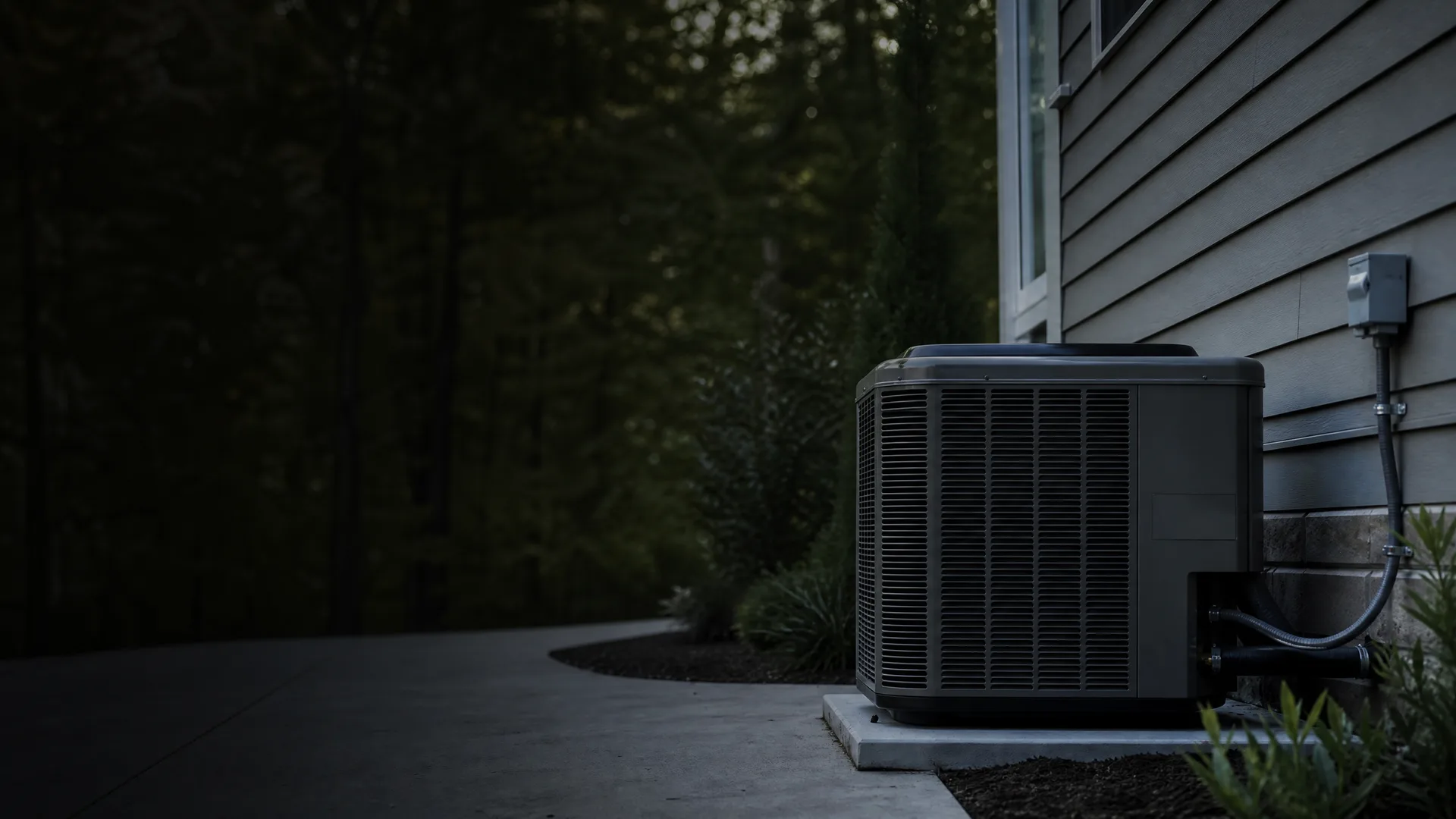
The unit sits on its pad doing nothing dramatic. The coil guards are clean, the disconnect box beside it is untouched, and the fan turns the moment the thermostat calls. A capacitor in good shape never announces itself. The unit just runs.
Struggling to keep up
Dust has built up heavy on the coil guards here, and that makes the compressor work harder to move heat off the coil. A weak capacitor under that extra strain is more likely to fail, and you'll hear it in the hum and hesitation before the unit gives out.
A hum, a click, or a slow fan means the capacitor needs a look
If your outdoor unit hums without starting, clicks and gives up, or shuts off minutes into a cycle, the capacitor is the likely reason. Those signs point to one part, even though the fix still means someone opening the unit and testing it to be sure.
A capacitor doesn't announce itself when it's healthy, and it doesn't leave much doubt when it's failing. Virginia summers push your AC hard enough that a weak one won't last long before it quits outright. Getting matched with a licensed contractor near you means someone who works on this equipment all summer and knows what a failing capacitor sounds like before they even open the panel. You'll hear from one contractor, not a handful, so there's no juggling calls while your AC sits there struggling to start.