
Virginia Cooling Pros

How to lower your AC bill in a Virginia summer

Send the form, and lining up the air conditioner tune-up stops being yours to chase.

I'm done searching

The biggest drop in your AC bill comes from keeping the system running the way it was built to run, not from turning the thermostat up. Virginia summers push an air conditioner for months at a stretch, and the harder it works to pull moisture and heat out of the air, the more power it burns doing it. A dirty coil, a low refrigerant charge, or a clogged filter all make the unit run longer to reach the same temperature, and that extra runtime shows up on your bill before it shows up as a breakdown. Most of that loss happens quietly. The unit still cools the house, just not efficiently, so nothing feels wrong until the bill comes. Catching those issues before the heat sets in means the system spends the summer working at the level it was designed for, instead of straining through July and August to make up for a problem that started in May.

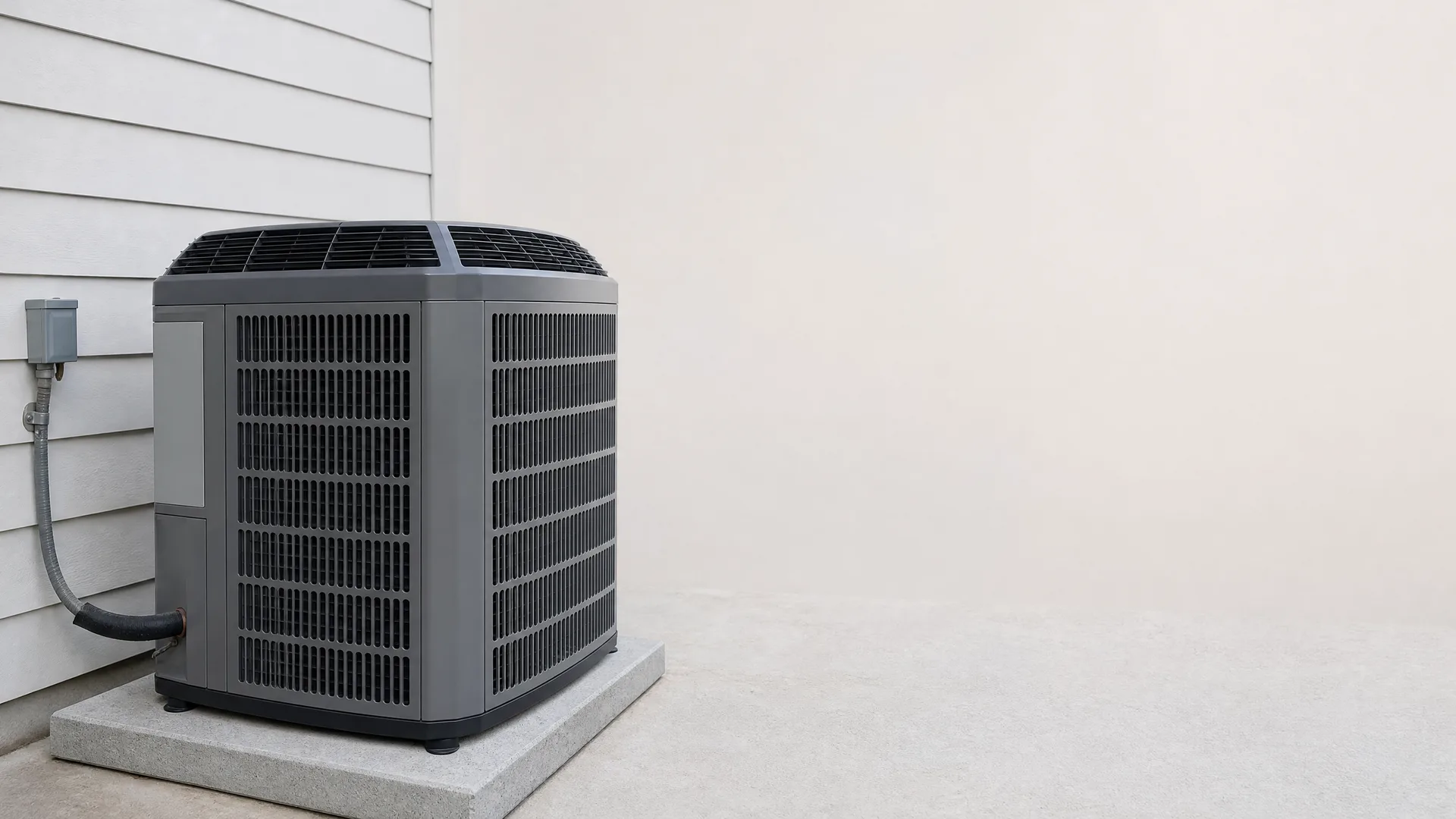
A gray outdoor air conditioner condenser unit on a concrete pad beside a house with horizontal siding, with an electrical disconnect box and conduit on the wall behind it.

A dirty coil runs longer

The outdoor coil gives up heat to the air outside. When it's coated with dust, pollen, or cut grass, it can't shed that heat as fast, so the system runs longer to reach the same temperature inside. A coil that's been washed down stays close to the efficiency it had new. One that hasn't can lose a real share of its capacity, and the compressor pays for that loss every hour it runs.

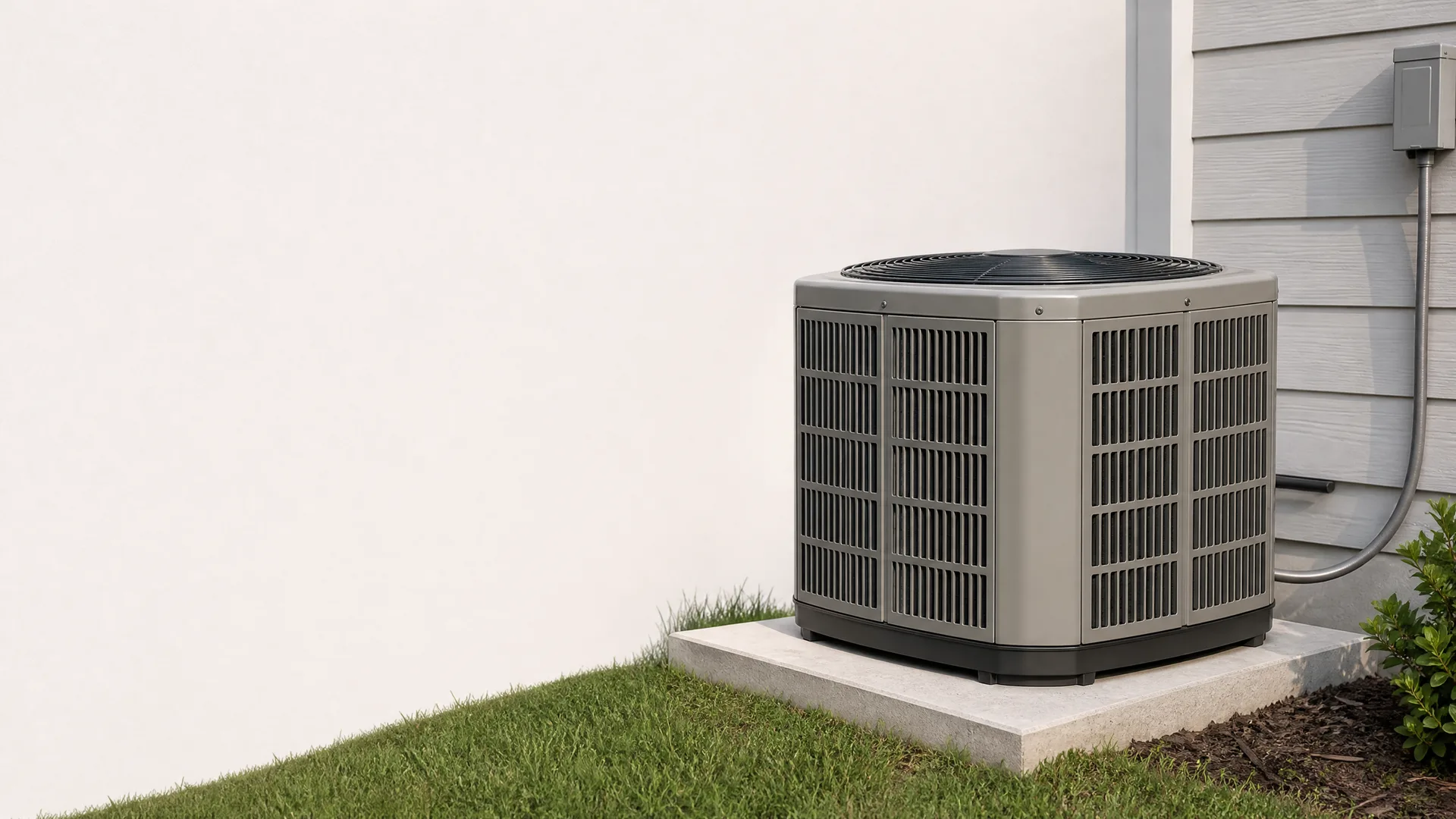
An outdoor air conditioner condenser unit on a concrete pad beside a house with horizontal lap siding, with a gray electrical disconnect box and conduit on the wall, grass in the foreground and a plain light wall at left.

The charge has to be right

Refrigerant doesn't get used up. If your system is low, it's losing it somewhere, and a low charge makes the compressor work harder to move the same amount of heat out of the house. Too much refrigerant causes the same strain in a different way. A tech checks the charge against what the system calls for, not by guessing, and corrects it before it costs you a summer's worth of extra run time.

Why does my AC run so long before the house even feels cool?

You set the thermostat and then wait, and wait, while the air coming out of the vents feels cool enough but the house doesn't seem to catch up. In a Virginia summer that can go on for an hour or more, and you start wondering if the unit is sized wrong or just wearing out, especially when the electric bill shows up and the run time matches the cost.

Long run times usually mean the system is losing capacity, not that it's too small

An air conditioner moves heat and moisture out of the house through the refrigerant in its coils. When the indoor coil is dirty, the charge is low, or airflow through the filter is restricted, the system still runs, but it moves less heat per hour than it's built to. So it keeps running, trying to catch up to the thermostat setting. In the humidity Virginia gets through the summer, that lost capacity shows up fast, because the system is also working to pull moisture out of the air, not just cool it. A unit running at full capacity should bring a room down steadily within the first half hour. If it's taking much longer, something in the system is working harder than it should to do the same job.

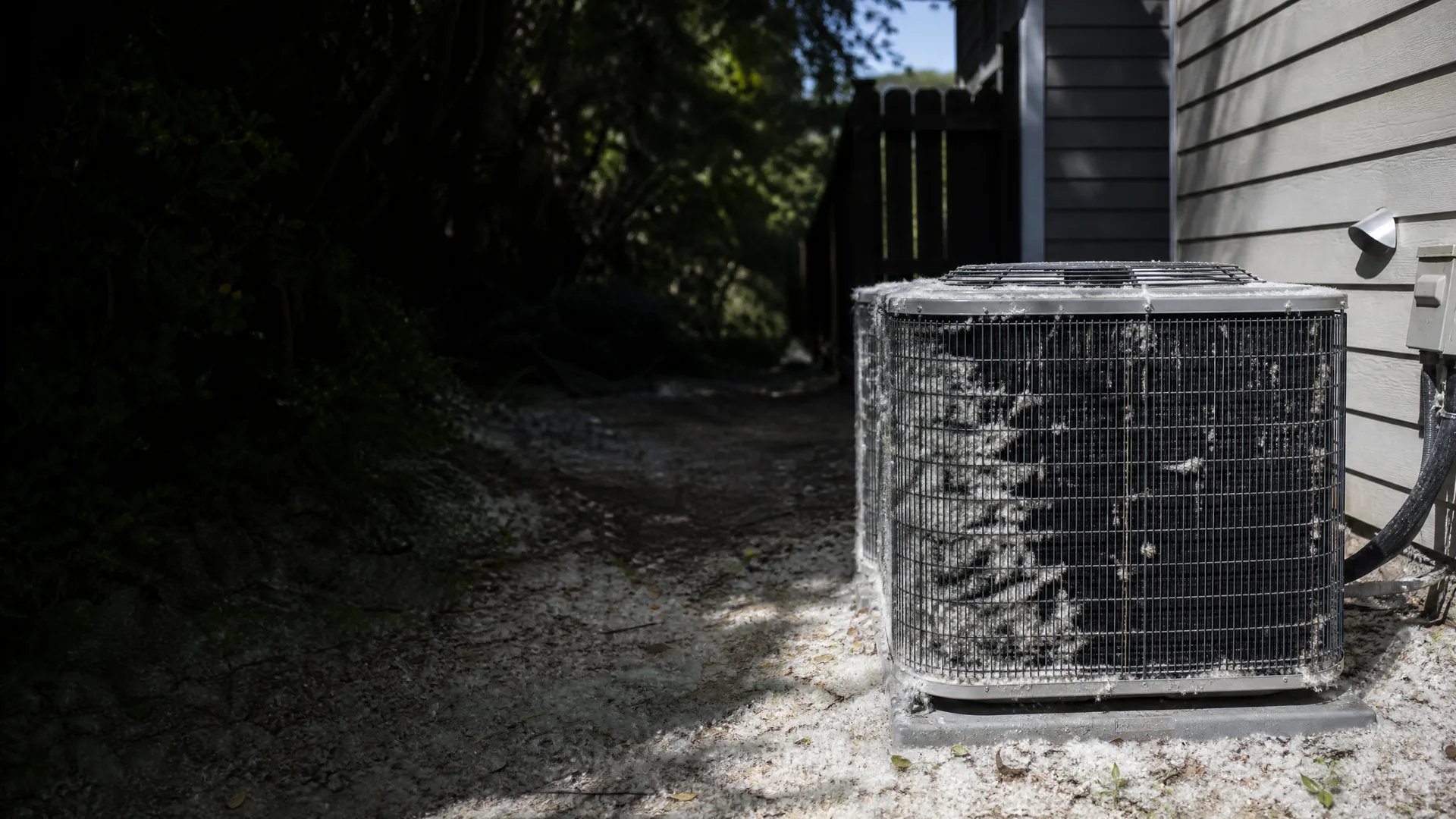
An outdoor air conditioner condenser unit covered in white foam-like debris sits on a concrete pad beside a light-colored lap-sided house, with white flecks scattered on the ground and dark trees and a wooden fence behind.

You're out pulling weeds along the side yard in late May when you see it. The condenser is running, you can hear the fan, but the top of it is covered in white fluff, drifting off the cottonwood tree near the fence line and catching on the fins like snow. You brush some off with your hand and more is stuck underneath, packed into the grille where the fins start. The unit keeps running the whole time you're out there, that same low hum, working through a coating it can't shed on its own.

Is your AC running nearly nonstop this summer?

You notice the unit outside hardly shuts off once the afternoon heats up. Inside, the air from the vents feels cool but the rooms stay sticky, and the thermostat seems to take forever to move a degree. The electric bill has crept up past what you remember paying last July. Maybe you've felt a warm room upstairs that never quite matches the one downstairs, or heard the outdoor fan running late into the evening after the sun's gone down. None of this means the system is about to quit. It means it's working harder than it should to do the same job, and in a Virginia summer that runs April through October, a system working that hard for that long adds up fast on the bill and wears out its parts sooner than it should.

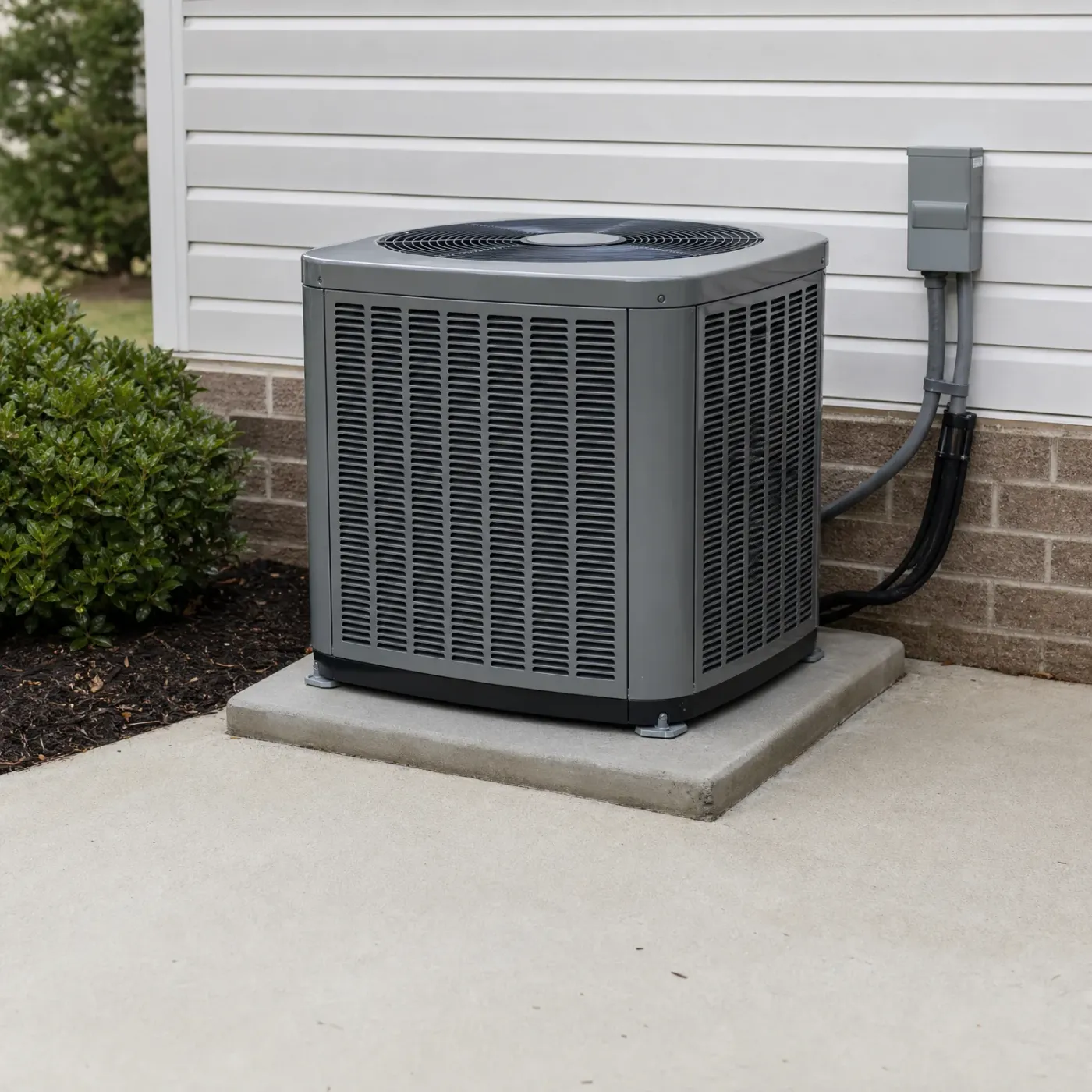
A gray outdoor air conditioner condenser unit on a concrete pad beside a house with white horizontal siding and a brick foundation, with a wall-mounted disconnect box and conduit, and a green shrub with mulch at left.

Clean and clear

This unit sits with room around it, fins free of dust and clippings, running the way it left the factory. Air moves through it without a fight. On a 95 degree day it cycles off sometimes, because it's actually catching up to the thermostat instead of chasing it.
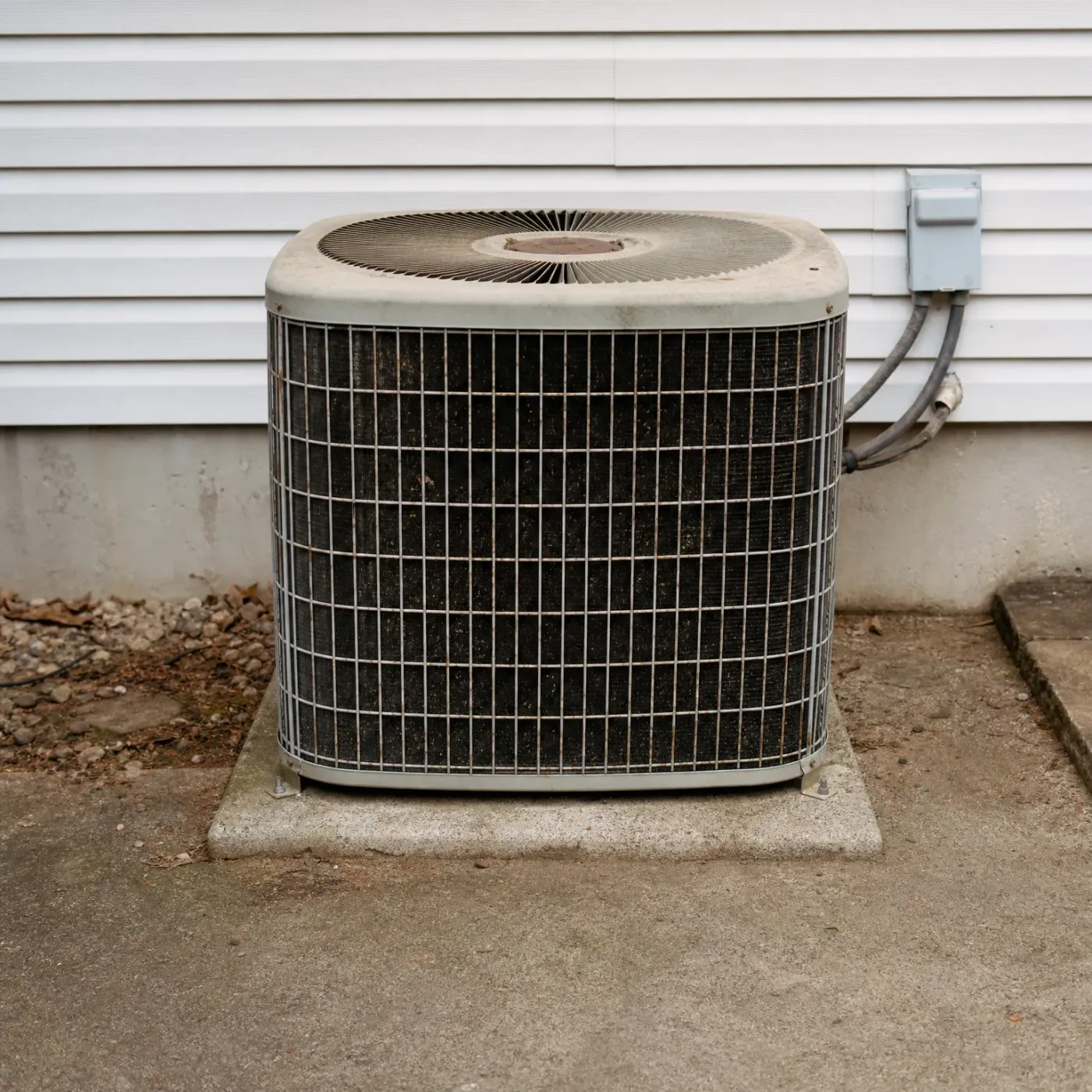
An outdoor air conditioning condenser unit on a concrete pad beside a house with white horizontal vinyl siding, with a gray electrical disconnect box and refrigerant lines on the wall behind it.

Caked and straining

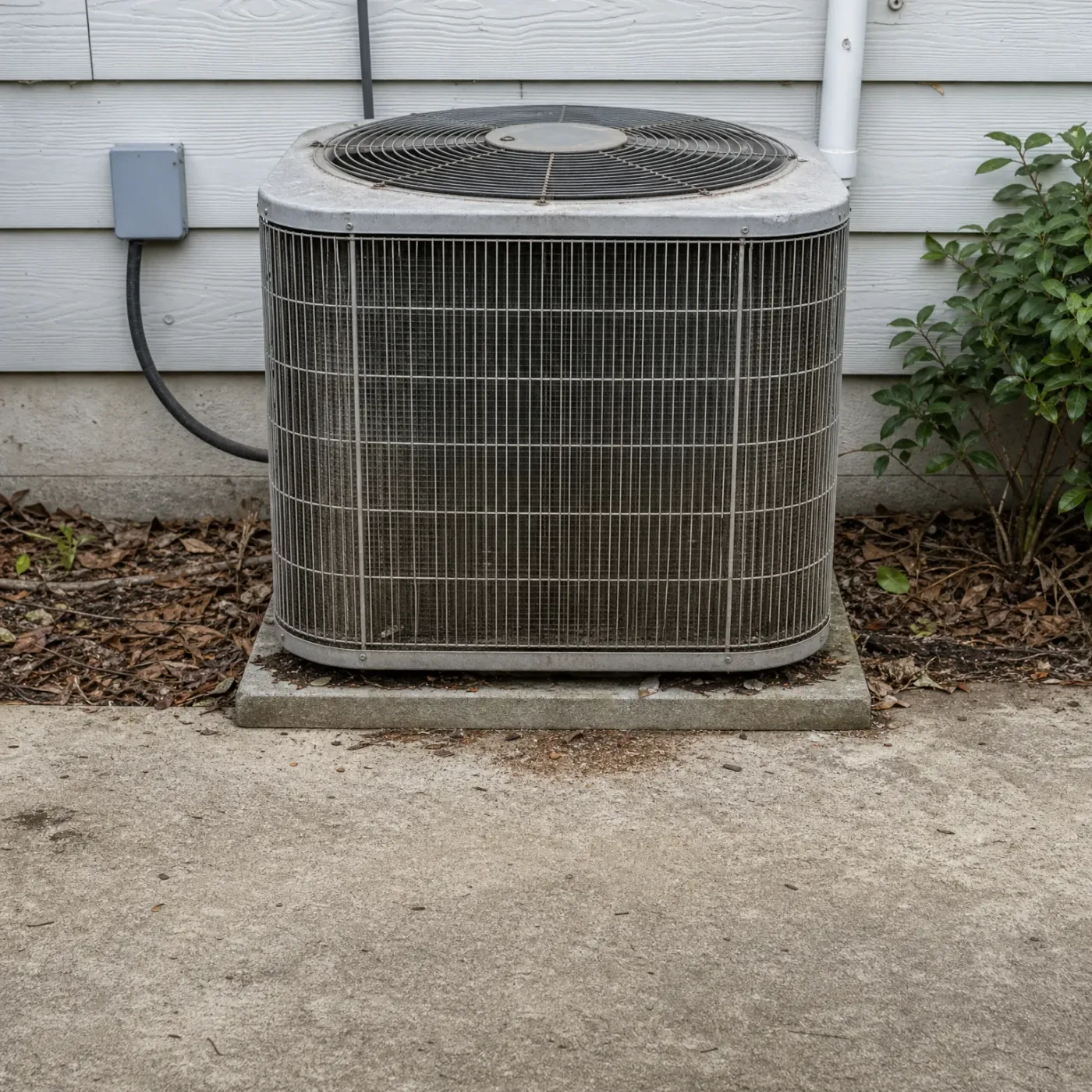
Grime covers the grille and the fins underneath are packed with it. The fan still turns, but the coil can't shed heat into the air around it, so the compressor runs longer for the same degree of cooling. That extra runtime shows up on next month's bill.

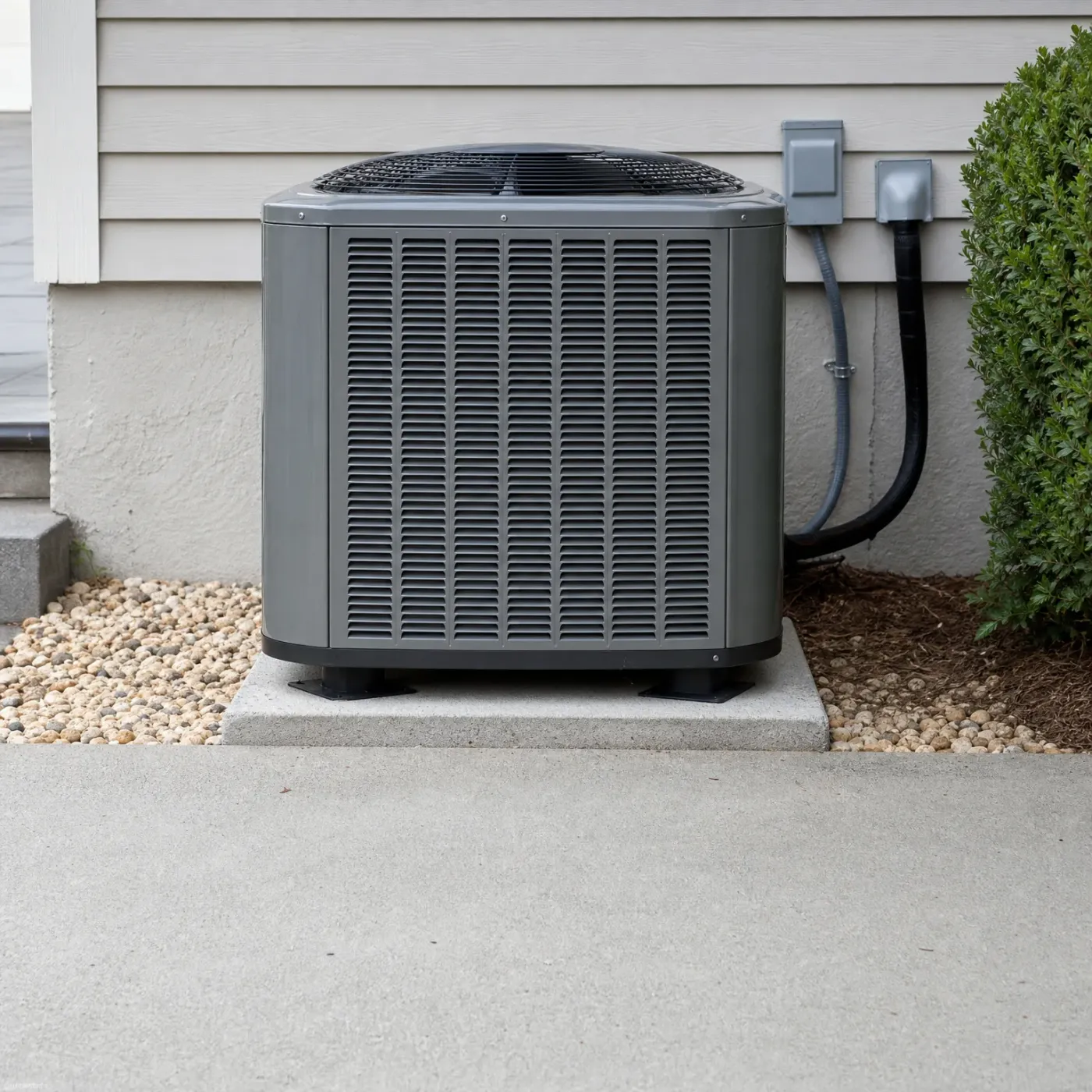
An outdoor air conditioning condenser unit on a concrete pad beside a house with horizontal lap siding, with an electrical disconnect box and conduit on the wall, mulch and a green shrub to the right, and a concrete walkway in the foreground.
Before you get your air conditioner maintenance
A gray outdoor air conditioner condenser unit on a concrete pad beside a house with horizontal siding and a stucco foundation, with a disconnect box and conduit on the wall, decorative gravel, mulch, and a shrub nearby.
After you get your air conditioner maintenance

Skip maintenance this summer

The system keeps running the way it is now. If a coil is dirty or the charge is low, your bill stays high and the strain on the compressor doesn't let up.

Find a licensed pro

Get it serviced

A local contractor checks the coil, the charge, and the parts that wear, and sets the system back to pulling the load it was built for.

Find a licensed pro

Power costs 15.28 cents per kilowatt-hour statewide

At 15.28 cents per kilowatt-hour, every extra hour your AC runs to make up for a dirty coil or a low charge lands on your bill right away. A system that's been serviced pulls the house down to temperature faster and shuts off sooner, so you're not paying for runtime you didn't need.

EIA-861 2025 statewide residential average

A man in a navy sweater reclines with closed eyes in a beige armchair in a living room, with a lamp, wooden cabinet, bookshelf, potted plant, and a side table holding a newspaper and mug nearby.
A man in a blue henley shirt reclines on a leather chair with his eyes closed, beside a window, a houseplant, a side table with a newspaper and a dark mug.
A man in a gray sweatshirt reclines with his eyes closed in a dark leather chair, with a bookshelf behind him and a side table holding folded newspapers, a mug, and a potted plant by a window.
A man in a blue sweater leans back on a brown leather chair with his eyes closed and a slight smile, in a room with bookshelves, framed pictures, a potted plant by a window, a folded newspaper and a dark mug on a table.

Send one request and you're done looking

Only one pro gets your request, so you hear from one company.

You're not committing to anything by asking.

  1. The contractor checks refrigerant pressure against the system's rating.

  2. The outdoor coil gets washed clean of dust and pollen.

  3. The blower and filter are checked so air moves the way it should.

  4. Electrical connections and the capacitor are tested under load.

What you can do, what a contractor checks

DIY upkeep

  • Rinsing the outdoor coil with a hose clears surface dust but won't reach what's packed between the fins.
  • Swapping the filter every month or two keeps airflow up, and it's something you can see and do yourself.
  • Clearing leaves, grass clippings, and vine growth from around the condenser takes minutes and costs nothing.
  • You can't check refrigerant charge or test the capacitor without gauges and a meter, so a low charge can run all summer unnoticed.
  • Without a way to measure what's happening inside the system, you're guessing at whether it's actually working the way it should.

Professional service

  • A local contractor who works on this equipment all summer knows what usually fails first in a Virginia heat wave.
  • Refrigerant charge gets checked against the system's actual rating, not guessed at by how cool the air feels at the vent.
  • The coil gets washed clean of what's built up between the fins, not just what a hose can reach from outside.
  • Electrical connections and the capacitor get tested under load, catching a part that's about to fail before it strands you on a 95 degree day.
  • One contractor takes the call, so you're not fielding a round of quotes from companies you didn't ask to hear from.
A two-story house with cream horizontal siding, a dark gabled roof, and a white front door, fronted by a lawn, shrubs, and a concrete walkway leading to a sidewalk and street, with large leafy trees on both sides.

Virginia summers run a dew point near 64°F across June, July and August, averaged over where homes in the state sit, according to NOAA climate data. That's thick air, the kind that sits on your skin even in the shade. Your air conditioner isn't just cooling that air, it's wringing the water out of it, and that's the harder half of its job. A system with a clean coil and the right refrigerant charge pulls that moisture out efficiently. One running low on charge or caked with dust struggles with it, so the house feels damp and warm even while the vents blow cool, and the unit keeps running to try to catch up.

NASA POWER T2MDEW county cells weighted by homes

An older man with gray hair and a navy knit sweater sits in an armchair with his eyes closed, near a bright window with potted green plants.
A woman in a cream knit sweater sits in an armchair indoors, eyes closed and smiling, beside a window showing yellow and orange autumn foliage, with a mug on a wooden side table and shelves holding vases behind her.

What this comes down to

  • A system that's been checked over pulls a Virginia summer's thick air down to temperature and shuts off instead of running straight through the afternoon.
  • Nothing about your thermostat setting fixes a dirty coil or a low charge; the equipment has to be looked at.
  • A local contractor who services this equipment all summer knows which part on your unit usually gives out first.
  • You're matched with one contractor, not a handful of companies calling about the same job.
  • The coil, the charge, and the electrical connections are the parts that decide whether your bill stays high or comes back down.

Your bill tracks how hard your AC has to work, and that comes down to a handful of parts, not the number on the thermostat. A clean coil, the right refrigerant charge, and electrical connections that are tight and tested are what let the system shut off instead of running through another sticky afternoon. None of that shows up by looking at the unit from across the yard. Someone has to check the pressure against what the system is rated for, wash the coil out, and test the capacitor and connections while they're in there. That's what a maintenance visit is for.

This is where having the right contractor matters as much as having the work done at all. A contractor who's in attics and side yards all summer on this equipment has seen which part gives out first on units like yours, because they've already replaced it on the house two doors down. That's a different kind of knowledge than a one-time call out for a breakdown. When you send a request through this page, it goes to one local contractor who takes on that job, not out to a handful of companies competing for it. You're not fielding five calls to compare quotes on something you already know you need. You hear from the person who's going to look at your coil and your charge and tell you straight what shape they're in. From there, whether the fix is a coil that needed washing or a charge that was low, the system goes back to doing what it was built to do, and the bill follows.

A single-story stucco house at dusk with a lit paver walkway lined by low path lights, desert plants and boulders in front, and distant mountains under an orange and blue sky.

Air Conditioner Maintenance

Finding a pro stops being your job

Step 1 of 3: Equipment
  • A brown leather and wood armchair with a cream knit throw sits in a corner beside a woven basket holding a dark cushion, under a framed mountain photograph, with a wood-trimmed window showing yellow and green foliage.
    • A local pro who services air conditioners gets in touch about the tune-up.
    • Say what's going on with your air conditioner, and a pro who works on them reaches out.
  • A dark wood dresser against a pale wall holds a ceramic vase of eucalyptus branches, a stack of books with a wooden bowl, and a woven basket, with a framed landscape painting above and a woven basket holding a knit blanket on the floor beside a window.
    • After you send the request, you're done searching.
    • Send the request and finding a pro stops being your problem.
  • A window seat with beige linen and brown textured cushions, a chunky knit blanket, and an open book, beside a window showing blurred yellow autumn foliage.
    • Fill out one form instead of calling around for an air conditioner tune-up.
    • Skip calling around to set up an air conditioner tune-up.
  • A cream upholstered armchair with a rust-colored pillow and knit fringed throw sits beside a window with a ceramic vase of orange-leafed branches on the sill, overlooking autumn trees and leaf-covered ground.
    • Your request goes to one pro, not a list of companies.
    • The pro who reaches out is licensed in Virginia.