Profile view of a bearded man wearing a black baseball cap and a dark gray T-shirt against a plain light background.

How to get your AC ready for a Virginia summer

Step 1 of 3: Equipment

Getting your AC ready for a Virginia summer means having it checked before the heat and humidity settle in for good, usually sometime in spring. A technician cleans the condenser coil, checks the refrigerant charge, and tests the capacitor and electrical connections, the parts most likely to cause a breakdown once the system is running long hours. Virginia summers are humid, and a humid summer makes an AC work harder than the temperature alone suggests, since it's pulling moisture out of the air as well as cooling it. A unit that's low on refrigerant or running on a weak capacitor can still blow cold air for a while, then quit on the first truly hot, sticky week when you need it most. Catching that ahead of time means the system runs through July and August instead of failing partway through them. It also tends to run more efficiently, which matters over months of near-constant use.

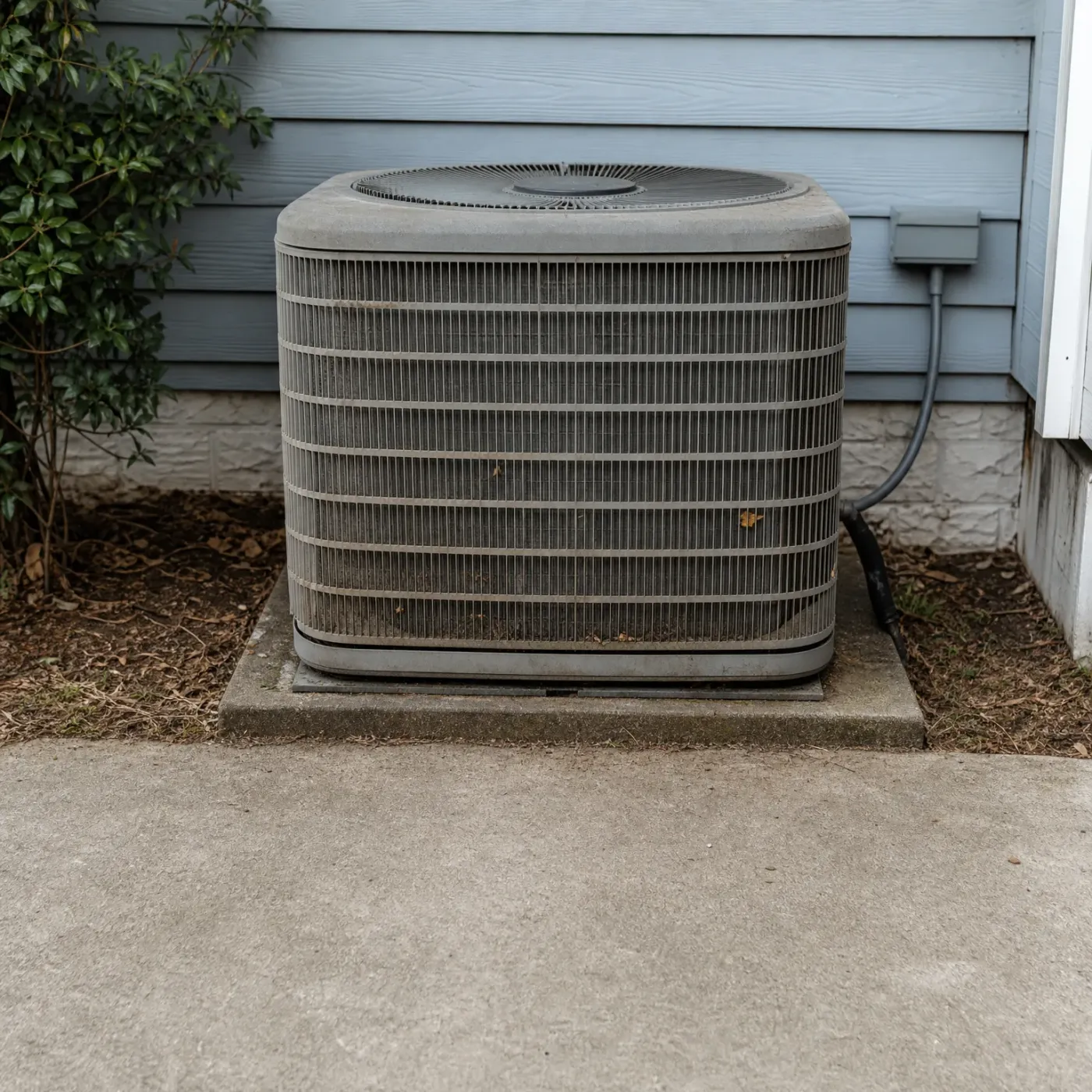
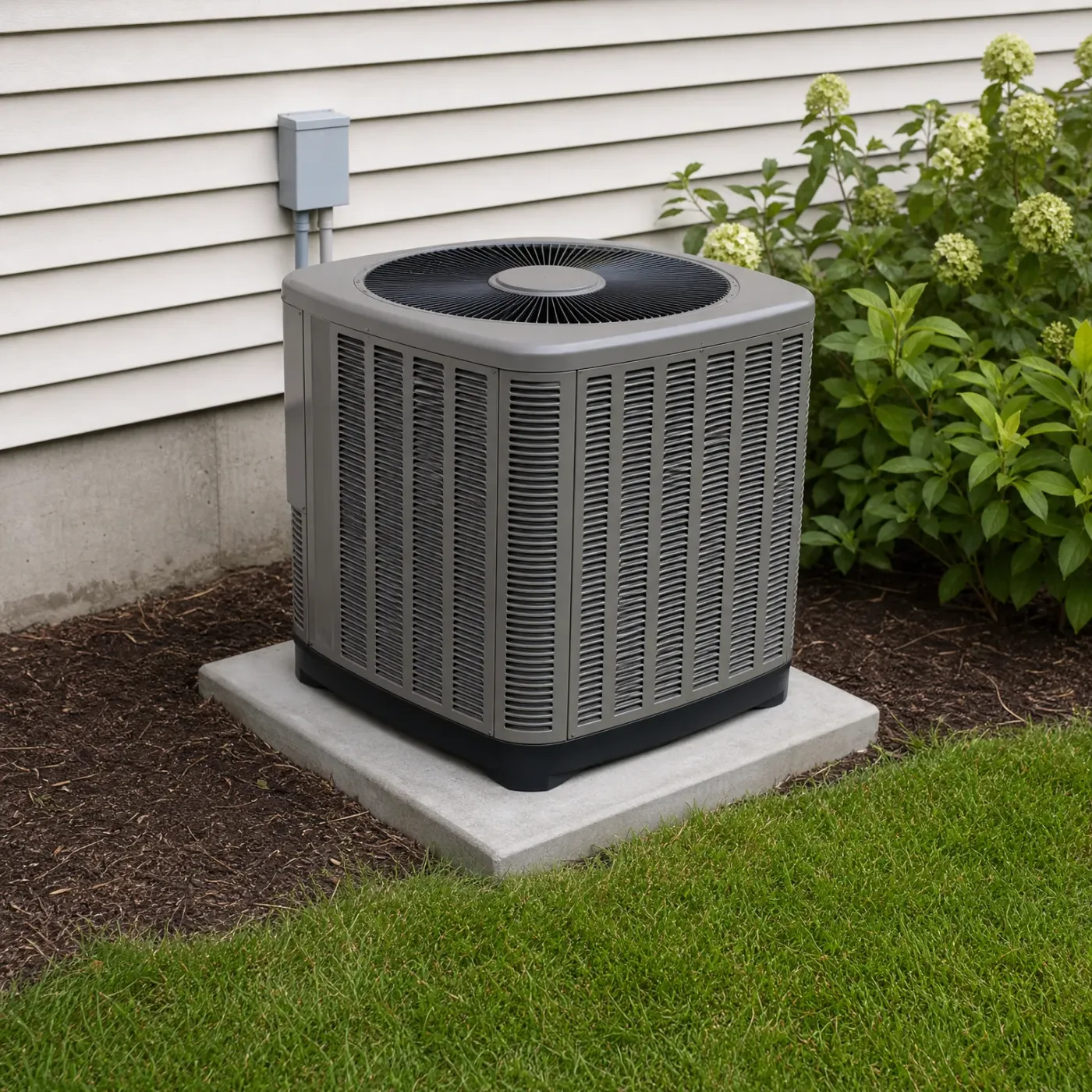
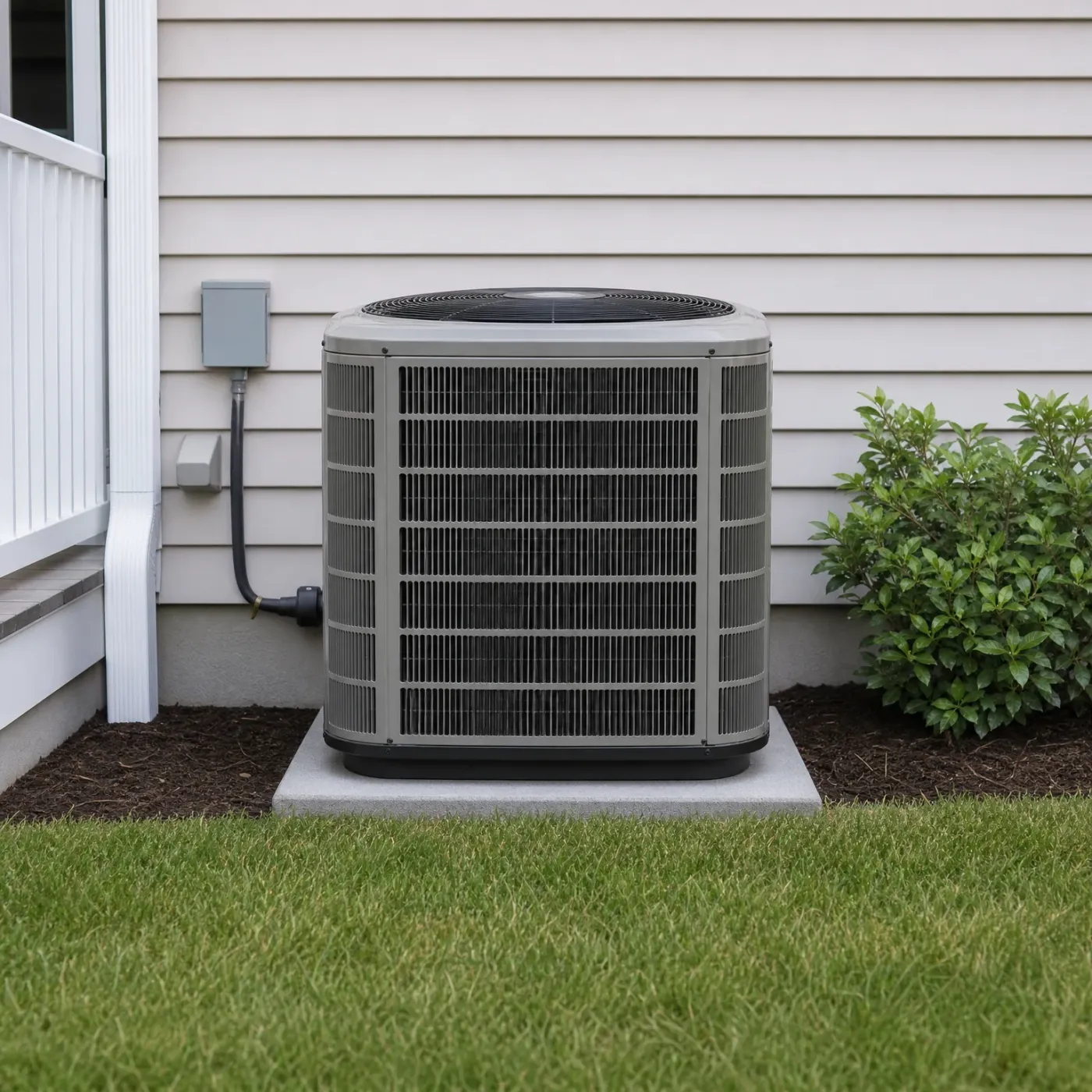
An outdoor air conditioning condenser unit on a concrete pad beside a house with horizontal lap siding, with a gray electrical disconnect box and conduit on the wall, mulch bed and shrub to the right, and mown grass in the foreground.
The coils are clean and the unit sits clear of the shrub, so air moves through it the way it's supposed to.
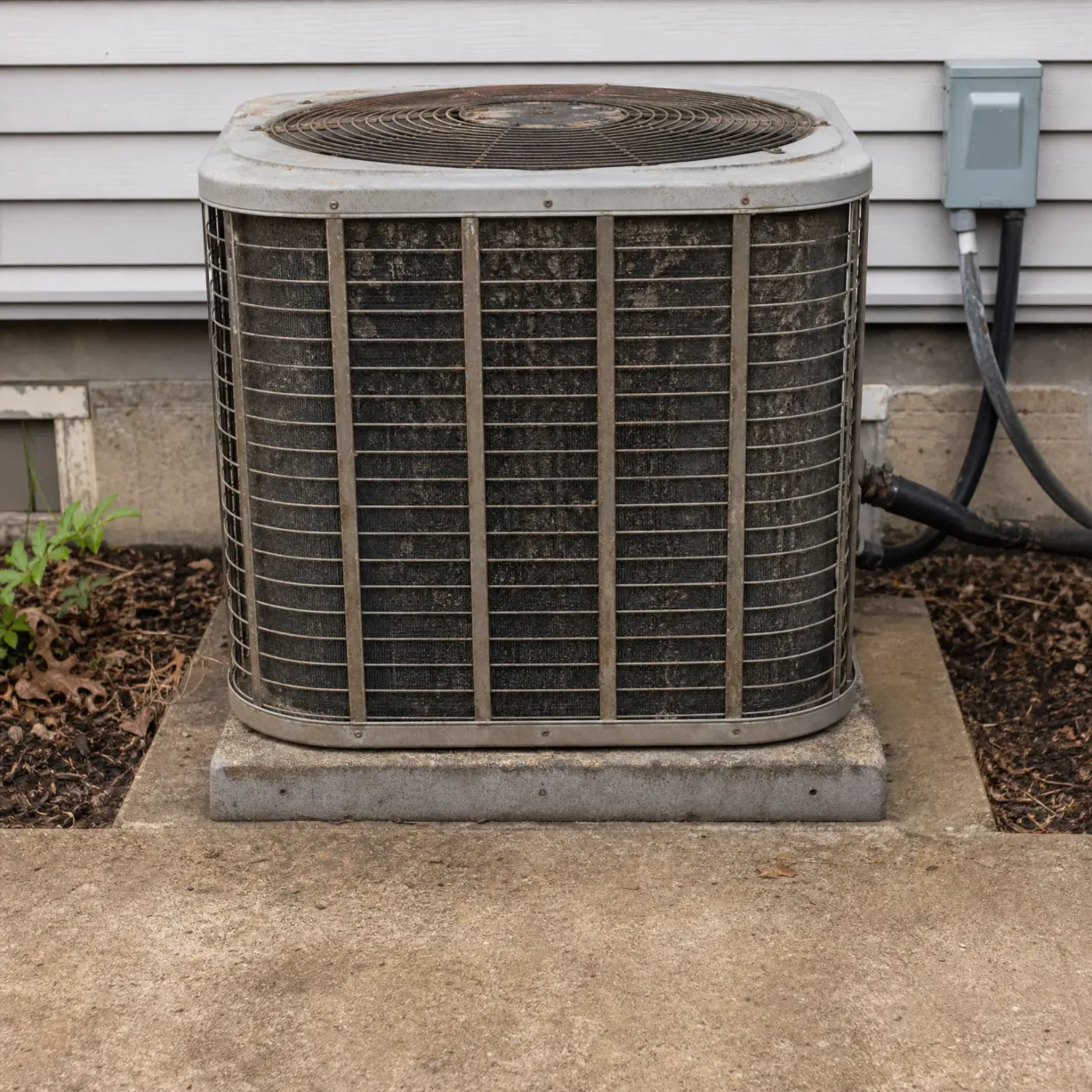
An outdoor air conditioning condenser unit on a concrete pad beside a house with light blue horizontal siding, with a shrub to the left and a conduit and disconnect box on the wall to the right.
Dust and debris coat the coil guards, and the unit has to work harder to pull heat out of your house.
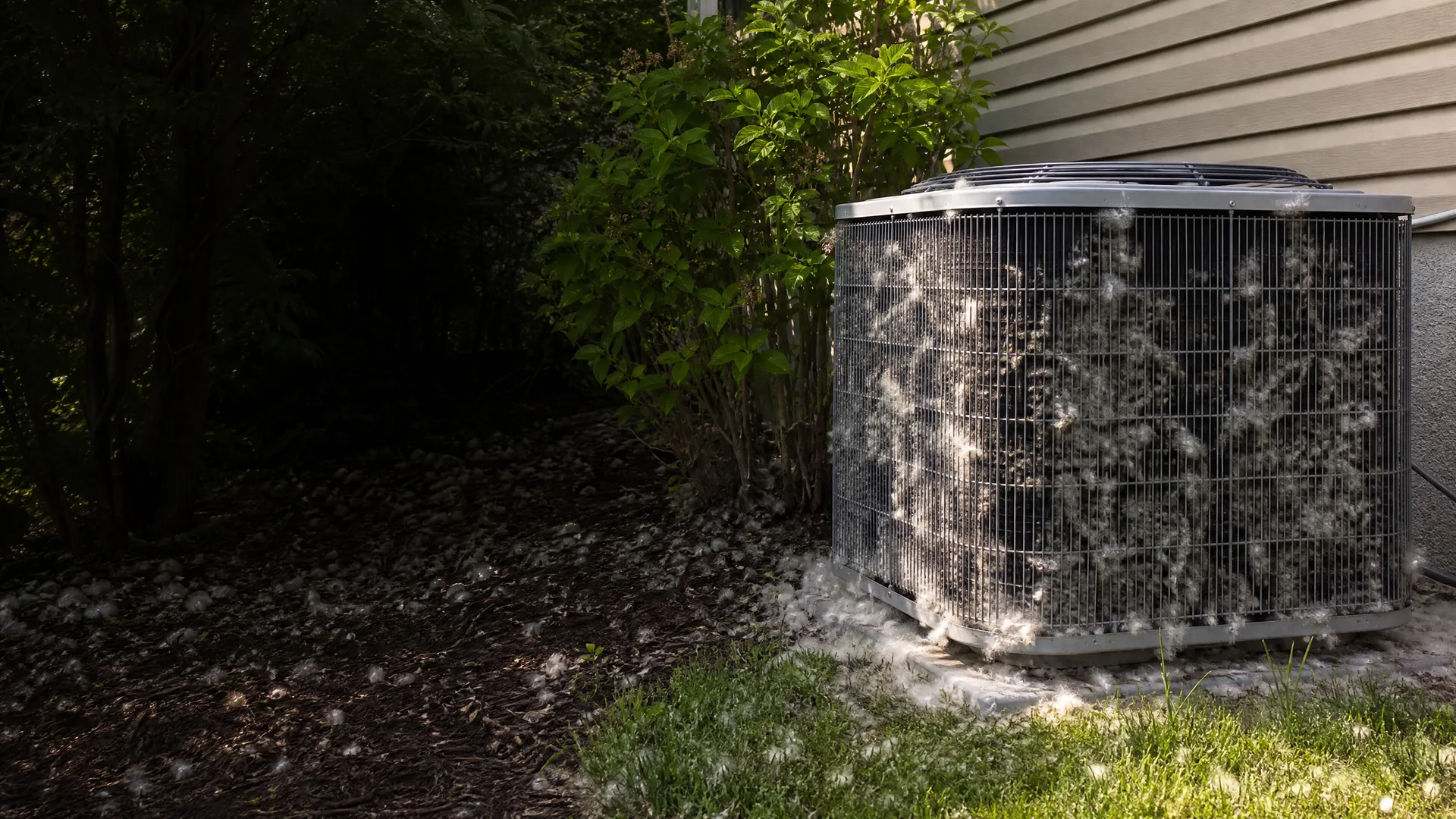
An outdoor air conditioner condenser unit beside a house with horizontal siding and stucco, its coil fins covered in white cottonwood fluff that also collects on the surrounding grass and mulch.

You're out in the side yard in late May, coiling up the garden hose, when you notice the cottonwood fluff. It's everywhere this week, drifting off the trees and catching on everything low to the ground. Some of it has settled thick across the condenser fins, a soft white layer packed into the grille like lint in a dryer trap. You give the side a tap and a little of it lifts and drifts off, but most stays put, matted into the metal. The unit's running right now, you can hear it, pulling air through that fluff to get at the coil underneath. You make a note to clear it off before the heat really sets in.

What does a tech actually check during an AC tune-up?

You want to know if this is just a quick look-and-go or something more. Before you pay for a tune-up, it helps to know what's actually getting inspected, because that's how you tell a thorough visit from a rushed one. You deal with small problems before they grow, so you want the real list, not a vague promise that the unit gets "checked out."

A tune-up covers the coil, the refrigerant charge, and the electrical parts that wear out first

A technician starts outside, cleaning the condenser coil so it can shed heat the way it's built to. Refrigerant charge gets checked next, since too little or too much makes the system run long and still fall short on hot, humid days. The capacitor gets tested, since a weak one is one of the more common reasons a unit stops cooling in July. Electrical connections get tightened, the fan motor gets checked for wear, and the thermostat gets confirmed to be reading correctly. Indoors, the evaporator coil and the blower get a look too. None of this takes long, but skipping it is how a small weak spot turns into a system that quits on the hottest week of the year.

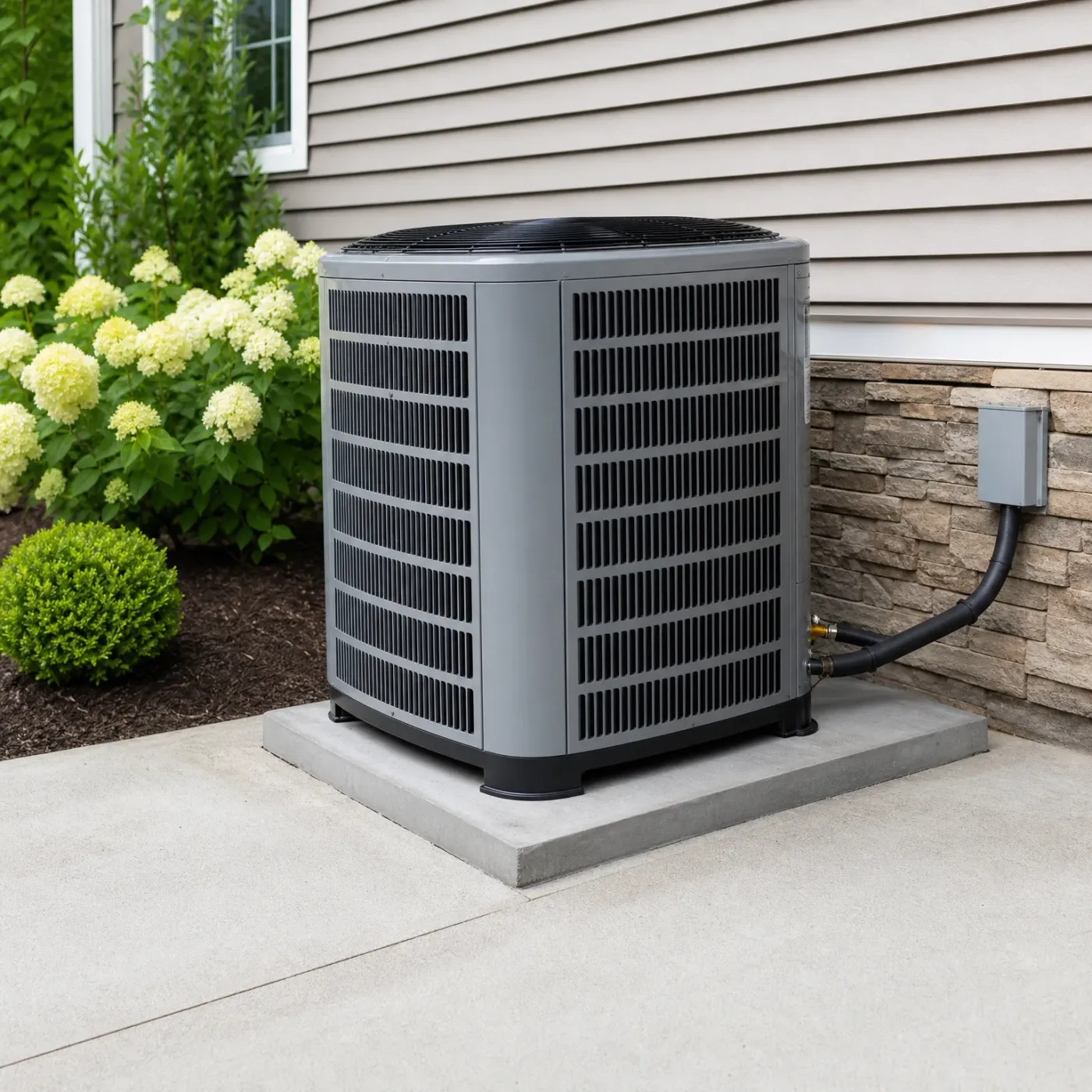
A gray outdoor air conditioning condenser unit on a concrete pad beside a house with horizontal siding and a stone veneer base, with refrigerant line and electrical disconnect box on the wall and flowering shrubs to the left.

Clean and running right

The coils are clear, the fins are straight, and the unit sits a couple feet off the siding with room to breathe. It pulls heat out of the house without straining, so it doesn't run longer than it has to to hit the temperature on your thermostat.

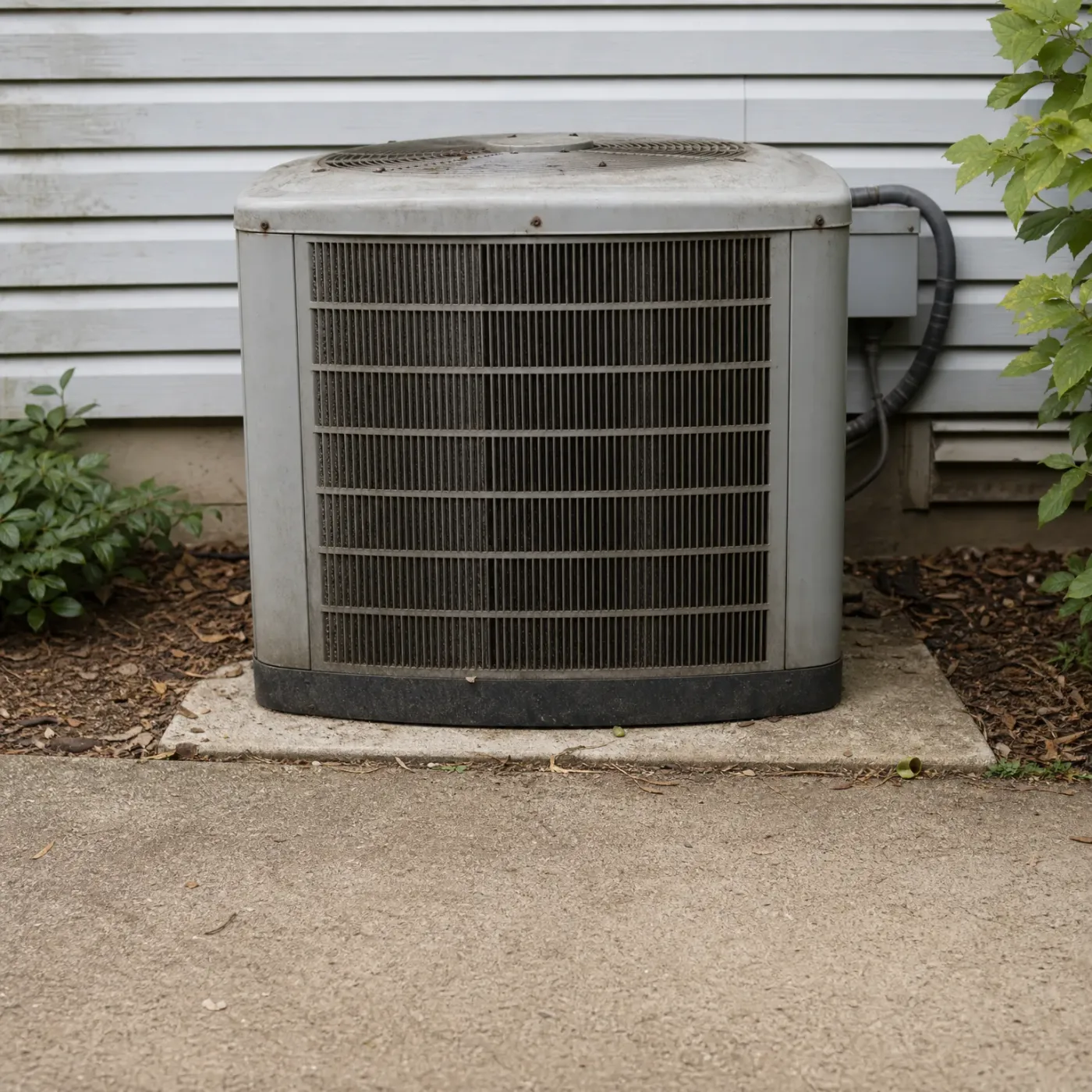
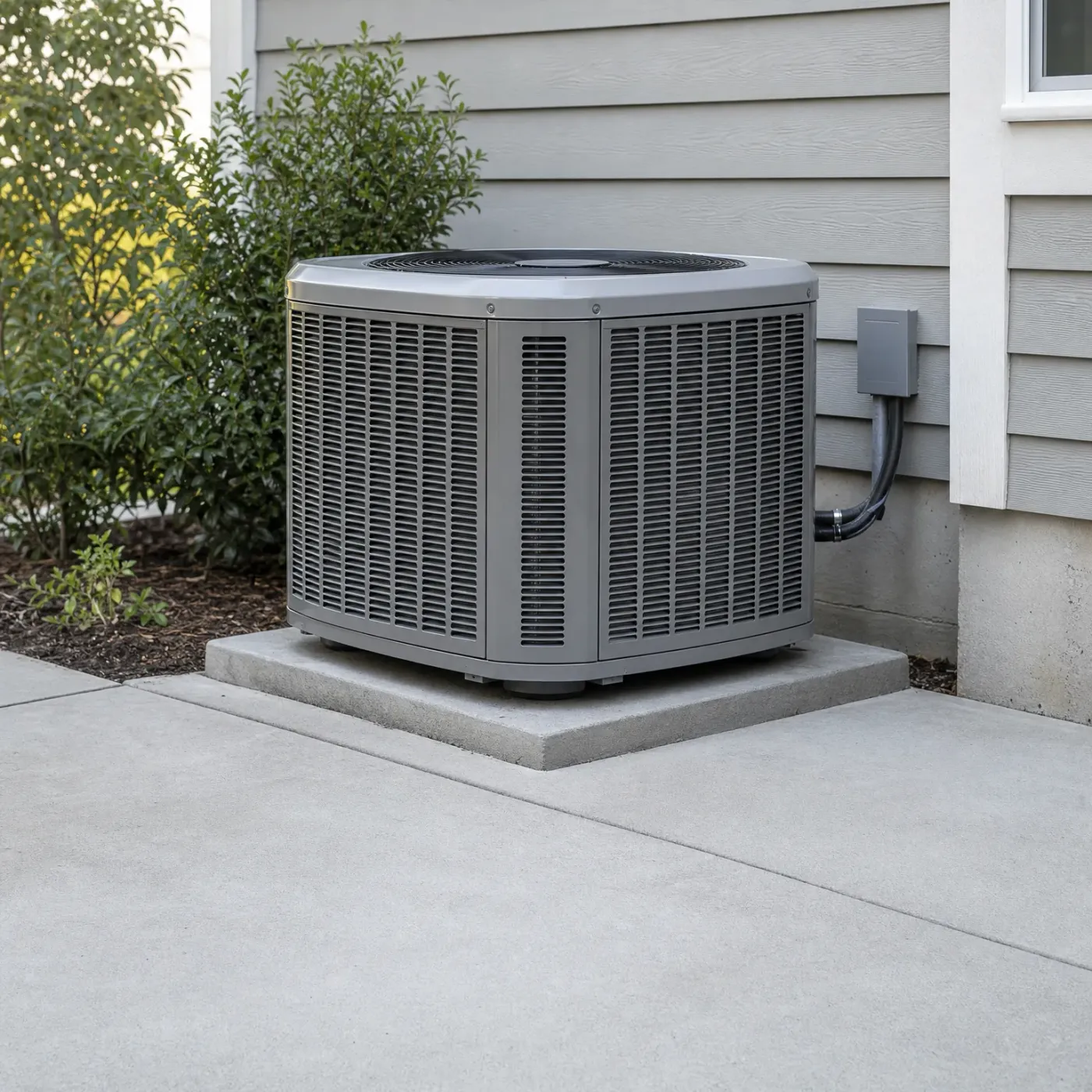
An outdoor air conditioner condenser unit on a concrete pad beside a house with light gray horizontal siding, with mulch and green shrubs on either side and a concrete walkway in the foreground.

Dirty and overworked

Grime cakes the fins and the cabinet, and the unit has sat untouched through a few Virginia summers already. It has to run longer to move the same heat, and a coil this dirty usually means nobody's looked at the refrigerant charge or the capacitor in a while either.

Tune-Up Now or Risk a Summer Breakdown

Spring tune-up

  • A technician checks the refrigerant charge before the first 90-degree week, when a low charge first shows up as weak cooling.
  • The condenser coil gets cleaned now, before cottonwood fluff and cut grass have a whole summer to pack into the fins.
  • Catching a weak capacitor in April means a scheduled visit, not a call placed when the house is already 85 degrees inside.
  • The unit runs on a scheduled visit, so a tech can test it under normal conditions instead of guessing what failed overnight.
  • A spring check costs the same whether the system is fine or needs a part, since the visit itself is the service.

Waiting for a breakdown

  • A failed capacitor in July means the AC quits on a day it's already hot and humid in Virginia, with no cool stretch to wait out.
  • Dirty coils that went unchecked all spring make the compressor work harder for months before anything actually fails.
  • A breakdown in peak summer often means a wait for a tech, since everyone else's AC is struggling on the same hot week.
  • Diagnosing a dead system is harder than checking a working one, since a tech can't watch it run to see where the trouble is.
  • A refrigerant leak that goes unnoticed through spring has months longer to drain the charge and strain the compressor.
A gray outdoor air conditioner condenser unit on a concrete pad beside a house with horizontal vinyl siding, surrounded by mulch, flowering shrubs, and lawn.

Running clear

The grass is cut back from the pad and the mulch sits low enough that air pulls through the coil without a fight. Whatever's blooming nearby, it isn't piled against the fins. The unit can move the heat out of your house and shut back off.

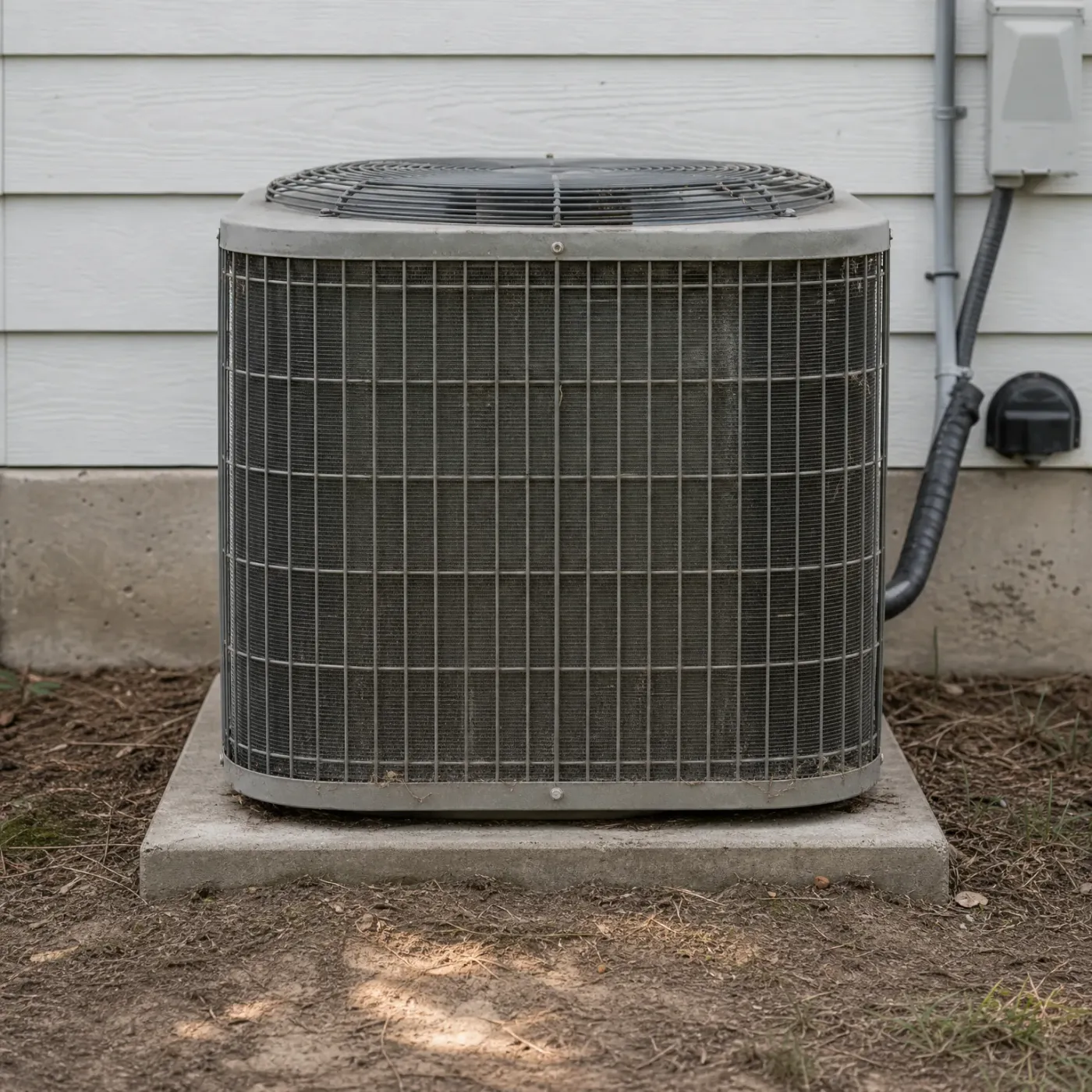
A weathered outdoor air conditioning condenser unit on a concrete pad beside a house with light horizontal siding, an electrical disconnect box and conduit on the wall, and mulched soil on either side.

Caked and straining

Grime covers the coil fins and the cage around them, thick enough to block airflow. The condenser has to run longer to do the same job, and the disconnect box and wiring sit right there with no clearance to check or service either one.

A bearded man in a plaid flannel shirt stands in a kitchen looking out a window toward snow-covered shrubs, with a steaming mug on the windowsill and potted plants on a shelf behind him.
A smiling man with dark curly hair in a navy t-shirt sits on a gray couch indoors, with a large-leafed plant and a window in the background.

A local pro for your air conditioner maintenance

Answer a few questions instead of calling shop after shop.

Sending the form costs nothing.

What a tune-up actually checks

  • A tech checks the refrigerant charge by measuring both the suction line temperature and the pressure, not just one gauge.
  • The condenser fan motor gets tested under load, since a motor can spin freely by hand and still fail once it's pulling current.
  • The blower wheel inside the air handler gets inspected for caked-on dust, which throws it off balance and strains the motor bearing.
  • A clean start capacitor reads within about 6 percent of its rated microfarad value; anything further off means it's on its way out.
  • The evaporator coil gets checked for a thin layer of ice, which shows up when airflow or charge is already off before you'd notice warm air.
  • Electrical connections at the disconnect box get tightened, since a loose lug heats up under load and can trip the breaker on the hottest day.

A thorough tune-up goes past wiping down the outdoor unit. The refrigerant charge gets measured two ways, suction line temperature and pressure together, because either reading alone can mislead. If the charge is low, that's where weak cooling starts, usually weeks before you'd feel it on a 95-degree afternoon. The condenser fan motor gets run under load rather than just spun by hand, since a motor can turn freely sitting still and still stall once it's pulling current outside in the heat. Inside the air handler, the blower wheel gets looked at for caked-on dust. Even a thin, even coating throws the wheel off balance, and an unbalanced wheel wears on the motor bearing every hour it runs. The start capacitor gets tested against its rated microfarad value. A capacitor that's drifted more than about 6 percent off is already failing, even if the unit is still starting up fine for now. The evaporator coil gets checked for ice, which can form when airflow is restricted or the charge is off, well before the house itself feels warm. Last, the electrical connections at the disconnect box get checked and tightened. A loose lug there heats up as current runs through it, and on the hottest day of the year, that's exactly when it tends to trip the breaker. Each of these is a small thing on its own. Together they're what separates a unit that gets through a Virginia summer from one that doesn't.

A woman in a gray turtleneck sweater stands by a window looking outside at snowy ground, with a dimly lit living room containing a sofa, shelves, lamp and a lit candle behind her.
A woman in a cream cable-knit turtleneck sweater stands in a warmly lit living room with a fireplace and shelves behind her, looking out a window toward snow-covered trees and a railed deck.
A woman in a cream knit turtleneck sweater stands by a window looking out at snow, with a lit fireplace, sofa and lamp in the room behind her.
A woman in a gray knit sweater sits by a window looking out at falling snow, with a dimly lit living room containing a sectional sofa, pillows, a lamp and houseplants behind her.

A dirty condenser coil can cut airflow enough that the unit absorbs less heat from the refrigerant passing through it, so the compressor runs longer to reach the same temperature on the thermostat.

That longer run time is what shows up on the power bill in July and August, not a change in how your thermostat is set or how often the doors get opened.

An outdoor air conditioning condenser unit on a concrete pad beside a house with horizontal lap siding, with a conduit and electrical disconnect box on the wall at right.
Before you get your air conditioner maintenance
A gray outdoor air conditioner condenser unit on a concrete pad beside a house with horizontal lap siding, with a wall-mounted disconnect box and conduit to its right and shrubs to the left.
After you get your air conditioner maintenance

Power costs 15.28 cents per kilowatt-hour statewide

At 15.28 cents per kilowatt-hour, every extra hour your compressor runs to chase a dirty coil or a low charge shows up on your bill. A unit that's been checked over doesn't have to work as hard to cool your house, so it draws less power doing it.

EIA-861 2025 statewide residential average

  1. The technician cuts power to the unit at the disconnect before opening anything.

  2. The condenser coil gets washed clean of leaves, grass, and cottonwood fluff.

  3. Refrigerant pressure and suction line temperature get measured to check the charge.

  4. The capacitor gets tested under a load, not just checked by eye.

Why does your AC run longer than it used to?

You notice it on the thermostat app, or just by how long the compressor hums outside before it shuts off. A system that used to cool the house in twenty minutes now runs through most of the afternoon. Maybe the air coming out of the vents doesn't feel as cold as it did last July. Maybe there's a musty smell when it first kicks on, or the unit outside seems to be working harder than usual, the fan straining a little. None of that means it's broken. It usually means it's been pulling heat out of your house less efficiently than it should, and the compressor is paying for it with longer run times. Left alone through a full Virginia summer, that strain is what tends to shorten how long a system lasts.

Single-story house with gray horizontal lap siding, dark shingled gable roof, a small covered front porch with a dark door, and windows, set behind a patchy green and brown lawn under a clear blue sky.

A dew point averaging 64°F across June, July and August is what makes a Virginia summer feel heavier than the thermometer lets on, according to NOAA climate data for the state. Air that wet doesn't just sit outside. Your AC has to pull moisture out of it before the house feels cool, and pulling moisture takes more work than dropping temperature alone. That's why the unit can run long stretches even when the thermostat says it's close to the setpoint, and why the house can still feel damp with the air blowing cold. A coil that's clean and a charge that's correct matter more here than they would somewhere drier, because the system is already doing two jobs at once all summer.

NASA POWER T2MDEW county cells weighted by homes

A man seen from behind raises his hand to wave at a woman standing in the open front doorway of a single-story house with gray shingle siding, white columns and a gabled porch entry.

Getting ahead of a Virginia summer

Check your AC before the heat settles in, before the coil packs with cottonwood fluff and cut grass, before a low charge turns into a compressor straining through a 90-degree afternoon. That's the whole answer. A technician looks at the coil, the charge, the capacitor and the electrical connections while the weather still gives them room to work.

Finding someone to do that check is its own chore, the calls, the explaining what's wrong twice over, the quotes you can't line up against each other. Answer a few questions about your system and your part of Virginia, and a contractor who handles this gets matched to your situation and reaches out to you. No calling around, no repeating yourself to three different companies before one gets back to you.

A gray upholstered sofa with a textured cushion sits beside a dark round side table holding a vase of green foliage, with a table lamp and sheer-curtained window behind.
Elevated view over a dark standing-seam metal roof with a stone chimney and wood-sided gable, surrounded by conifers and autumn-colored trees with forested hills under an overcast sky.

Get the right pro for your air conditioner

Get a local pro

You're not committing to anything by asking.

A technician booked now can look at your system before the first stretch of 90-degree days, instead of after the compressor's already been straining through them for weeks. Skip the calls around town and the back and forth comparing quotes. Send one request and a contractor who covers your area gets in touch.