Tell us about the job
Takes about a minute. No obligation.
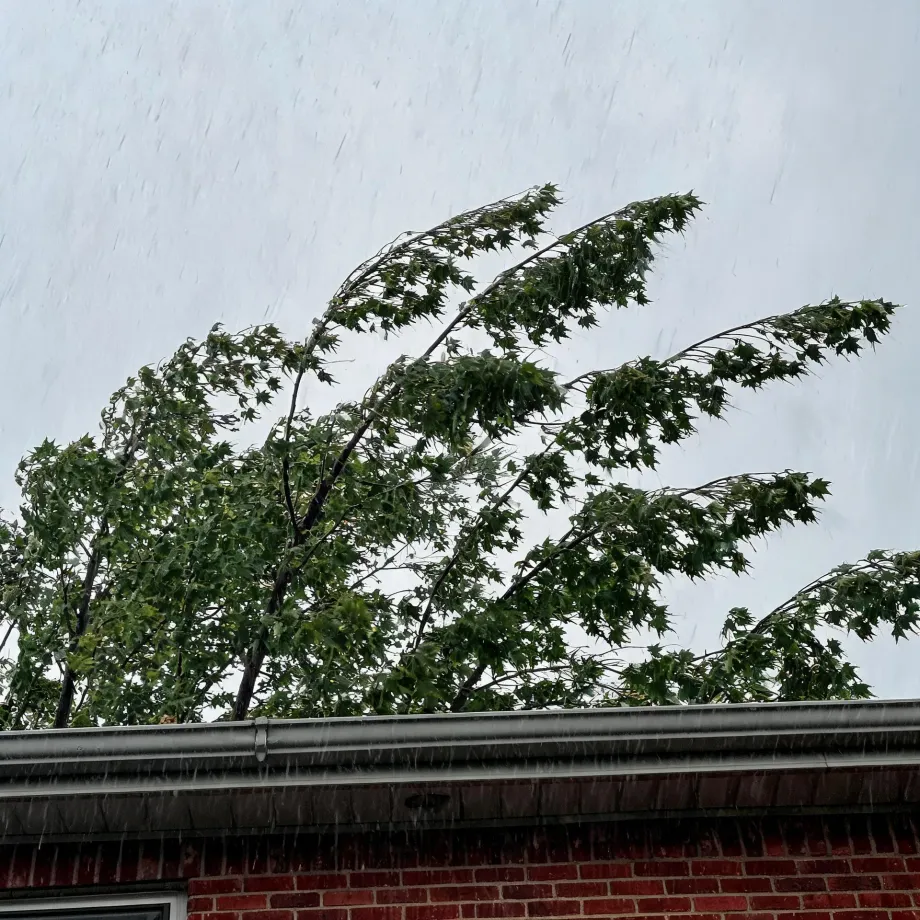
A contractor quoting a central AC repair in Augusta County has to work out whether a failing component gave out under load or just reached the end of its service life, because the answer changes what gets replaced and what the job costs. 190 severe weather events were recorded in Augusta County, Virginia between 2015 and 2024. At that rate, severe weather is a standing condition here, and compressor wear, contactor pitting, and capacitor stress can all trace back to it. But weather load and age produce similar symptoms, and a contractor who assumes one without checking the other will price the wrong repair.
Ductwork routed through spaces that were never planned for forced air, drain lines tucked into crawlspaces that were adapted rather than built for them: these are what a contractor opens up to in a large share of Augusta County homes. Half the homes in Augusta County, Virginia were built in 1989 or earlier (2020-2024 ACS 5-year). That span between when the house was framed and when the current equipment went in is where repair calls get complicated. A failed capacitor or a refrigerant leak is a known quantity; what a contractor finds behind the unit once a panel comes off is not. Parts availability for older equipment is a real variable, and so is whether the surrounding installation was ever done cleanly enough to make a repair hold.
The Parts of a Central AC a Contractor Checks During Repair
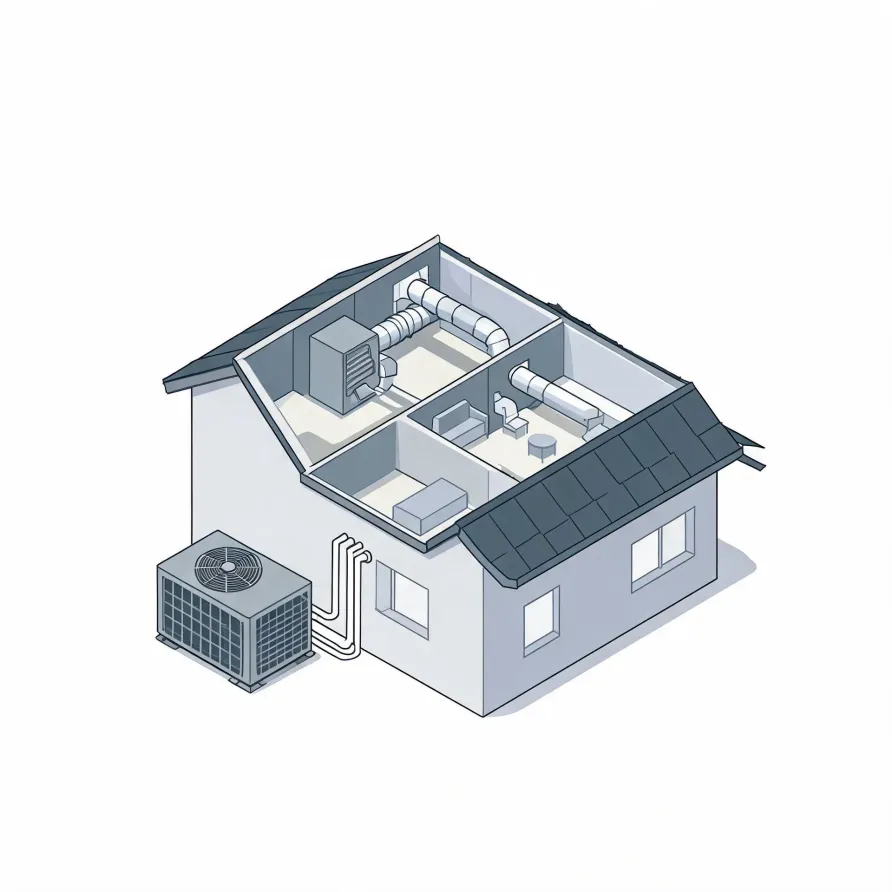
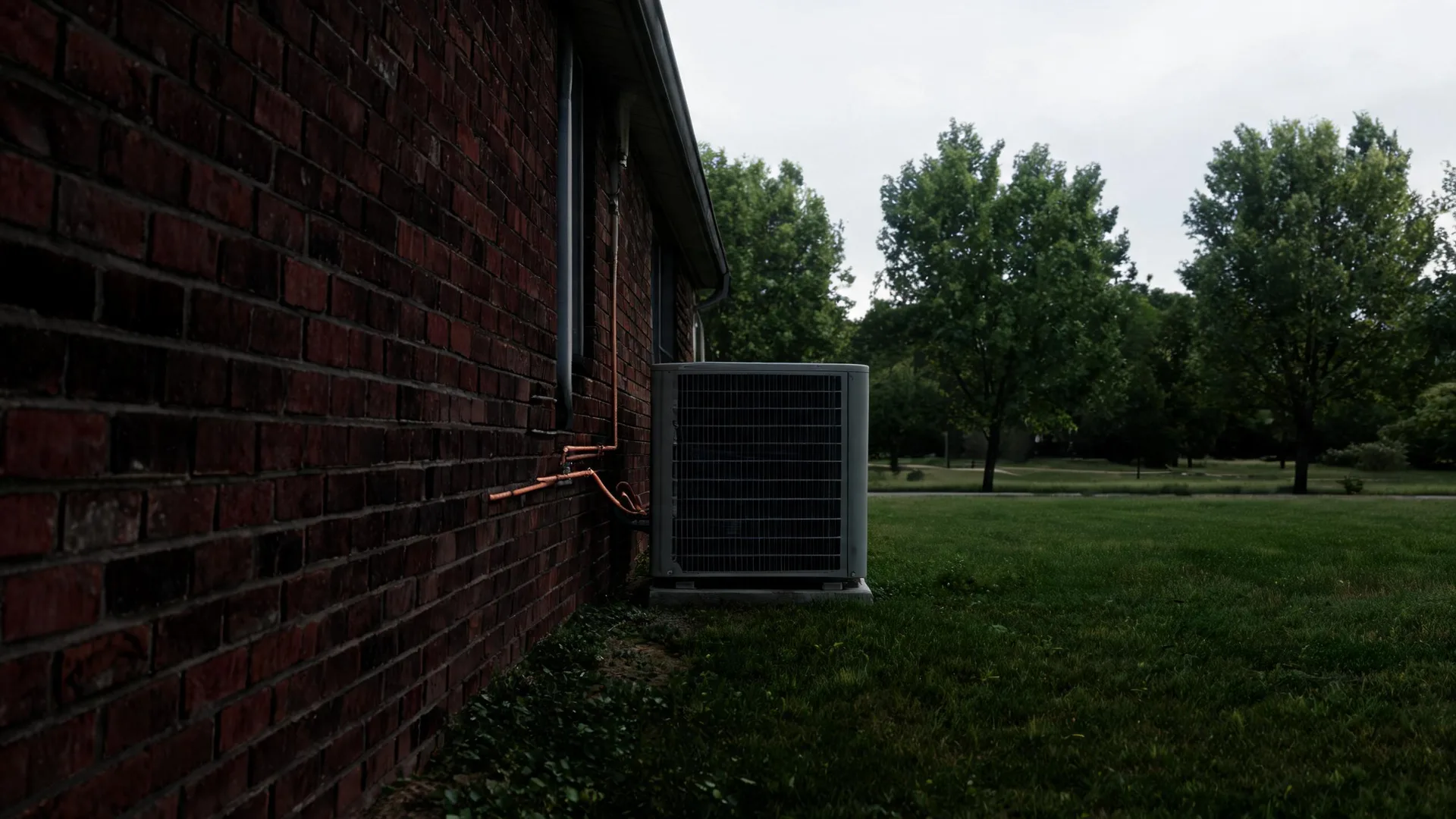
The outdoor condenser unit sits outside the house, usually on a concrete pad at ground level, and houses the compressor and condenser coil. These are the parts that take the heat pulled from your home and release it outside. When the system blows warm air or shuts itself off, a contractor starts here.
Inside the house, the air handler holds the evaporator coil and the blower fan, and it sits in a utility closet, basement, or attic depending on how the house was built. The refrigerant lines running between the two units and the expansion valve that regulates refrigerant flow are also points a contractor checks when a coil or the blower is not the source of the problem.
The drawing shows the general layout of a central AC system, and a licensed contractor determines which components and conditions apply to your specific home.
Get matched in Augusta CountyAugusta County, by the numbers
190 severe weather events were recorded in Augusta County, Virginia between 2015 and 2024.
NOAA National Centers for Environmental Information, Storm Events Database, bulk CSV export, events 2015-01-01 through 2024-12-31.Half the homes in Augusta County, Virginia were built in 1989 or earlier (2020-2024 ACS 5-year).
U.S. Census Bureau, 2020-2024 American Community Survey 5-Year EstimatesAugusta County, Virginia holds 33,111 housing units (2020-2024 ACS 5-year).
U.S. Census Bureau, 2020-2024 American Community Survey 5-Year EstimatesOwners occupy 80.2% of the occupied homes in Augusta County, Virginia (2020-2024 ACS 5-year).
U.S. Census Bureau, 2020-2024 American Community Survey 5-Year EstimatesRules & Standards Governing Central AC Repair in Augusta County, Virginia10 sourced rules and standards
What HVAC Repair Looks Like in Augusta County
Split-system central air conditioners rated below 45,000 Btu/h manufactured on or after January 1, 2023 must meet a federal minimum of 13.4 SEER2.
Split-system central air conditioners rated at or above 45,000 Btu/h manufactured on or after January 1, 2023 must meet a federal minimum of 13.4 SEER2.
Split-system central air conditioners manufactured between January 1, 2015 and December 31, 2022 had to meet 13 SEER, the metric that preceded SEER2.
Single-package central air conditioners manufactured on or after January 1, 2023 must meet a federal minimum of 13.4 SEER2.
Space-constrained central air conditioners manufactured on or after January 1, 2023 must meet a federal minimum of 11.7 SEER2.
Federal efficiency standards for split-system central air conditioners and heat pumps are set on each certified combination of outdoor unit and indoor coil rather than on the outdoor unit alone.
Residential and light commercial air conditioning and heat pump systems assembled in the field, including mini-splits and unitary systems, may not be installed on or after January 1, 2025 using a refrigerant with a global warming potential above 700.
A field-assembled system whose specified components were all manufactured or imported before January 1, 2025 carries no installation compliance date under the refrigerant restrictions and may still be installed.
Contractor Rules in Augusta County, Virginia
Virginia’s contractor licence classes start above $1,000: the entry class covers a single contract or project over $1,000 but less than $30,000, or less than $250,000 of work in any 12-month period, with larger classes above that.
Virginia requires a contractor licence: no person may engage in, or offer to engage in, contracting work in the Commonwealth without one.
Severe Weather Events in Augusta County
Hard weather puts real hours on cooling equipment. Repair needs in Augusta County track closely with what the climate asks of the systems running here, which is why local event history is part of the picture.
190 severe weather events, 2015–2024. Source: NOAA National Centers for Environmental Information, Storm Events Database.