Tell us about the job
Takes about a minute. No obligation.
A contractor quoting a Central AC installation in Scott County is not sizing against a punishing storm history. 61 severe weather events were recorded in Scott County, Virginia between 2015 and 2024. At that rate, severe weather is an occasional event rather than a standing condition, and it does not drive the core decisions on equipment selection. What does drive them is the age of the home, duct condition, and how well a previous install was done. A contractor will assess those factors before settling on unit size or recommending any particular configuration.
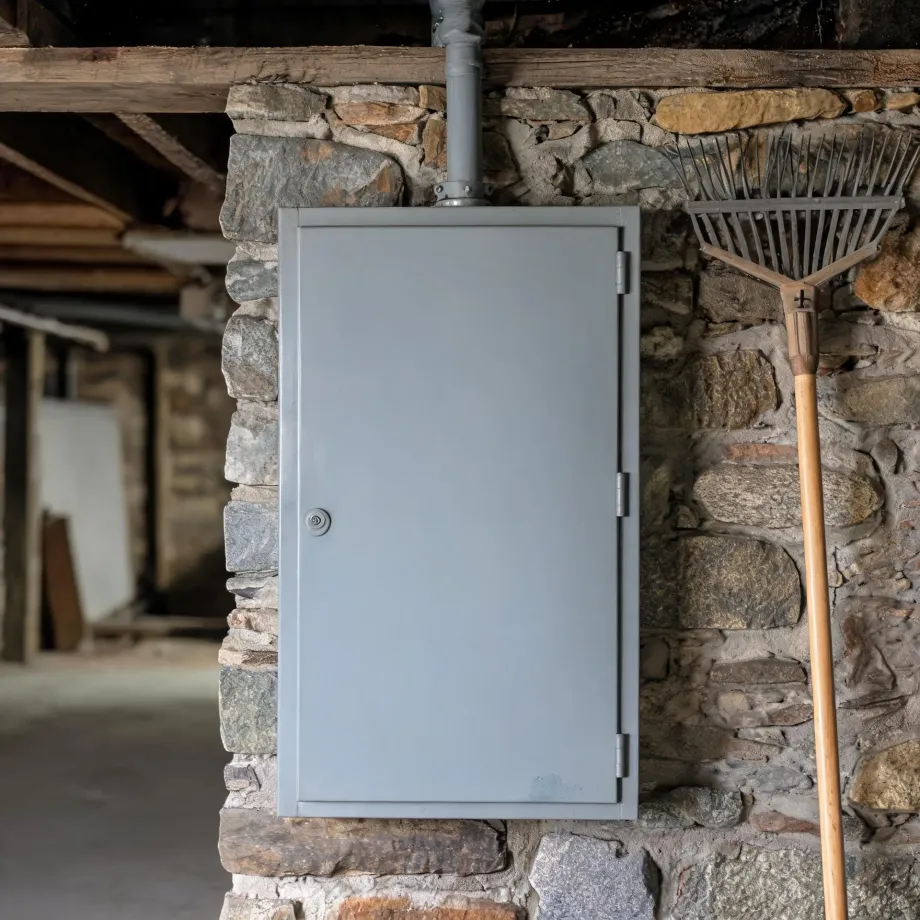
Ductwork sized and routed for the equipment of an earlier era is what a contractor runs into in a large share of Scott County homes. Half the homes in Scott County, Virginia were built in 1975 or earlier (2020-2024 ACS 5-year). That gap between when a house was built and what a homeowner wants to run in it now is where an installation job gets complicated or stays simple. If the existing duct layout cannot move the air volume a new central system requires, the ductwork gets modified or replaced before the unit itself is ever priced. Electrical service is the second check: older panels wired for the loads of that period often need an upgrade to support modern equipment.
What Gets Installed With a New Central AC
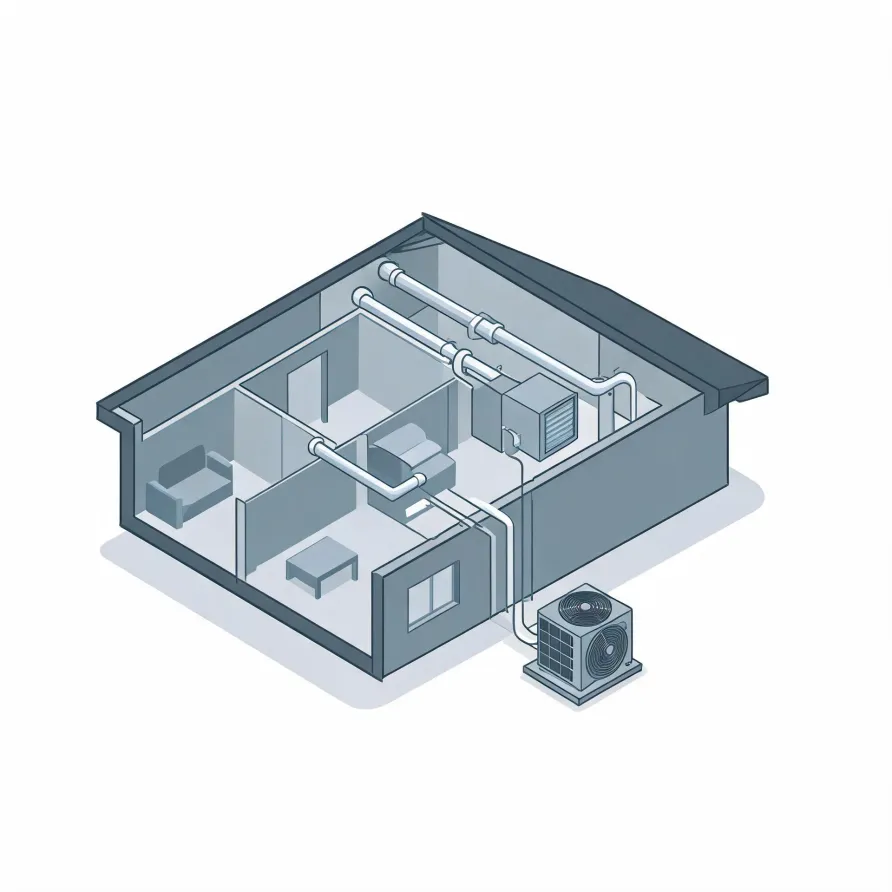
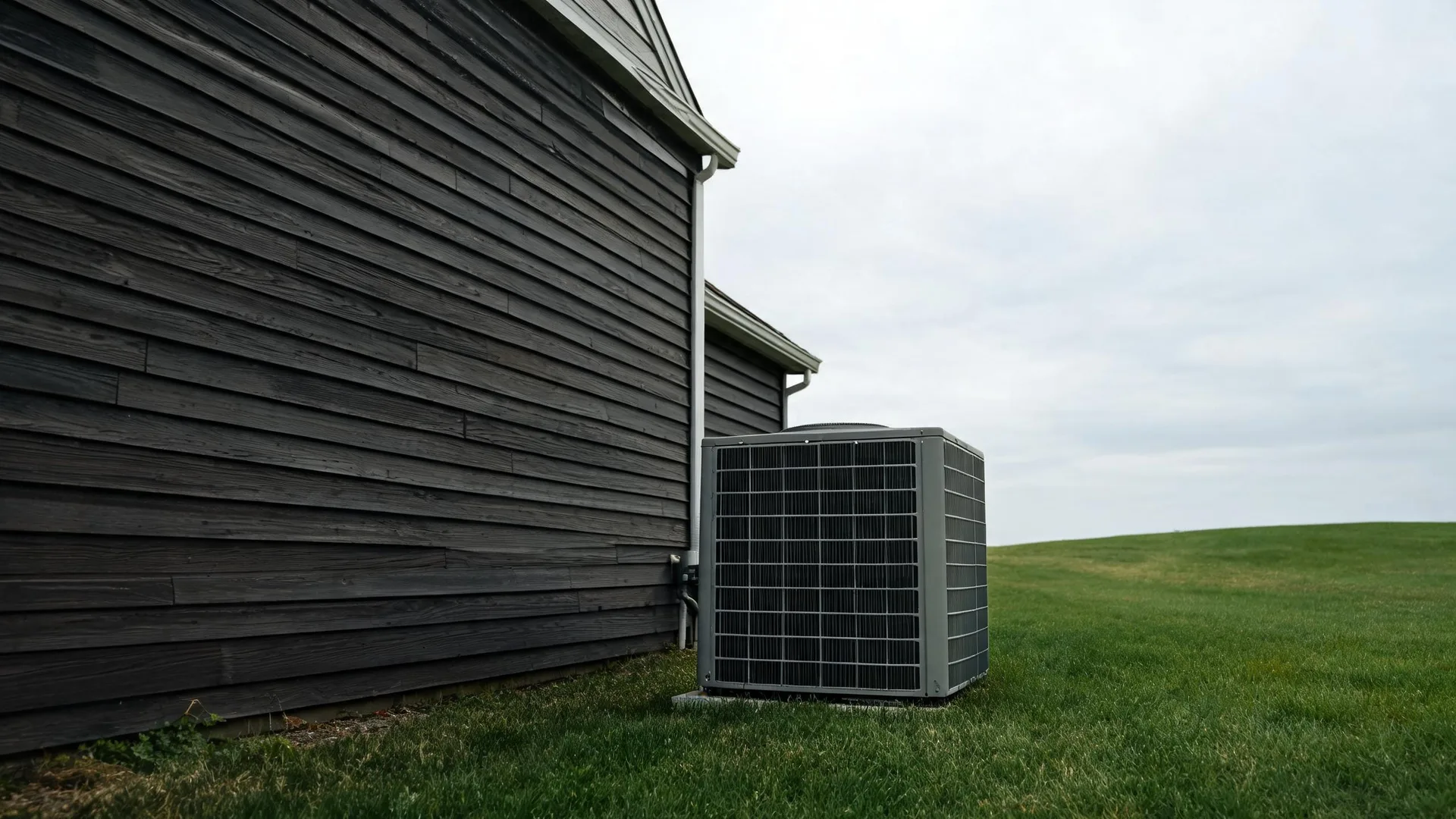
The outdoor condenser unit sits outside the house, usually on a concrete pad at ground level beside the foundation, and it holds the compressor and the condenser coil. Inside, the air handler mounts in a utility space, basement, or attic and contains the evaporator coil and the blower that pushes conditioned air through the home.
The thermostat goes on an interior wall where it can read the home's air accurately and gives the homeowner control over the whole system. A condensate drain line runs from the air handler to a nearby drain, carrying away the moisture the evaporator coil pulls from the air as it works.
The drawing shows a typical layout, and a licensed contractor determines exactly how each piece is placed and connected in your house.
Get matched in Scott CountyScott County, Virginia, by the numbers
61 severe weather events were recorded in Scott County, Virginia between 2015 and 2024.
NOAA National Centers for Environmental Information, Storm Events Database, bulk CSV export, events 2015-01-01 through 2024-12-31.Half the homes in Scott County, Virginia were built in 1975 or earlier (2020-2024 ACS 5-year).
U.S. Census Bureau, 2020-2024 American Community Survey 5-Year EstimatesScott County, Virginia holds 11,780 housing units (2020-2024 ACS 5-year).
U.S. Census Bureau, 2020-2024 American Community Survey 5-Year EstimatesOwners occupy 77.0% of the occupied homes in Scott County, Virginia (2020-2024 ACS 5-year).
U.S. Census Bureau, 2020-2024 American Community Survey 5-Year EstimatesRules & Standards Behind Central AC Installation in Scott County, Virginia10 sourced rules and standards
What HVAC Installation Looks Like in Scott County
Split-system central air conditioners rated below 45,000 Btu/h manufactured on or after January 1, 2023 must meet a federal minimum of 13.4 SEER2.
Split-system central air conditioners rated at or above 45,000 Btu/h manufactured on or after January 1, 2023 must meet a federal minimum of 13.4 SEER2.
Split-system central air conditioners manufactured between January 1, 2015 and December 31, 2022 had to meet 13 SEER, the metric that preceded SEER2.
Single-package central air conditioners manufactured on or after January 1, 2023 must meet a federal minimum of 13.4 SEER2.
Space-constrained central air conditioners manufactured on or after January 1, 2023 must meet a federal minimum of 11.7 SEER2.
Federal efficiency standards for split-system central air conditioners and heat pumps are set on each certified combination of outdoor unit and indoor coil rather than on the outdoor unit alone.
Residential and light commercial air conditioning and heat pump systems assembled in the field, including mini-splits and unitary systems, may not be installed on or after January 1, 2025 using a refrigerant with a global warming potential above 700.
A field-assembled system whose specified components were all manufactured or imported before January 1, 2025 carries no installation compliance date under the refrigerant restrictions and may still be installed.
Licensing Rules for Scott County, Virginia
Virginia’s contractor licence classes start above $1,000: the entry class covers a single contract or project over $1,000 but less than $30,000, or less than $250,000 of work in any 12-month period, with larger classes above that.
Virginia requires a contractor licence: no person may engage in, or offer to engage in, contracting work in the Commonwealth without one.
Severe Weather Events in Scott County
Local weather conditions set the workload that any central AC system has to carry over its lifetime. Equipment sized and installed for what Scott County actually delivers in stress holds up better than equipment specified for somewhere else.
61 severe weather events, 2015–2024. Source: NOAA National Centers for Environmental Information, Storm Events Database.